




The Foundation: A Soft and Pliable Dough
Before you even think about rolling or cooking, the secret to a soft roti begins with the dough. The goal is a soft, smooth, and pliable consistency. Using lukewarm or even hot water is a widely shared tip, as it helps activate the gluten in the whole
wheat flour (atta), making the dough more elastic. Add the water gradually, kneading patiently for a good 8 to 10 minutes until the dough is smooth and no longer sticky. If you press it with a finger, the indentation should remain. A crucial, and often skipped, step is to let the dough rest. Cover the kneaded dough with a damp cloth and let it sit for at least 20 to 30 minutes. This resting period allows the gluten to relax, making the dough much easier to roll and ensuring a softer final product.
Mastering the Roll: The Secret to Evenness
Uneven rolling is one of the biggest culprits behind rotis that cook poorly and fail to puff up. If a roti has thick and thin spots, the thin parts can overcook and become hard while the thicker parts remain doughy. The key is to apply gentle, consistent pressure as you roll. To prevent sticking, lightly dust the dough ball and rolling surface with dry flour, but avoid using too much, as excess flour can make the final roti dry. A good technique is to roll from the center outwards, rotating the dough frequently to maintain a uniform circle. Don't worry so much about achieving a perfect circle at first; focus on getting an even thickness throughout. An evenly rolled roti allows steam to build up uniformly inside when cooking, which is what creates that magical puff.
The Heat is On: Taming Your Tawa
Controlling the pan's temperature is the other half of the equation. A traditional iron or cast-iron tawa is ideal because it distributes and retains heat well. The mistake many beginners make is not preheating the pan enough or having the heat too low. A cold or lukewarm pan will cause the roti to dry out before it can cook properly, resulting in a hard texture. The ideal temperature is medium-high heat. A simple way to test if your tawa is ready is to sprinkle a few drops of water on it; if they sizzle and evaporate almost immediately, you're good to go. If the pan is smoking excessively, the heat is too high and will burn the roti before it cooks through. Finding this balance might take some practice, but it is essential for success.
The Cook: Timing and Technique
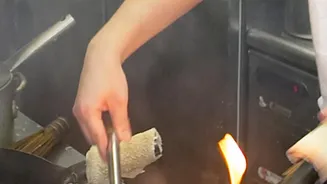
Once your evenly rolled roti is on the hot tawa, the cooking process is quick. Place the roti on the pan and let it cook for about 15-30 seconds, just until you see small bubbles start to form and the color changes slightly. Flip it over. Let the second side cook a bit longer, for about 30-40 seconds, until light brown spots appear. At this point, you have two options to make it puff. You can flip it back onto the tawa and gently press down around the edges with a clean, folded kitchen towel or a spatula, which encourages the trapped steam to inflate the roti. The other common method is to use tongs to carefully remove the roti from the pan and place it directly over an open flame for a few seconds. The direct heat will cause it to puff up dramatically. This method also adds a slight char, which many people enjoy.