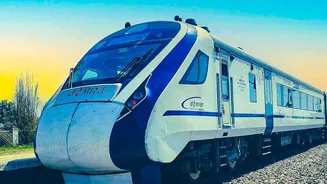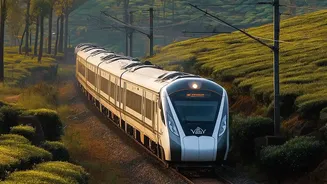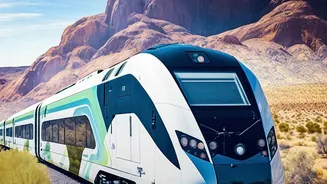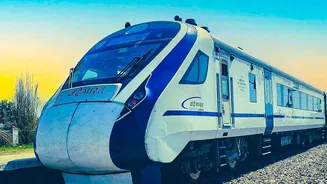



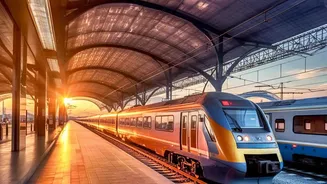
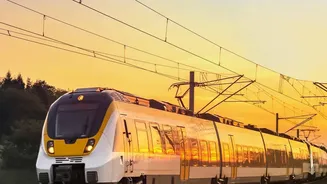
India's long-held dream of a bullet train network is rapidly taking shape on the ground. The first tangible taste of this high-speed future is set to arrive in Gujarat, with the Surat to Vapi section slated to become the first operational corridor.
The First Run in 2027
The
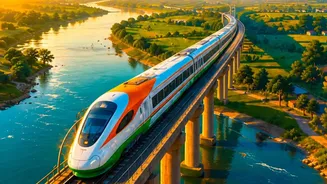
anticipation is over: India's first bullet train service is expected to begin operations in the last quarter of 2027. Railway Minister Ashwini Vaishnaw has confirmed that the inaugural run will take place on the Surat-Vapi section of the ambitious Mumbai-Ahmedabad High-Speed Rail (MAHSR) corridor. This initial phase will serve as a critical proof of concept for the entire 508-kilometre project, marking a historic moment in the nation's infrastructure development. While the full corridor connecting Gujarat's commercial hub with India's financial capital will be completed in phases, the launch of the Surat-Vapi section will shift the bullet train from a blueprint to a reality for Indian passengers.
Why This Section Is First
Prioritising the Surat-Vapi stretch is a strategic decision rooted in practical realities. The entire section lies within Gujarat, where land acquisition and construction permissions progressed much more smoothly and rapidly compared to the project's leg in Maharashtra. These early delays in the neighbouring state, compounded by the COVID-19 pandemic, meant that full-scale construction across the entire corridor only gained momentum in 2021. The National High-Speed Rail Corporation Limited (NHSRCL), the body executing the project, has been able to make significant headway in Gujarat. The terrain is favourable, and the progress on viaducts, piers, and station construction in this section is the most advanced along the entire route, making it the logical choice for the first rollout.
A Glimpse of the Progress
The work on the ground paints a picture of rapid progress. According to official updates from late 2026, a significant portion of the foundational work is complete. Across the full corridor, hundreds of kilometres of pier work and viaduct construction have been finished. Specifically, the 50-km Surat-Bilimora stretch, which is part of the larger Surat-Vapi section, recently achieved a major milestone by successfully energising its overhead electrical equipment. This is a crucial step towards conducting trial runs. Furthermore, civil construction work at eight stations in Gujarat, including Surat and Vapi, has been completed, with architectural finishing now underway.
Indigenous Manufacturing and Technology
While the project is based on Japan's renowned Shinkansen technology, a significant aspect is the push for indigenous manufacturing. India's first bullet train sets are being manufactured domestically by a consortium including Integral Coach Factory (ICF) and BEML. The first body frame of the B28 trainset, designed for speeds up to 280 kmph, has already been completed and is undergoing rigorous structural testing. Track trials for these 'Made in India' trains are anticipated by mid-2027, just ahead of the planned public launch. This focus on domestic production is a key part of the project's long-term vision, building local expertise in high-speed rail technology.
The Bigger Picture and Future Phases
The Surat-Vapi launch is just the beginning. The complete 508-km MAHSR corridor will connect Mumbai and Ahmedabad with 12 stations, slashing travel time between the two economic powerhouses. The project includes remarkable engineering feats, most notably India's first undersea rail tunnel—a 7-km stretch beneath Thane Creek in Maharashtra. Work on this complex section is underway, with massive Tunnel Boring Machines deployed in July 2026. The phased opening, starting with the most advanced section in Gujarat, allows the NHSRCL to operationalise parts of the line as they are completed, ensuring that the benefits of high-speed rail reach the public as soon as possible.