








The Deceptive Comfort of the National Average
On the surface, national reports often paint a broad-strokes picture of a country making gradual progress. Statistics on nationwide forest cover, overall emissions, or average air quality can suggest a situation that is under control. The latest State
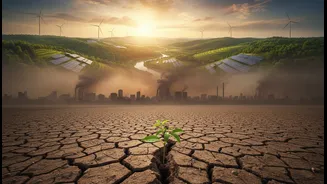
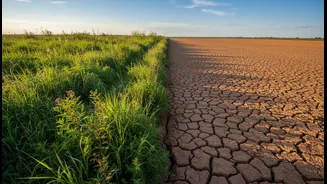
of India's Environment (SoE) report, an annual publication from the Centre for Science and Environment (CSE), collates vast amounts of data on everything from climate to waste. However, the report's central, urgent message is that these national averages are becoming dangerously misleading. They create an illusion of uniform conditions, hiding the fact that for many Indians, the environmental reality is far more perilous than the numbers suggest. This discrepancy is where the true story lies – a story of unequal exposure and localised crises that demand a more granular look.
Extreme Weather: A National Trend with Local Epicentres
The SoE 2026 report highlights that in 2025, India experienced extreme weather events on a staggering 99% of days. These events, including heatwaves, floods, and landslides, claimed over 4,400 lives and affected 17.4 million hectares of cropland. While this points to a national vulnerability, the impact is not evenly distributed. For instance, Himachal Pradesh was the worst-affected state, followed by Kerala and Madhya Pradesh, demonstrating how certain regions bear a disproportionate burden of climate-related disasters. Similarly, analysis of the 2024 report showed the Himalayan region accounted for 44% of all climate-related disasters in the preceding decade. A national statistic of 'extreme weather days' fails to capture the concentrated devastation in these specific areas, where lives and livelihoods are repeatedly shattered.
The Air You Breathe Depends on Your Pincode
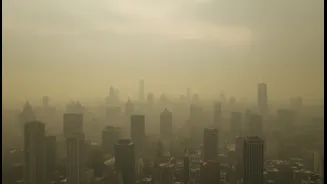
Air pollution is one of India's most critical environmental challenges, but its severity is profoundly unequal. While policy often focuses on major cities like Delhi, the SoE report underscores a massive gap in monitoring, with only 12% of India's 4,041 census cities having air quality stations. This means a vast majority of the population lives without any real-time data on the air they breathe. Research shows that poorer neighbourhoods and rural areas often face severe exposure. For example, while urban pollution from vehicles and industry gets attention, household emissions and the open burning of waste are dominant sources of pollution in rural India, where over 65% of the population resides. The health burden, therefore, falls unequally, with studies linking chronic exposure to pollutants in disadvantaged areas with higher rates of respiratory and cardiovascular diseases.
Unequal Burdens: The Social Injustice of Environmental Decay
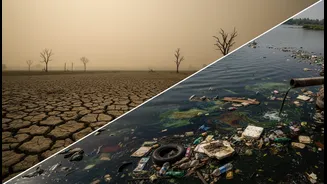
Environmental degradation is rarely democratic. The communities that contribute least to the problem are often the ones who suffer most. Whether it is industrial hazardous waste, contaminated water, or the impacts of deforestation, these burdens are disproportionately placed on Adivasi communities, low-income households, and other marginalised groups. For example, research highlights the link between the location of hazardous industries and socially disadvantaged populations in cities like Ahmedabad. In Mumbai's Aarey Forest, indigenous Warli and Koli communities face displacement and cultural erasure due to infrastructure projects. Furthermore, the SoE 2026 report points to rising human-tiger conflicts as growing human populations and shrinking habitats force tigers outside protected zones, creating friction with the approximately 60 million people living near forests. These are not just environmental issues; they are matters of profound social injustice.
Why Local Data is the Only Way Forward
The core argument of the SoE 2026 report is a call to move beyond national averages in policymaking. A state average for waste management, for instance, can hide the fact that even top-performing states have critically polluted rivers or fail to treat the majority of their sewage. Andhra Pradesh, a high-ranking state for overall environment, still treats less than 11% of its sewage. To create effective solutions, policies must be built on local, granular data. Understanding the specific challenges of a single district—be it groundwater depletion in Punjab, urban heat islands in Delhi, or waste management failures in a rural block—is essential. Without this localised focus, national plans risk being ineffective, pouring resources into the wrong places while the most acute problems fester.