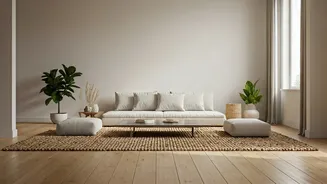









1. What Exactly is Low-Floor Seating?
At its core, this trend is about bringing your living space closer to the ground. It ditches traditional, leggy furniture like towering sofas and armchairs in favour of seating that is either directly on the floor or on very low-profile frames. Think
large, comfortable floor cushions, plush poufs, low wooden benches, and deep-seated, modular sofas that barely skim the floor. The goal is to create an environment that feels open, informal, and incredibly inviting—a relaxed lounge space rather than a formal drawing-room.
2. Why It’s Perfect for Renters
The obsession among renters isn't just about aesthetics; it’s deeply practical. Firstly, it’s space-saving. In the often compact apartments of cities like Mumbai, Bengaluru, or Delhi, low seating creates a visual illusion of higher ceilings and a more open floor plan. Secondly, it’s incredibly flexible. A set of large floor cushions can be a sofa one day, individual seats for a party the next, and stacked away for a home workout the day after. This versatility is a godsend for those who can’t make permanent changes to their space. Finally, it’s often more budget-friendly and easier to move than a heavy, three-seater sofa, a major plus for anyone not settled in a 'forever home'.
3. A Modern Take on a Timeless Idea
While it may feel like a new Instagram trend, low seating has deep roots in both Indian and other Asian cultures. It's a modern reinterpretation of the traditional 'baithak' or 'gadda' seating common in Indian homes for generations. It also draws heavily from Japanese minimalism, which prizes a connection to the earth and uncluttered living, and the cosy, floor-centric culture seen in Korean interiors. This fusion of global influences with a familiar, traditional concept makes the trend feel both aspirational and comfortably authentic for many in India.
4. Key Elements to Get the Look
Achieving this style is about curating a few key pieces. Start with the foundation: a large, textured rug. This defines the seating area. Next, layer on the seating itself. Invest in oversized floor cushions (in durable fabrics like jute, cotton, or canvas) and a few poufs or ottomans for varied height and texture. A low-slung coffee table, perhaps made of reclaimed wood or simple metal, is essential to keep everything in proportion. For those who want more back support, consider a low-profile modular sofa or a simple wooden bench placed against a wall, adorned with cushions.
5. Mastering the Minimalist Colour Palette
The 'minimalist' part of this trend is crucial. It’s not about a riot of floor pillows. The aesthetic leans on a calm, neutral colour palette. Think shades of beige, cream, grey, and soft whites as your base. This creates a serene backdrop. Interest comes from texture—the weave of a jute rug, the grain of a wooden table, the softness of a linen cushion. Pops of colour should be earthy and muted: terracotta, olive green, dusty blue, or ochre. This keeps the space from feeling sterile while maintaining a sophisticated, uncluttered vibe.
6. But Is It Actually Comfortable?
This is the most common question, and the answer is yes—if you do it right. The key is layering and support. Don't just throw a few thin cushions on a hard floor. Use a thick, plush rug or even a padded mat as a base layer. Choose high-density foam cushions that won't flatten instantly. For long lounging sessions, arrange cushions against a wall to create makeshift backrests. The idea is to foster a relaxed, informal posture. It's less about sitting upright and more about lounging, leaning, and settling in comfortably.