





First, What Is a Semicryogenic Engine?
Think of any rocket engine as a controlled explosion. To make it work, you need two things: a fuel to burn and an oxidizer to make it burn, since there's no oxygen in space. ISRO’s workhorse rockets have historically used solid propellants or earth-storable
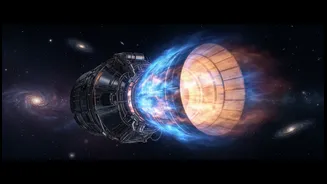
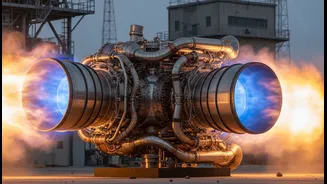
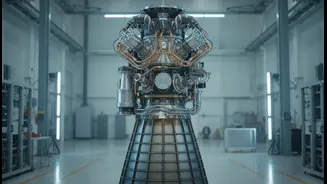
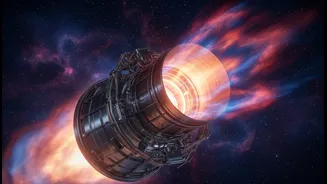
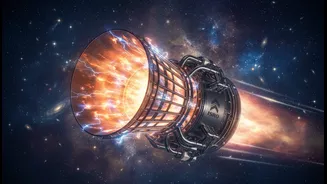
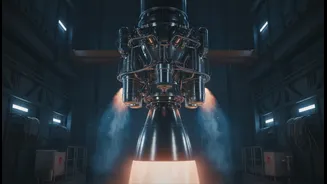
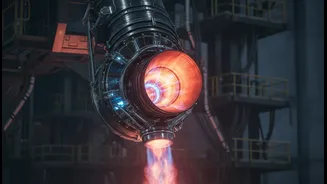
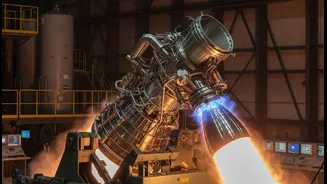
liquid fuels. Its most powerful rocket, the LVM3, uses a cryogenic upper stage, which combines super-chilled liquid hydrogen (LH2) and liquid oxygen (LOX). A semicryogenic engine changes the recipe. It keeps the liquid oxygen but swaps the liquid hydrogen for a highly refined form of kerosene, which ISRO calls Isrosene. Because only one of the propellants (the oxygen) is cryogenic, or stored at extremely low temperatures, the engine is called 'semi'-cryogenic. This might seem like a small change, but it has huge implications for power and efficiency.
More Thrust, Less Hassle
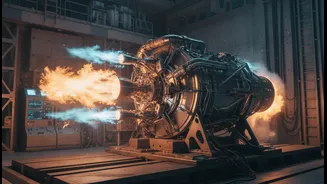
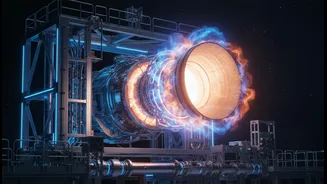
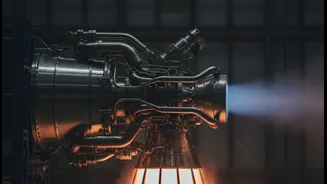
The primary lesson from these tests is that semicryogenic technology offers a smarter way to achieve higher thrust. Thrust is the force that pushes a rocket upwards, and more of it means you can lift heavier things into space. Kerosene is much denser than liquid hydrogen, meaning you can pack more fuel into a tank of the same size. This denser fuel, when combined with liquid oxygen, results in a more powerful combustion, providing significantly more thrust. The new SE-2000 engine, for example, is designed to produce a staggering 2,000 kilonewtons of thrust. Beyond power, there's a major practical advantage. Kerosene can be stored at normal room temperature. Liquid hydrogen, on the other hand, must be kept below a frigid -253 degrees Celsius. Eliminating the need for one set of ultra-cold fuel tanks and complex insulation makes the rocket easier to handle, cheaper to build, and quicker to launch.
A Big Upgrade for India's Workhorse Rocket
This new engine isn't just for a future, hypothetical rocket. It's slated to become the new heart of India's mightiest launch vehicle, the LVM3. Currently, the LVM3's core stage is powered by two Vikas liquid engines. The plan is to replace that entire stage with a new one powered by a single SE-2000 semicryogenic engine. Even a single one of these new engines will be more powerful than the two it replaces. This upgrade will boost the LVM3's carrying capacity significantly. It's expected to increase the payload it can lift to Geostationary Transfer Orbit (GTO) from four tonnes to five, and eventually even six tonnes. This means ISRO can launch heavier, more advanced communication and navigation satellites for India, and also carry heavier payloads for international customers, all on the same proven rocket.
Powering India’s Future in Space
The successful tests are about more than just upgrading an existing rocket; they are about laying the foundation for India's next chapter in space. This high-thrust engine technology is a critical building block for ISRO's planned Next Generation Launch Vehicle (NGLV), a future family of rockets designed to be more powerful, cost-effective, and even partially reusable. Mastering semicryogenic propulsion will allow India to compete more aggressively in the lucrative global launch market, with the stated aim of increasing its market share from around 2% to 10% in the coming years. While the engine won't be ready for the initial Gaganyaan human spaceflight missions, it is vital for more ambitious future endeavours, including deep-space exploration and sending heavier robotic probes to the Moon and Mars. This technology, currently possessed by only a handful of spacefaring nations, signals India's growing self-reliance and ambition on the world stage.