






The Golden Cage of Daily Soaps
For decades, daily television soaps were the undisputed kings of Indian entertainment. Shows with high TRPs (Target Rating Points) held families in a collective spell for years, dictating dinner schedules and dominating conversations. The formula was
consistent: sprawling joint families, dramatic plot twists, and storylines that stretched across thousands of episodes. Even at their peak, producers admit top shows commanded massive ratings. This content was designed for collective viewing, offering a shared, predictable rhythm to domestic life. However, audiences grew tired of the repetitive plots, illogical twists, and characters who rarely evolved. Viewers began openly criticizing long-running serials, demanding fresher narratives that made sense.
The Twin Revolutions: Cheap Data and Smartphones
The ground began to shake with the arrival of affordable, high-speed mobile data. The launch of Reliance Jio, in particular, was a watershed moment that transformed data from a luxury into a utility. Within six months of its launch, India became the world's highest mobile data consumer. Suddenly, streaming video was no longer a frustrating, buffering experience. This data revolution coincided with the mass adoption of smartphones, which put a personal screen in the hands of hundreds of millions of Indians, including those in rural and semi-urban areas. The combination was explosive. Entertainment was no longer tethered to the television set in the living room; it was now mobile, personal, and available on demand.
A New Era of Storytelling
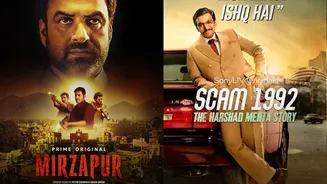
Over-the-top (OTT) platforms like Netflix, Amazon Prime Video, and JioHotstar rode this wave perfectly. They offered what television soaps couldn't: variety and quality. Web originals brought forth diverse genres, from gritty crime thrillers to slice-of-life comedies and realistic dramas. Unlike the endlessly stretching plots of TV serials, web series offered finite seasons and episodes, respecting the viewer's time. The content was also bolder and more relatable, exploring contemporary themes and presenting characters that mirrored the lives and aspirations of a modernising India. Audiences, especially younger ones, connected with these realistic portrayals and the freedom from the censorship that often constrains television content.
From the Living Room to Personal Screens
This technological and content shift fundamentally altered family viewing dynamics. The single TV, once a symbol of family togetherness, now competed with multiple personal screens. Entertainment became an individualised experience. A father could watch a political thriller on his tablet, a mother could follow a cooking show on her phone, and a teenager could binge-watch a new series on a laptop. This doesn't mean family viewing is dead; many families now gather to watch web series or movies on connected smart TVs. However, the power has shifted. Viewing is now appointment-free and tailored to individual tastes rather than a household compromise. The shared experience is now a conscious choice, not a default setting.
The Numbers Tell the Story
The statistics confirm this migration. In recent years, linear TV viewership has started to decline in absolute terms, with India losing nearly 40 million pay-TV households between 2018 and 2024. Meanwhile, the number of digital-only viewers—those who use the internet but don't watch linear TV at all—has surged. The ratings for even the most popular Hindi TV shows have seen a significant dip. A show that once garnered a TRP of 9-10 is now considered successful if it touches 2-3. In contrast, India's OTT audience reached over 664 million in 2026, with average consumption hitting nearly 15 hours per week. While TV serials are also finding a second life on these platforms, the primary driver of growth is original digital content.