

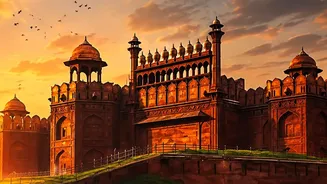
An Unconquered Bastion
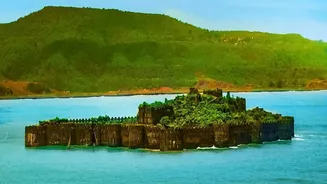
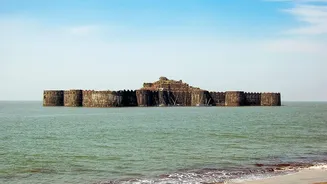
Perched majestically off the coast of Murud, about 165 kilometres south of Mumbai, the fort of Murud-Janjira remains one of India's most formidable maritime strongholds. Its claim to fame is simple yet profound: it was never conquered. For nearly 400
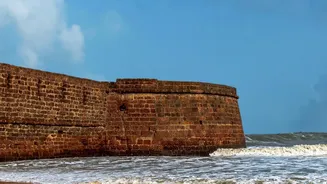
years, this island fortress repelled attacks from the mighty Marathas, the Portuguese, and the British, earning its moniker 'Unconquerable Janjira'. Accessible only by sailboat from the nearby Rajapuri jetty, the journey to the fort itself is a step back in time, approaching the 40-foot high stone walls that seem to emerge directly from the sea. Its main gate is ingeniously concealed, becoming visible only when you are almost upon it—a clever defensive trick that confused enemy navies for centuries.
A Legacy of Defiance
The fort's origins trace back to the 15th century, when local fishermen built a smaller wooden structure to fend off pirates. Recognising its strategic potential, the structure was captured and rebuilt into a formidable stone citadel in the 16th century by Malik Ambar, an Abyssinian regent of the Ahmadnagar Sultanate. This marked the beginning of the Siddi dynasty's rule over the fort, which became their sovereign capital. The Siddis, skilled mariners of African origin, established a powerful naval presence on the Konkan coast. Great Maratha rulers, including Chhatrapati Shivaji Maharaj and Sambhaji Maharaj, launched several campaigns to capture Janjira, but its robust defences proved impenetrable each time. The fort finally became part of Indian territory only after independence in 1947.
Architectural and Engineering Marvels
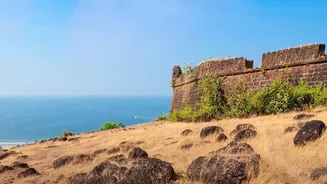
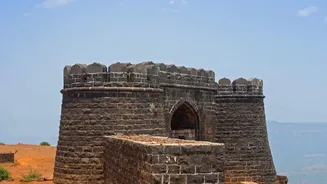
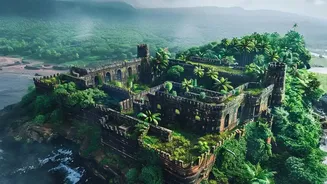
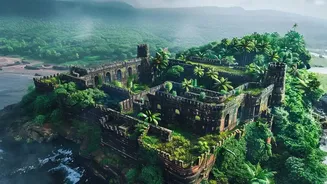
Murud-Janjira is a masterclass in military architecture. The fort is girdled by 19 to 26 rounded bastions, still intact, which once housed over 500 cannons. Three of these, the colossal 'Kalal Bangadi', 'Chavri', and 'Landa Kasam', were famous for their immense size and firing range. Within its walls, Janjira was a self-sufficient township. It contains the ruins of a mosque, palaces, and administrative quarters. Perhaps most astonishingly, despite being surrounded by the saline Arabian Sea, the fort has several freshwater sources, including a deep well and two large lakes that have never run dry, a testament to the ingenuity of its builders. Near the main gate, a striking sculpture depicts a tiger-like beast clutching elephants, symbolising the fort's dominance and strength.
The Fort Today: A Tourist Magnet
Today, Murud-Janjira is a protected monument and a major tourist attraction, drawing history buffs and curious travellers alike. After its seasonal closure during the monsoon for safety, the fort reopened to visitors in October 2026, reviving the local tourism economy. Local sailboats ferry visitors across the water, where they can explore the labyrinthine passages and weathered ramparts. Inside, one can still see the remains of the palace of the Nawab and imagine the bustling life that once filled this island city. The panoramic views of the sea from the bastions are breathtaking, offering a sense of the isolation and strategic advantage the fort once commanded. While time and the elements have taken their toll, the essence of Janjira's power and resilience remains palpable.