




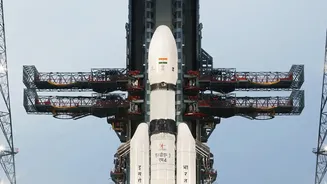
An Economy Reaching for the Stars
India's space economy is undergoing a monumental shift, poised for explosive growth. Currently valued at around $8.4 billion, projections indicate it could surge to over $44 billion by 2033. This rapid expansion is not just about national pride; it's
a calculated economic strategy. The sector's growth is fueled by a combination of government reforms, a surge in private investment, and an increasing global demand for cost-effective space solutions. The government has set an ambitious target to increase India's share of the global space economy from its current 2-3% to 8% by 2030. This transformation is largely thanks to landmark policies that have opened the doors for private companies, turning a government-led program into a dynamic, commercial marketplace.
Launchpad for Private Ambition
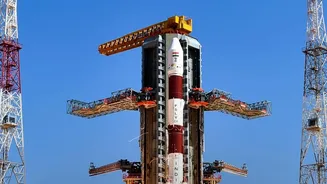
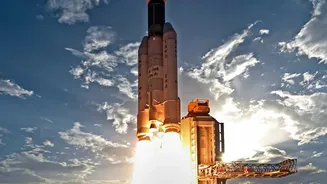
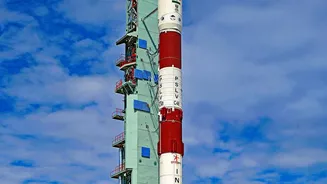
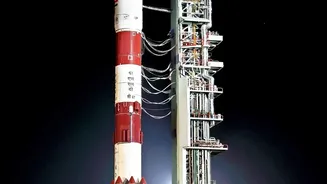
The most visible sign of this new era is in the launch sector. For decades, the Indian Space Research Organisation (ISRO) was the sole provider of launch services. Now, a new breed of private rocket-makers is emerging. Hyderabad-based Skyroot Aerospace made history in July 2026 by becoming the first Indian private company to launch a rocket, Vikram-1, into orbit. This milestone placed India in an elite club with the US and China as nations with private orbital launch capabilities. Another key player is Chennai-based Agnikul Cosmos, which is developing its Agnibaan rocket, notable for its single-piece 3D-printed engine. These companies are not just building rockets; they are creating a competitive market for launching small to medium-sized satellites, a fast-growing segment of the global space industry.
India's New Eyes in the Sky
Beyond the rockets that carry them, the satellites themselves represent a massive business opportunity. The focus is shifting from large, multi-purpose government satellites to constellations of smaller, specialized ones built by private firms. Pixxel, a Bengaluru-based startup, is a leader in this domain, building a constellation of hyperspectral imaging satellites. These powerful sensors can see the Earth in hundreds of colours, providing incredibly detailed data for agriculture, climate monitoring, and resource management. The company has already raised significant funding to expand its satellite fleet and its data platform, Aurora. Other companies like Dhruva Space are developing small satellite platforms and related ground infrastructure, creating a full-stack ecosystem for satellite manufacturing and deployment in India.
The Downstream Data Gold Rush
Perhaps the largest economic opportunity in space lies not in the hardware sent to orbit, but in the data it sends back. This is the 'downstream' segment of the space economy, and it involves turning satellite imagery and signals into actionable intelligence and commercial services. There are over 200 identified use cases, spanning agriculture, logistics, disaster management, urban planning, and financial services. For instance, hyperspectral data from Pixxel’s satellites can help farmers monitor crop health with precision, while communication satellites provide broadband services to remote areas and enable in-flight connectivity. This conversion of space-based capabilities into everyday applications is where the sector's true value will be unlocked, improving productivity and resilience across the entire economy.
Government as an Enabler, Not Just a Player
This private-sector boom would not be possible without a fundamental change in government policy. The establishment of the Indian National Space Promotion and Authorisation Centre (IN-SPACe) in 2020 was a game-changer. IN-SPACe acts as a single-window agency to authorize, promote, and supervise the activities of private space companies, making it easier for them to operate and access ISRO's world-class facilities. Meanwhile, NewSpace India Limited (NSIL), ISRO's commercial arm, is tasked with commercializing space technologies and managing launch services on a demand-driven basis. This clear demarcation allows ISRO to focus on advanced research and development, while IN-SPACe and NSIL foster a vibrant and competitive commercial industry.