



Meet the Roman Space Telescope
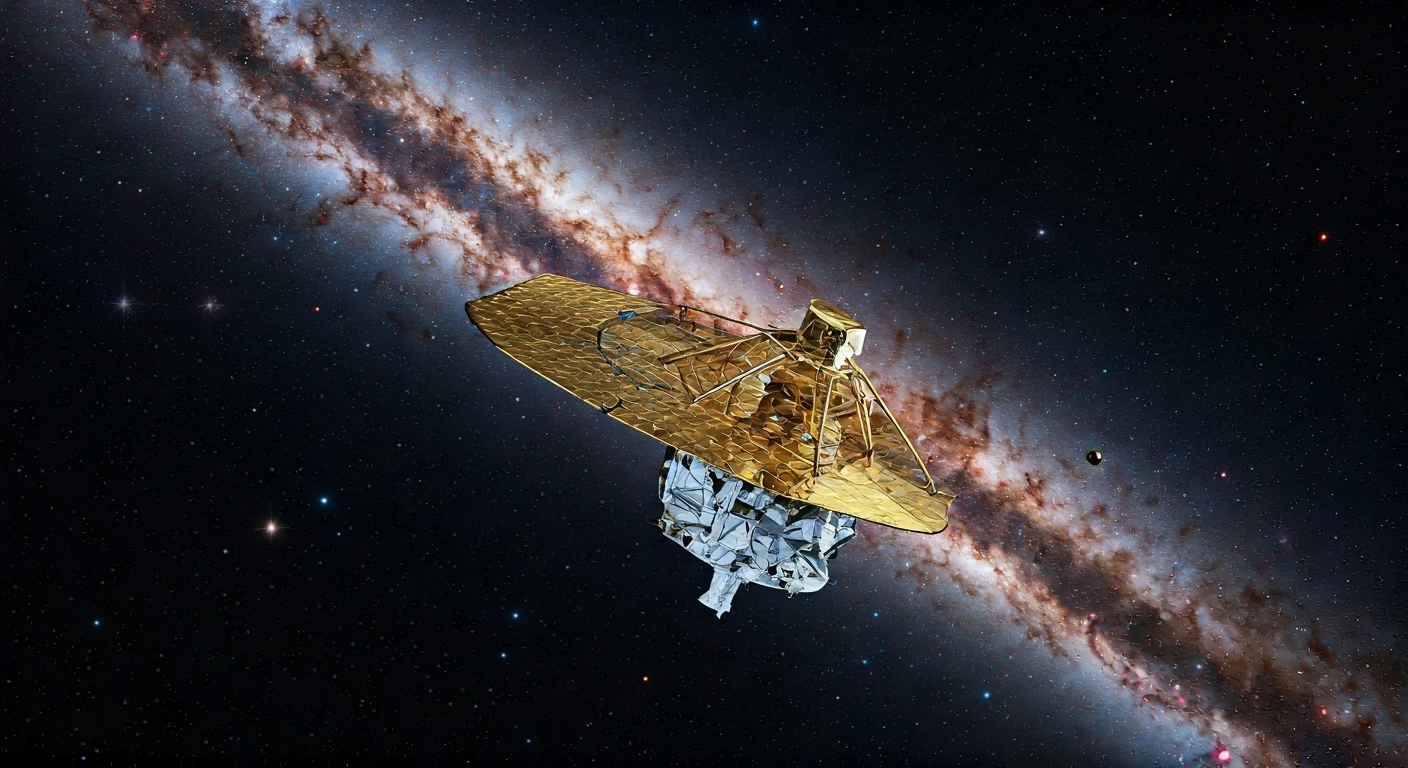
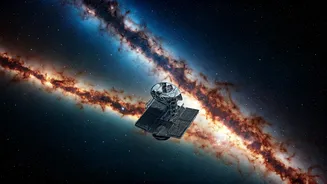
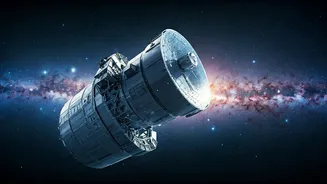
The star of the show is the Nancy Grace Roman Space Telescope, NASA's next-generation flagship astrophysics mission. [14] Named after Dr. Nancy Grace Roman, NASA's first chief of astronomy who was instrumental in making the Hubble Space Telescope a reality,
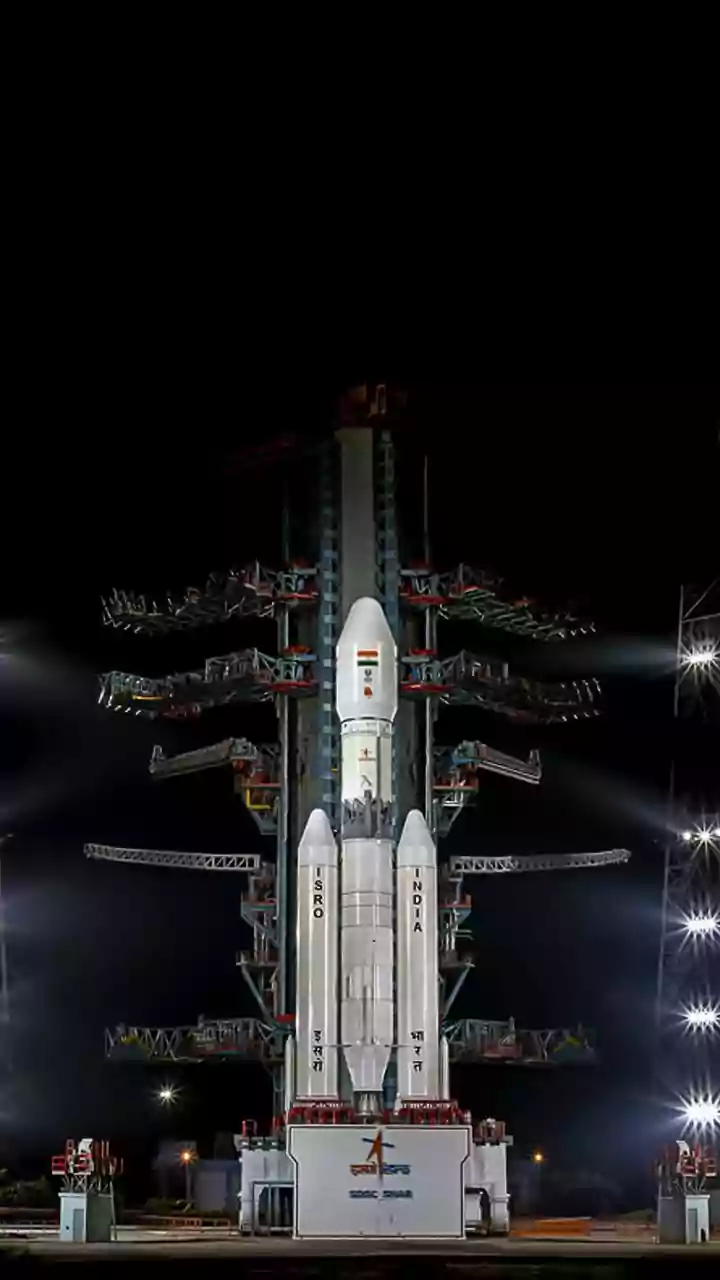
this new observatory is engineered for discovery on a cosmic scale. [20] At its heart is a 2.4-meter primary mirror, the same size as Hubble's, but with a critical difference: its Wide-Field Instrument (WFI) will provide a field of view 100 times larger than Hubble's iconic infrared camera. [22] This means that where Hubble might show an individual star or a small cluster, Roman will capture an entire star-forming nebula in a single shot. The telescope is scheduled to launch on August 30, 2026, aboard a powerful SpaceX Falcon Heavy rocket from NASA's Kennedy Space Center in Florida. [14, 19, 20]
Unveiling the Dark Universe
One of Roman's primary objectives is to tackle two of the biggest puzzles in cosmology: dark energy and dark matter. Together, these enigmatic components are believed to make up roughly 95% of the universe, yet they remain almost entirely mysterious. Roman will survey billions of galaxies across vast stretches of space and time to map the expansion history of the universe. By precisely measuring the distances and shapes of these galaxies, scientists hope to understand how dark energy, the force thought to be accelerating cosmic expansion, has behaved throughout history. [22] This grand survey will create a monumental 3D map of the cosmos, offering unprecedented insight into the growth of cosmic structures and the fundamental forces that govern them.
The Search for New Worlds
Beyond cosmology, the Roman Space Telescope is a formidable planet-hunting machine. While missions like Kepler and TESS looked for the telltale dimming of a star as a planet passes in front of it, Roman will primarily use a different technique called gravitational microlensing. [22] This phenomenon, predicted by Einstein's theory of general relativity, occurs when a massive object like a star or planet passes in front of a more distant star. The gravity of the foreground object acts like a lens, briefly magnifying the light from the background star. This method is sensitive enough to find planets of all sizes, including rogue planets that wander through space untethered to a star. Roman's microlensing survey is expected to discover thousands of new exoplanets, providing a new statistical census of planetary systems throughout our galaxy.
A New Era of Discovery
In addition to its two main surveys, Roman is equipped with a Coronagraph Instrument, a technology demonstration designed to directly image giant exoplanets by blocking out the overwhelming glare of their host stars. [20, 22] This is a crucial step toward the ultimate goal of imaging Earth-like planets. The telescope recently arrived at Kennedy Space Center after completing assembly and testing at NASA's Goddard Space Flight Center, and it is now undergoing final preparations for its journey. [19] By launching in August, the mission is reportedly eight months ahead of its formal schedule. [19] Positioned at the second Sun-Earth Lagrange point (L2), about 1.5 million kilometers from Earth, the Roman Space Telescope will have an unobstructed view of the cosmos, building on the legacies of Hubble and the James Webb Space Telescope to usher in a new era of astronomical discovery. [20]