





The Science of a Soft Roti
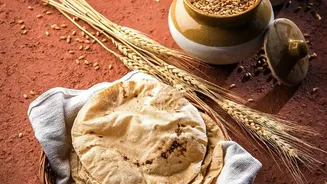
A perfect roti puffs up on the tawa because steam gets trapped between its layers, cooking it from the inside out. This process, known as gelatinization, is what gives a fresh roti its soft, pliable texture. For this to happen, the dough needs to be elastic
and well-hydrated. The key is forming a strong gluten network during kneading, which gives the dough its structure and stretchiness. This network acts like a balloon, holding the steam that makes the roti inflate. If the dough is too dry or not rested enough, the gluten remains tight and the roti won't puff correctly, resulting in a dense, hard flatbread.
Why Surface Drying Is the Enemy
When a rolled roti sits out for even a few minutes, its surface begins to lose moisture to the air. This causes a thin, dry crust to form on the top layer of the dough. While it might seem insignificant, this dry layer is far less elastic than the moist dough underneath. When you place this roti on a hot tawa, the dry surface can't stretch and expand properly. As steam builds up inside, it struggles to lift the stiff top layer, preventing the roti from puffing up fully. Instead of a light, airy pocket, you get a flat, unevenly cooked chapati that can quickly become tough and leathery as it cools.
The 'Roll and Cook' Assembly Line
The most effective way to combat surface drying is to adopt an assembly-line workflow. Roll one roti and place it on the preheated tawa immediately. While that first roti is cooking for about 15-20 seconds on the first side, you can begin rolling the next one. By the time you need to flip the first roti and attend to it, you've made progress on the next. This continuous process ensures that no rolled roti is left exposed to the air for more than a few moments. This simple change in rhythm is one of the most powerful techniques for guaranteeing that each roti has the best possible chance to puff up perfectly and stay soft.
Keeping the Main Dough Hydrated
Preventing dryness starts even before you roll. The main ball of dough must also be protected from the air. After kneading, it's crucial to let the dough rest for at least 20-30 minutes. During this resting period, cover the bowl with a damp cloth or a lid. This allows the gluten to relax and the flour to absorb water evenly, making the dough more pliable. Some cooks also apply a thin layer of oil or ghee over the dough before resting it to create a barrier that locks in moisture. Keeping the dough well-hydrated from the start is fundamental to achieving soft rotis.
More Secrets to the Perfect Puff
Beyond timing, a few other factors are critical. Always cook on a properly preheated tawa; a pan that isn't hot enough will slowly dry out the roti instead of cooking it quickly. Medium-high heat is ideal. Uneven rolling can also lead to hard spots, so aim for a uniformly thin circle. Using warm water or milk to knead the dough can also result in a softer, more manageable texture. Finally, once cooked, stacking the hot rotis on top of each other in a cloth-lined, insulated container traps residual steam, which helps keep them soft and moist for longer.