



Days 1-2: Jaipur and its Textile Villages
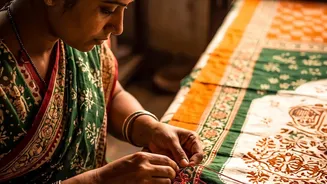
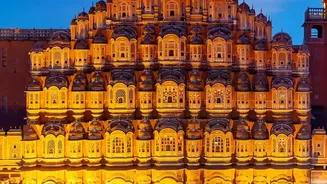
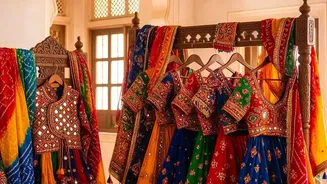
Your journey begins in Jaipur, the Pink City, a hub for a dazzling array of crafts. While the city's markets are tempting, the real magic lies just outside. Dedicate a day to visiting the nearby villages of Sanganer and Bagru, the epicentres of Rajasthani
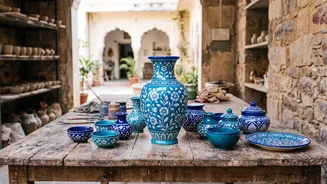
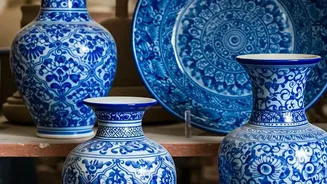
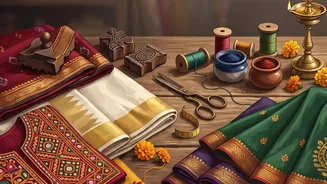
block printing. In Bagru, you can witness the ancient 'dabu' mud-resist technique, where artisans use natural dyes like indigo and madder to create earthy, geometric patterns. Sanganer, in contrast, is known for its delicate floral motifs on crisp white backgrounds. Many workshops, such as those run by Jai Texart or Studio Bagru, offer hands-on sessions. For a few hours, you can learn directly from a craftsman, try your hand at the printing process, and create your own scarf or tote bag. Back in Jaipur, explore the world of Blue Pottery, a craft with Persian origins that uniquely uses quartz powder instead of clay. Visiting a studio like Ram Gopal Blue Pottery allows you to see the entire process, from shaping the quartz dough to the intricate hand-painting of cobalt blue designs, and even paint a tile yourself.
Day 3: The Blue City of Jodhpur
A train or car ride takes you to Jodhpur, the Sun City, famed for its imposing Mehrangarh Fort and vibrant blue houses. It's also the home of the 'mojari', the traditional Rajasthani leather footwear. Historically, the Mochi and Jingar communities crafted these shoes for royalty. Today, you can still find families in areas like Jingar Mohalla who have been making mojaris for generations. Visiting a workshop allows you to bypass the mass-produced versions sold in markets. Here, you can watch artisans cut, stitch, and embroider the leather by hand. The embroidery is often done by the women of the family, who create intricate patterns with golden thread directly onto the leather. The benefit of buying direct is not just authenticity but also the possibility of getting a pair custom-fitted, ensuring a level of comfort and quality that is hard to find elsewhere.
Day 4: Udaipur's Royal Artistry
Your next stop is Udaipur, the city of lakes, renowned for its romantic palaces and as a centre for one of India's most delicate art forms: miniature painting. This tradition, once patronised by the royal courts of Mewar, involves creating incredibly detailed artworks using fine brushes often made from squirrel hair and natural stone pigments. Numerous studios and art schools in the Old City, such as Indigo Art School, offer workshops for visitors. Under the guidance of a master artist, you can learn the painstaking techniques and create your own small masterpiece. The experience offers a profound appreciation for the skill and patience required, transforming your perception of these artworks from mere souvenirs into testaments of a living heritage.
Day 5: The True Value of Direct Shopping
The final day is a chance to reflect on the 'value' added. Shopping directly from artisans is about more than just a lower price or a unique product. It is an act of participation in a cultural ecosystem. By cutting out the layers of middlemen, a larger portion of the money you spend goes directly to the creators and their families, sustaining their households and communities. This economic support is crucial for the survival of generational skills that are constantly threatened by mass production. Furthermore, the experience itself is invaluable. You leave not just with a beautiful object, but with the story of its creation, a personal connection to the person who made it, and a deeper understanding of Rajasthan's cultural fabric. The memory of sharing a cup of chai in a dusty workshop is a far more lasting souvenir than any item bought from a crowded shop.