






First, What Is This 'New' Fee?
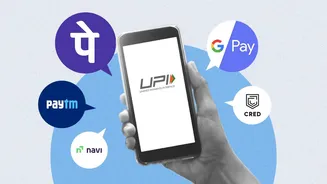
You may have seen headlines about a charge on UPI transactions. This isn't a fee for all UPI payments. The National Payments Corporation of India (NPCI) has introduced what is called an 'interchange fee'. This fee applies only to a specific type of transaction:
when a customer pays a merchant using a prepaid wallet (like Paytm Wallet, PhonePe Wallet, or Amazon Pay Wallet) via UPI, and the transaction amount is over ₹2,000. This is not a blanket charge on all UPI use. Your everyday bank-to-bank UPI transfers remain completely free.
So, Do Shoppers Pay This Fee?
In short, no. The fee is not directly charged to the customer making the payment. Instead, it is a merchant-side cost. The interchange fee is paid by the merchant's bank to the company that issued the customer's prepaid wallet (the PPI issuer). This system is designed to create a sustainable revenue model for payment service providers who incur costs for processing these transactions. Think of it like the Merchant Discount Rate (MDR) that has long existed for credit and debit card payments, which is also borne by the merchant, not the customer at the point of sale.
Which Transactions Are Actually Affected?
This is the most important point of clarification. The vast majority of UPI transactions are not affected by this fee. According to NPCI, over 99.9% of all UPI payments are direct bank-account-to-bank-account transfers, which remain free for both customers and merchants. The interchange fee only kicks in under three specific conditions met together: it is a payment to a merchant, the payment is made from a prepaid wallet (PPI), and the transaction value is ₹2,000 or more. Payments you make to friends or family (peer-to-peer) are completely exempt, regardless of the amount.
Why Was This Fee Introduced?
For years, the UPI ecosystem has operated on a zero-fee model to encourage mass adoption. This strategy was incredibly successful, making UPI the backbone of India's digital economy. However, running this massive infrastructure—including the technology, security, and processing power—is not free. Banks and payment companies have been bearing these costs. The introduction of a targeted interchange fee for higher-value, wallet-based commercial transactions is a step towards making the ecosystem financially self-sustaining without burdening the average user for their daily transactions.
How Could This Indirectly Affect Shoppers?
While you won't see a 'UPI fee' on your bill, the cost could still find its way back to you indirectly. Merchants facing this new cost on larger transactions have a few options. They could absorb the fee as a cost of doing business. However, some might choose to discourage customers from using wallets for payments over ₹2,000. Another possibility is that some businesses may slightly increase their overall prices to offset these new operational costs. While regulators have advised merchants against passing the fee directly to consumers, the long-term market reaction is still unfolding.