


A Long and Winding Road
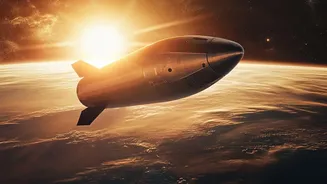
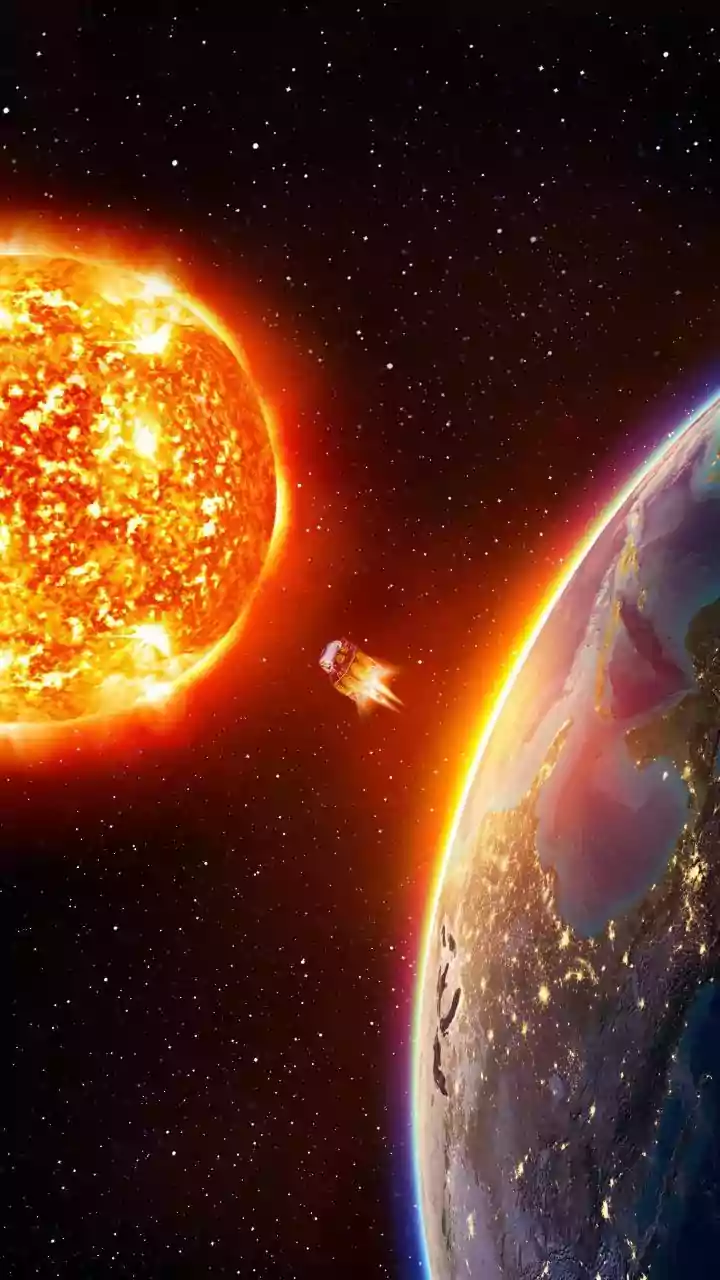
Getting to Mercury is incredibly difficult. Launched in October 2018, the joint European Space Agency (ESA) and Japan Aerospace Exploration Agency (JAXA) BepiColombo mission has travelled billions of kilometres. To slow down against the Sun's immense
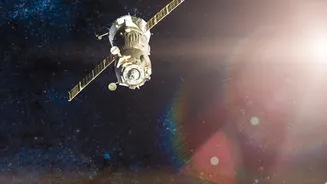
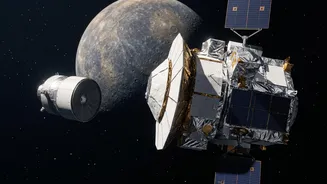
gravity, the spacecraft performed nine planetary flybys: one of Earth, two of Venus, and six of Mercury itself. The journey was extended after a solar panel issue in 2024 required engineers to plot a new, lower-thrust trajectory, pushing the arrival from 2025 to late 2026. On September 3, 2026, the mission took a huge step forward when the Mercury Transfer Module (MTM), which provided power and propulsion for the long cruise, successfully separated from the two science orbiters. This event marked the official start of the arrival phase.
Two Spacecraft, Two Complementary Goals
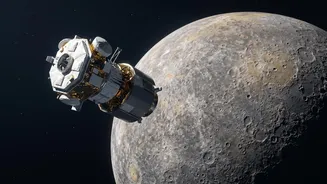
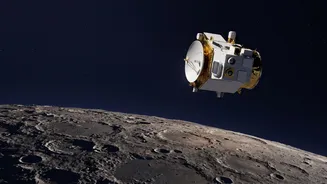
BepiColombo isn't one spacecraft, but a trio that travelled together. With the MTM now detached, the remaining stack consists of two orbiters: ESA’s Mercury Planetary Orbiter (MPO) and JAXA’s Mercury Magnetospheric Orbiter, nicknamed Mio. This dual-spacecraft approach is a first for Mercury exploration. The two orbiters are designed to work in tandem from different orbits, providing a more complete picture of the planet than any single mission could. The composite craft is scheduled to enter a preliminary orbit around Mercury on November 21, 2026.
The Great Separation
The next major milestone will be the separation of the two science orbiters from each other. Around December 9-10, 2026, JAXA's Mio will be released from the MPO. Following this, the MPO will jettison the sunshield that protected Mio during the long journey. Both spacecraft will then perform a series of complex manoeuvres to settle into their final, distinct scientific orbits. This separation is the crucial moment that transitions BepiColombo from a single cruising spacecraft into a coordinated, multi-point observatory. Scientific operations are expected to begin in earnest by April 2027.
MPO: Mapping a Scorched World
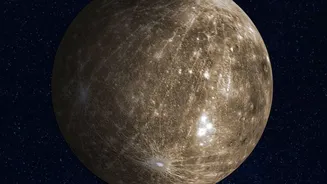
ESA's Mercury Planetary Orbiter (MPO) will fly in a low, circular polar orbit, focusing on the planet itself. Its primary job is to create comprehensive maps of Mercury's surface, studying its geology, craters, and chemical composition. It will investigate the planet's unusually large iron core, which makes up a staggering 55% of the planet's volume. The MPO is equipped with 11 instruments, including spectrometers and a laser altimeter, to probe the surface and what lies beneath. It will operate in an extreme environment, with one side facing the planet's scorching heat while the other radiates that heat away into deep space.
Mio: Unlocking Magnetic Mysteries
JAXA's Mio orbiter will enter a different, more elliptical orbit, allowing it to study the space around Mercury. Its main goal is to investigate Mercury’s surprising magnetic field. For a small, slowly rotating planet, Mercury's magnetic field is unexpectedly active, a mystery that has puzzled scientists. Mio will study how this magnetic field interacts with the constant stream of particles from the Sun, known as the solar wind. Its five instrument suites will measure plasma particles, waves, and the planet's thin sodium atmosphere, known as an exosphere. Together with MPO, Mio will help us understand why Mercury is one of only two terrestrial planets, alongside Earth, to have a global magnetic field.
Why Mercury Still Baffles Scientists
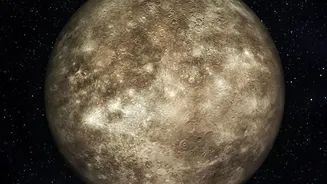
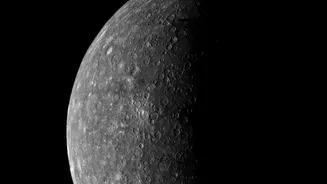
Previous missions like NASA's Mariner 10 and MESSENGER revealed a world of contradictions, making Mercury one of the solar system's most enigmatic planets. Scientists are still unsure why the planet is so dense, with theories ranging from a massive ancient collision that stripped away its lighter crust to the Sun's radiation vaporizing its early surface. Another major puzzle is the confirmed presence of water ice in permanently shadowed craters at the poles, despite surface temperatures elsewhere hot enough to melt lead. By providing two simultaneous viewpoints, BepiColombo's MPO and Mio hope to finally provide the data needed to solve these and other long-standing mysteries about the formation of planets in our solar system.