


A Journey Through Time
While the jalebi feels quintessentially Indian, its story begins far beyond our borders. Believed to have originated in the Middle East as 'zalabiya', this sweet delicacy travelled to India with Persian-speaking invaders and traders centuries ago. By
the 15th century, it was firmly embedded in our culture. The Jain writer Jinasura described it in his work 'Priyamkarnrpakatha' (1450 CE) as a treat served at gatherings of wealthy merchants. From a foreign import to a beloved staple, the jalebi’s journey is a testament to India's ability to adopt, adapt, and fall in love with new flavours, making them irrevocably our own. Today, it’s hard to imagine a festive celebration or a bustling street-corner market without its familiar, inviting presence.
The Hypnotic Spiral
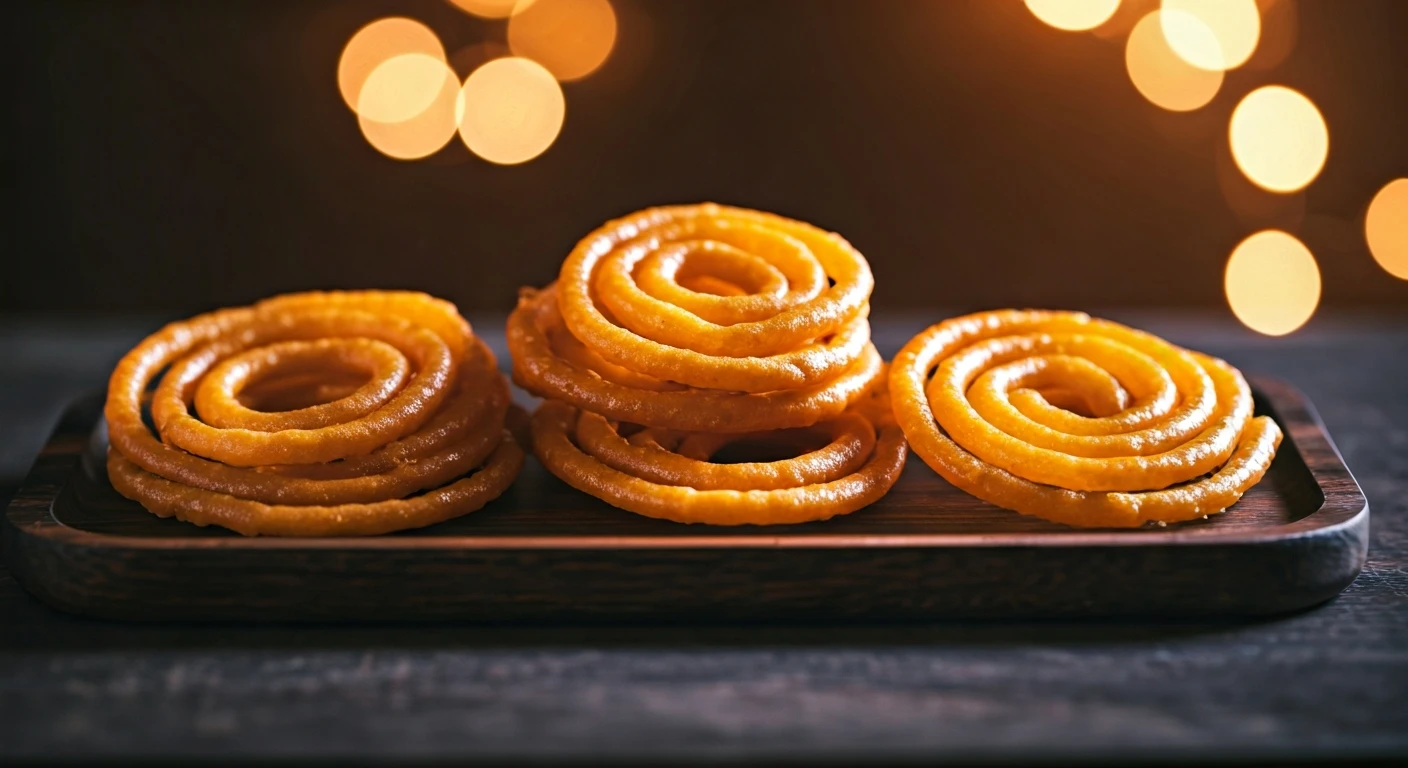
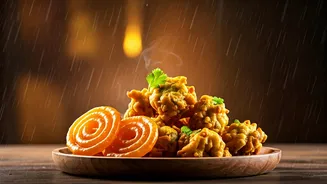
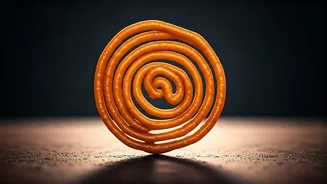
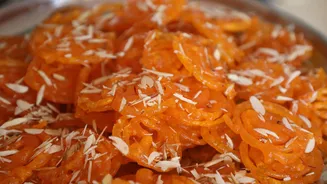
Part of the jalebi's charm lies in the theatre of its creation. Watching a halwai at work is mesmerising. A thin stream of fermented batter, made from maida (all-purpose flour), is expertly piped in concentric, chaotic circles into a wide kadai of hot oil or ghee. The batter puffs up almost instantly, transforming from a liquid into a crisp, golden lattice. These fragile spirals are then fished out and plunged into a warm bath of sugar syrup, often scented with cardamom, saffron, or rose water. The final creation is a marvel of texture—crispy on the outside, with a slightly chewy, dense interior that has soaked up the perfect amount of fragrant sweetness. Each jalebi is unique, a one-of-a-kind piece of edible art.
A Bite for Every Occasion
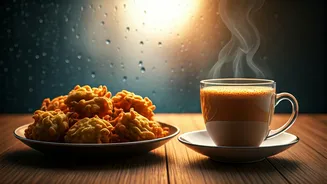
The jalebi is a sweet of incredible versatility. It is not confined to being an after-dinner dessert. In many parts of North India, a plate of hot jalebis served with creamy rabri is a decadent breakfast, especially during winter. In states like Madhya Pradesh, it's famously paired with savoury poha, creating a delightful sweet-and-salty combination that locals swear by. During festivals like Diwali and Dussehra, massive piles of jalebis are prepared to be shared with family and friends, symbolising joy and togetherness. It's the go-to treat for celebrating good news, be it an exam result or a new job. It is comfort food on a rainy day, a quick indulgence from a street vendor, and a centerpiece on a wedding platter. This adaptability is key to its timeless appeal; there is always a good reason to have a jalebi.
An Unforgettable Sensation
Ultimately, the jalebi’s enduring charm comes down to the pure, unadulterated joy it delivers with every bite. The experience is multi-sensory. It’s the vibrant, almost fluorescent orange colour that catches your eye. It’s the sticky feeling on your fingers that you can’t help but lick clean. It’s the loud, satisfying crunch as you bite into the crystalline shell, followed by the immediate gush of warm, sweet syrup that floods your mouth. This textural contrast—the perfect marriage of crisp and soft, crunchy and chewy—is what makes the jalebi so addictive. It’s a simple pleasure, yet one that is complex and deeply satisfying, evoking memories of childhood, festivals, and shared moments of happiness.