






Understanding El Niño's Global Reach
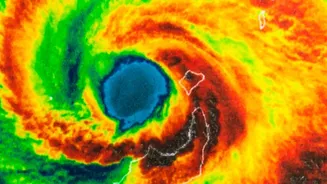
El Niño is a naturally occurring climate pattern characterized by the unusual warming of sea surface temperatures in the central and eastern equatorial Pacific Ocean. It's one phase of a larger cycle called the El Niño-Southern Oscillation (ENSO). Think
of it as a massive redistribution of heat in the ocean, which in turn disrupts atmospheric circulation patterns across the globe. Normally, strong trade winds blow from east to west, piling up warm water in the western Pacific near Asia. During an El Niño, these winds weaken, allowing the warm water to shift eastward, toward the coast of South America. This change, happening thousands of kilometres away, sets off a chain reaction that influences weather worldwide.
The Critical El Niño-Monsoon Connection
For India, the most significant consequence of El Niño is its potential to weaken the southwest monsoon. The monsoon is a complex system driven by temperature and pressure differences between the Indian subcontinent and the surrounding oceans. El Niño alters this delicate balance. The shift in warm water and atmospheric pressure in the Pacific can disrupt the circulation patterns that typically draw moisture-laden winds from the Indian Ocean towards India, resulting in suppressed rainfall. However, it's important to note that not every El Niño year leads to a drought in India. Other climate factors, like the Indian Ocean Dipole (IOD), can sometimes counteract El Niño's drying effect. Still, a strong El Niño significantly increases the probability of a below-normal monsoon.
Impact on Agriculture and Water Security
With nearly half of India's farmland being rain-fed, the performance of the monsoon is critical for the agricultural sector and the livelihoods of millions of farmers. A weak or erratic monsoon, often associated with El Niño, can lead to delayed sowing, reduced crop yields, and even crop failure. This directly affects the production of key kharif crops like rice, soybeans, and cotton. The impact extends beyond the fields to the nation's water security. The monsoon replenishes over 70% of the country's annual water supply, filling reservoirs that are essential for drinking water, irrigation during the dry season, and hydroelectric power generation. A deficit in monsoon rains can lead to depleted reservoirs, straining water resources for both urban and rural populations.
Economic Ripples and Inflationary Pressures
The effects of a poor monsoon quickly ripple through the entire economy. Reduced agricultural output shrinks farm incomes, which in turn dampens rural demand for goods and services. More visibly for urban consumers, lower crop production leads to food shortages and a spike in food prices, driving up inflation. This can put pressure on household budgets and force the government to implement costly measures like importing food staples and offering financial relief to farmers. The energy sector can also feel the strain, as lower reservoir levels reduce hydropower capacity at the same time that hotter, drier weather increases the demand for electricity for cooling and irrigation pumping.
The 2026 Outlook and Proactive Planning
For 2026, the India Meteorological Department (IMD) has forecast below-normal rainfall for August, with moderate El Niño conditions expected to persist and strengthen through the rest of the season. Forecasters at NOAA have warned that the developing El Niño could become one of the strongest on record by the end of the year. In response, the Indian government has shifted into preparedness mode, advising farmers to switch to short-duration, drought-tolerant crop varieties. Contingency plans are being activated, especially for the 150-200 districts identified as most vulnerable to El Niño's impact. These plans involve promoting water conservation techniques, ensuring the availability of alternative seeds, and preparing for potential drought relief measures to safeguard farmers' livelihoods.