






Why Airlines Have Strict Battery Rules
Airlines and aviation bodies like India's Directorate General of Civil Aviation (DGCA) aren't trying to make travel difficult; their primary concern is safety. Batteries, particularly the lithium-ion ones found in most modern devices, store a significant
amount of energy. If damaged or short-circuited, they can overheat and cause fires that are extremely difficult to extinguish in a pressurised aircraft cabin. The rules are in place to minimise this risk, ensuring the safety of everyone on board. These regulations are based on international standards set by the International Air Transport Association (IATA), so they are similar across most global airlines.
The First Step: Know Your Battery Type
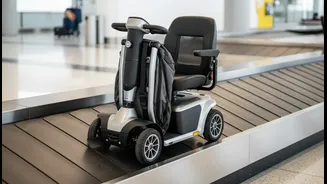
Before you even book your ticket, you need to identify what kind of battery your mobility device uses. The rules vary significantly depending on the type. The three main categories are: Non-Spillable Wet Batteries or Dry-Cell (like sealed lead-acid or gel): These are generally allowed as checked-in baggage. The battery can often remain attached to the wheelchair, provided it is securely fastened and the electrical circuits are isolated to prevent accidental activation. Any spare batteries must be packed in strong, rigid packaging and also checked in. Spillable Wet Batteries: These are almost universally forbidden on passenger flights due to the risk of corrosive liquid leaking. IndiGo explicitly states they will not accept wheelchairs with wet-cell batteries. Lithium-Ion (Li-ion) Batteries: These are the most common type in modern devices but also have the strictest rules. The regulations for these depend on their energy capacity, measured in Watt-hours (Wh).
The Golden Rule: Inform Your Airline in Advance
Regardless of your battery type, you must inform the airline about your powered mobility device when you book, or at least 48 hours before your flight. Airlines need this time to make the necessary arrangements and verify that your device complies with their regulations. Many airlines, like Air India, have a specific 'Battery Powered Wheelchair Information Form' that you need to fill out and submit. When you call, be prepared to provide the make and model of your device, its dimensions and weight, and full details about the battery type and its Watt-hour rating if it's a lithium-ion battery.
Navigating Lithium-Ion Battery Regulations
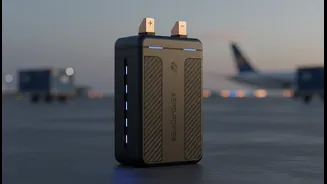
If your device has a lithium-ion battery, the rules get more specific. If the battery is designed to remain in the device and is well-protected by the chair's frame, there is often no Watt-hour limit for the installed battery. However, the rules change if the battery must be removed. For removed batteries or any spares, specific limits apply. A single battery must not exceed 300 Wh. If you are carrying two spare batteries, neither can exceed 160 Wh. All spare lithium-ion batteries must be carried in your cabin baggage—never in checked luggage. You must also protect the terminals from short-circuiting by taping them over or placing each battery in a protective pouch or its original packaging.
At the Airport: Check-In and Boarding
Plan to arrive at the airport early, at least three hours before an international flight and two hours for a domestic one. This gives you ample time for the special handling required. Have a copy of your wheelchair information form and any manufacturer's documentation for the battery handy for verification. You can typically use your own device up to the boarding gate. At the gate, airline staff will take the device to be stored in the aircraft's hold. If the battery needs to be removed, this is when you will do it and take it with you into the cabin. Upon arrival, the airline should make every effort to return your wheelchair to you as close to the aircraft door as possible.