





A New Eye in the Martian Sky
The latest breakthrough in Martian exploration isn’t a new rover or lander, but a significant leap in software and data analysis. The “upgrades” refer not to new hardware being sent to Mars, but to sophisticated new algorithms and machine learning models
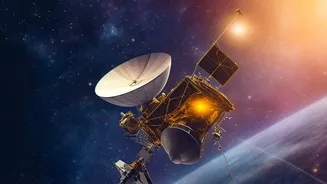
being applied to data from long-serving orbiters like NASA’s Mars Reconnaissance Orbiter (MRO). These powerful new tools process images and atmospheric data from instruments like the Mars Climate Sounder and Mars Color Imager (MARCI), which create daily global weather maps. By integrating data from multiple orbiters—including MRO, Odyssey, and MAVEN—and using AI to identify patterns, scientists can now forecast the development, movement, and intensity of dust storms with greater precision than ever before. This transforms Martian weather monitoring from simple observation into a powerful predictive science, akin to modern hurricane tracking on Earth.
The Red Planet's Dusty Menace
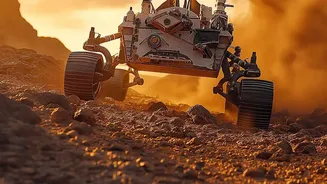
To understand why this matters, one needs only to look at the fate of the Opportunity rover. After an incredibly successful 15-year mission, the solar-powered rover was engulfed by a planet-encircling dust storm in 2018. The storm grew so thick that it blocked 99% of direct sunlight, preventing Opportunity from recharging its batteries. The rover eventually fell silent, a powerful reminder of how vulnerable our technology is to the harsh Martian environment. These are not trivial storms; they can grow to the size of continents and persist for months. The fine Martian dust, rich in iron oxide, gets into everything. It coats solar panels, blinds optical sensors, and poses a threat to mechanical parts. Even nuclear-powered rovers like Curiosity and Perseverance, while not dependent on sunlight for energy, rely on clear conditions for navigation and science operations.
From Weather Report to Precision Forecasting
The new system represents a paradigm shift. Previously, orbiters could spot a storm as it formed, providing a snapshot of the current weather. Now, by feeding years of historical data into advanced machine learning models, scientists can predict a storm's trajectory and how it will evolve. These models learn the complex physics of the Martian atmosphere, including how airborne dust absorbs sunlight, which in turn heats the atmosphere and can create feedback loops that intensify a storm. This predictive capability allows mission controllers on Earth to make proactive decisions. Instead of reacting to a storm that has already arrived, they can receive warnings days in advance. This lead time is critical for taking protective measures, such as commanding a rover to a safer location, turning sensitive instruments away from the wind, or placing the entire craft into a low-power hibernation mode to conserve energy until the sky clears.
Safeguarding Our Robotic Pioneers
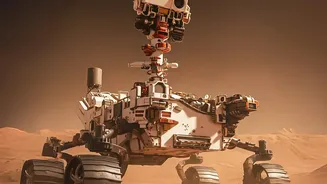
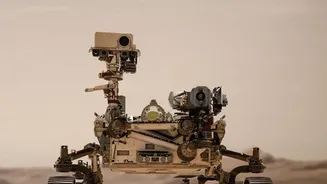
The immediate beneficiaries of this technology are the active missions on Mars. The solar-powered Ingenuity helicopter, for instance, is highly susceptible to atmospheric conditions, and accurate forecasting is essential for planning its flights. Landers like InSight, which recently concluded its mission due to dust accumulation on its solar panels, have shown just how critical power management is. For the nuclear-powered Perseverance rover, the danger is less about power and more about operational efficiency and safety. Precise weather forecasts help in planning drives and drilling operations, ensuring that the multi-billion-dollar asset is not put at unnecessary risk. These upgrades effectively provide an insurance policy for some of humanity’s most ambitious and expensive scientific endeavours. By improving our ability to forecast the weather, we extend the life and increase the scientific return of every mission we send.