



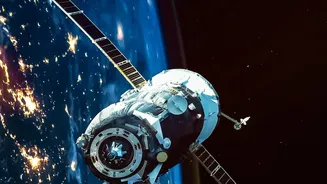
Meet 'Pushpak': India's Space Shuttle
The vehicle at the heart of this ambition is the Reusable Launch Vehicle - Technology Demonstrator (RLV-TD), affectionately named 'Pushpak'. Unlike conventional rockets that are discarded after a single use, Pushpak is designed to function like a spaceplane.
It launches vertically, deploys its payload in orbit, and then re-enters the atmosphere, landing horizontally on a runway just like an aircraft. This concept is a cornerstone of ISRO's strategy to develop a Two-Stage-to-Orbit (TSTO) launch system, where the most expensive components can be flown again and again. The recent series of landing experiments (LEX) have been crucial in proving the autonomous capabilities of this uncrewed, robotic vehicle, bringing this futuristic vision closer to reality.
The Challenge of a Perfect Landing
The most recent tests have focused on mastering the incredibly complex phase of autonomous landing. In a series of experiments conducted at the Aeronautical Test Range in Chitradurga, Pushpak was lifted to an altitude of 4.5 kilometres by an Indian Air Force Chinook helicopter and released. From there, the vehicle had to navigate on its own, executing complex manoeuvres to correct its path and align with the runway for a high-speed landing. The final test in June 2024 was the most challenging, with the vehicle released further away from the runway and under more severe wind conditions. Pushpak autonomously corrected its course, touched down precisely on the centreline at a speed exceeding 320 kmph, and used a brake parachute to safely come to a stop. These successful trials have validated ISRO's mastery over the critical navigation, guidance, and control systems needed for a vehicle returning from space.
The Billion-Dollar Question of Cost
The primary driver behind the RLV program is economics. Traditionally, the cost of a rocket's hardware accounts for the vast majority of a space launch's price tag. By creating a reusable system, ISRO aims to slash the cost of delivering a kilogram of payload to Low Earth Orbit by as much as 80 percent, potentially from around $20,000 down to $4,000. This dramatic cost reduction would not only benefit India's national missions but also make ISRO an even more formidable competitor in the global commercial launch market, a sector currently dominated by players like SpaceX who have already proven the economic viability of reusable rockets. Cheaper access to space opens doors for deploying large satellite constellations, more frequent scientific missions, and new commercial opportunities that were previously too expensive to consider.
From Self-Reliance to Global Ambition
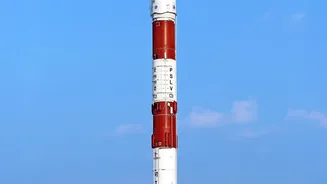
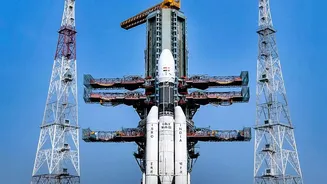
The Pushpak program is a powerful symbol of India's long-standing culture of frugal engineering and self-reliance in space technology. Having successfully developed its own cryogenic engines and launch vehicles like the PSLV and GSLV, ISRO is now taking the next logical step towards full reusability. This capability is not just about saving money; it's about strategic autonomy and securing India's place as a leading space power. While the current focus remains on perfecting the technology—with the next major step being an orbital re-entry test—the long-term vision is clear. By making space access affordable and routine, ISRO aims to boost India’s share of the global launch market fivefold in the coming decade and solidify its reputation as a hub for cost-effective, reliable space exploration.