




Start With the Back, Not the Front
The front of a package is prime marketing real estate, designed to catch your eye with appealing words and images. The real story, however, is on the back. This is where the Food Safety and Standards Authority of India (FSSAI) mandates that companies
provide factual information. While the front might shout "High Fibre," the back tells you exactly how much. Recently, FSSAI has been cracking down on misleading front-of-pack claims, forcing major brands to revise their packaging. To make things even simpler for consumers, India is also in the process of rolling out a Front-of-Pack Labelling (FoPL) system called the Indian Nutrition Rating (INR). This will display a star rating from 0.5 (least healthy) to 5 (healthiest) on the front, giving you a quick snapshot of the product's nutritional value.
The Ingredients List Tells the Real Story
This is arguably the most important part of any food label. FSSAI regulations require that ingredients be listed in descending order by weight. This means the first three ingredients make up the bulk of what you're eating. If you see sugar, maida (refined wheat flour), or palm oil listed first, you know the product is primarily made of these, regardless of any health claims. Also, be aware of hidden sugars. Companies often use multiple types of sweeteners like glucose syrup, fructose, or fruit juice concentrate so that "sugar" doesn't appear as the top ingredient.
Navigating the Nutrition Facts Table
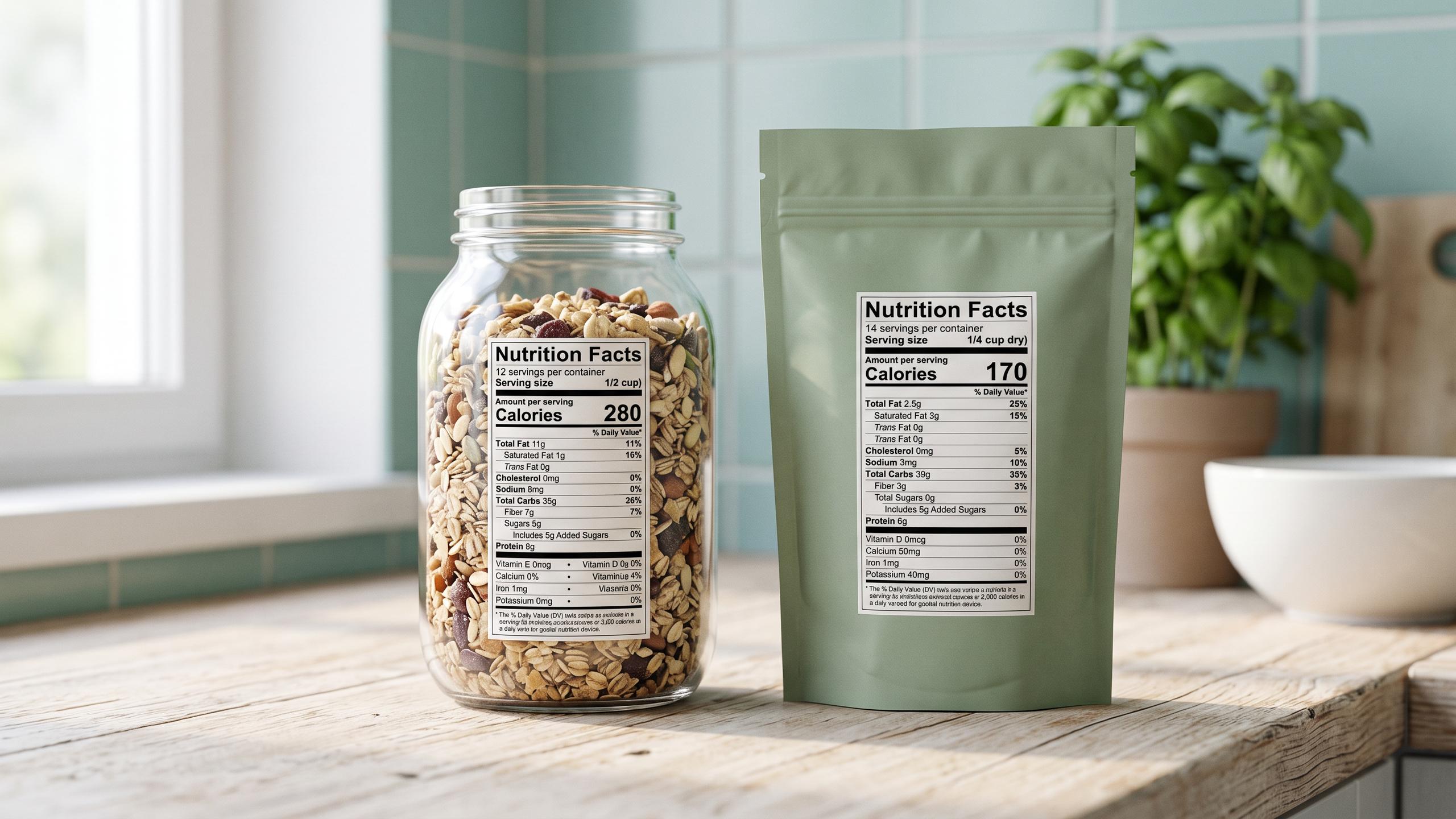
The nutrition panel can seem complex, but focus on a few key areas. First, check the serving size. Manufacturers often list a small serving size to make the calorie and sugar counts seem lower. A packet of biscuits might list nutrition information for just two biscuits, but most people eat more. Always check the values "per 100g" for a more standardized comparison between products. A 2024 FSSAI amendment now requires that Total Sugar, Saturated Fat, and Sodium be listed in bold and a larger font, making these key nutrients easier for consumers to spot. Pay close attention to these, as they are linked to non-communicable diseases.
Beware of Misleading Health Buzzwords
Many terms used on packaging are not strictly regulated and can be misleading. Here are a few common ones: "Natural": This term does not have a tight legal definition unless it's a single-ingredient product with minimal processing. A processed, multi-ingredient snack labelled "natural" may still be high in sugar or sodium. "No Added Sugar": This simply means no sugar was added during manufacturing. The product can still be very high in natural sugars from fruit purees, concentrates, or dates. It does not mean the product is "sugar-free." "Multigrain": This means the product contains more than one type of grain, but the primary grain could still be refined flour (maida). Look for "Whole Wheat" or "Whole [Grain Name]" as the first ingredient for a genuinely higher-fibre option. "Organic": In India, a product can only be legally called "organic" if it carries a certification logo like the Jaivik Bharat logo, NPOP, or PGS-India. Without these logos, the claim is not verified.
Don't Forget the Mandatory Symbols
Every pre-packaged food item in India must display a few key symbols and declarations. Look for the FSSAI logo with its 14-digit license number, which shows the product is registered and compliant with food safety laws. You'll also find a mandatory symbol indicating whether the food is vegetarian (a green circle in a square) or non-vegetarian (a brown triangle in a square). Finally, FSSAI requires a specific declaration for the eight most common allergens, including milk, soy, peanuts, tree nuts, and gluten-containing cereals. This is usually in a separate box near the ingredients list and is crucial for anyone with food allergies or sensitivities.