


A New Window on the Universe
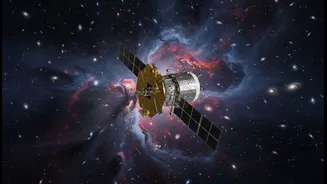
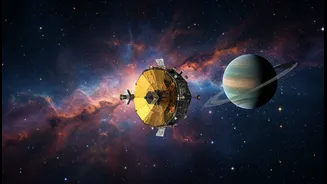
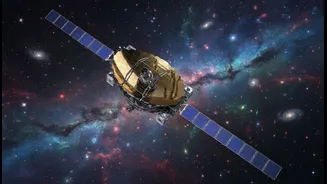
Set to launch by late 2026, the Nancy Grace Roman Space Telescope is not just another eye in the sky. Named after NASA's first Chief of Astronomy, Nancy Grace Roman, it is engineered to tackle some of the biggest questions in astrophysics. While the Hubble
Space Telescope zooms in on tiny patches of the sky with incredible detail, and the James Webb Space Telescope peers deep into the infrared universe, Roman offers something entirely different. It pairs the image sharpness of Hubble with a field of view at least 100 times wider. This isn't just an incremental improvement; it's a fundamental shift in our ability to survey the cosmos. Roman is designed for efficiency, capable of mapping vast regions of space thousands of times faster than Hubble. It achieves this with a 2.4-meter primary mirror—the same size as Hubble's—but coupled with an advanced 300-megapixel Wide Field Instrument. This allows it to capture panoramic images of the universe without sacrificing the crisp resolution that has made Hubble famous.
The Power of a Panoramic View
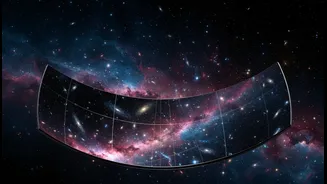
Roman's greatest strength is its immense 'scale' or field of view. Imagine trying to create a mosaic of a massive forest by taking photos of one leaf at a time. That’s similar to how Hubble operates. Roman, by contrast, can capture the entire forest in just a few snapshots. For example, to image the entirety of our neighboring Andromeda galaxy, Hubble would need to take hundreds of pictures. Roman could do it in just two. This wide-angle perspective is a game-changer for statistical studies of the universe. Instead of observing individual objects, Roman will conduct massive surveys, imaging billions of galaxies and stars. This capability will allow astronomers to create the largest-ever 3D maps of the universe, providing crucial data for understanding its structure and evolution on a grand scale. The observatory won’t replace the deep, focused views of Hubble or Webb; instead, it will act as a powerful cosmic scout, identifying targets and phenomena for its counterparts to study in more detail.
Sharpness Across the Sky
Having a wide view is only useful if the image is clear. This is where Roman's 'sharpness' comes in. The telescope is designed to deliver a resolution of 0.11 arcseconds per pixel, comparable to Hubble's infrared camera. Achieving this level of clarity across such a massive field of view is a major technological feat. It's like having a television screen the size of a wall with perfect 4K resolution from corner to corner. This combination is what truly sets Roman apart. While other survey telescopes can see large areas of the sky, they often do so with lower resolution. Roman offers the best of both worlds: the ability to see vast cosmic landscapes with the precision needed to distinguish faint, distant galaxies and individual stars within them. This will allow scientists to study the subtle warping of light from distant galaxies, an effect called weak gravitational lensing, with unprecedented precision. This phenomenon provides a way to map the distribution of dark matter, the invisible substance that makes up most of the universe's mass.
Tackling the Universe's Biggest Mysteries
With its unique capabilities, Roman is primed to address two of the most profound puzzles in modern science: dark energy and the census of exoplanets. Scientists will use Roman to study the expansion history of the universe by observing thousands of Type Ia supernovae—exploding stars that serve as cosmic distance markers. These observations will help determine if dark energy, the mysterious force causing the universe's accelerating expansion, has changed over time. In the hunt for worlds beyond our solar system, Roman will use a technique called gravitational microlensing. This method can detect planets with masses as small as Mars, as well as 'rogue' planets that drift through space without a host star. It is expected to discover thousands of exoplanets, providing a statistical census that will help us understand how common planetary systems like our own are throughout the galaxy.