




Decoding the 'Premium' Label
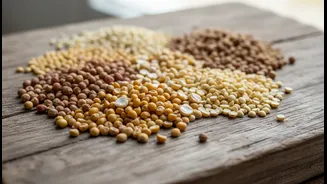
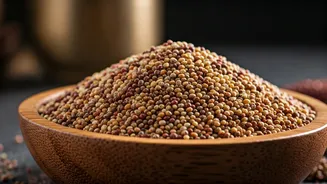
The term 'premium' on a millet packet isn't a government-regulated standard like 'organic'. Instead, it’s a marketing term used by brands to signify higher quality. This can refer to several things: it might be a rarer type of millet like Browntop, it could
be unpolished to retain more nutrients, or it might be sourced from specific organic farms. Often, 'premium' is associated with 'minor millets' such as Foxtail, Kodo, Little, and Barnyard millet, which were less common until the recent health food boom. Brands also use this label for products that have undergone careful sorting and grading to ensure clean, uniform grains free of defects, which is now guided by FSSAI standards.
What Are 'Regular' Millets?
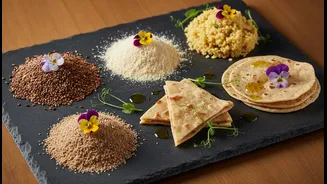
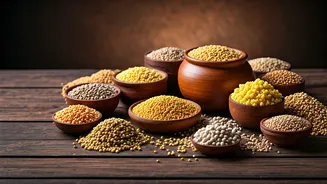
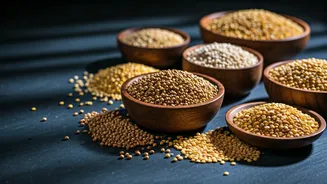
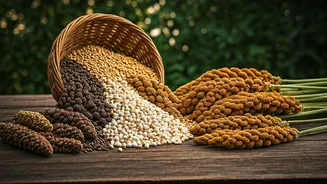
What we often call 'regular' millets are typically the 'major millets' that have been staples in Indian diets for centuries. This group includes Jowar (Sorghum), Bajra (Pearl Millet), and Ragi (Finger Millet). These grains are widely cultivated, more affordable, and familiar to most households across different regions of India. They are nutritional powerhouses in their own right. For instance, Ragi is famously rich in calcium, while Bajra is a great source of iron and keeps the body warm, making it a winter favourite. Their widespread availability and lower price point do not make them nutritionally inferior; they are simply more common.
The Polished vs. Unpolished Factor
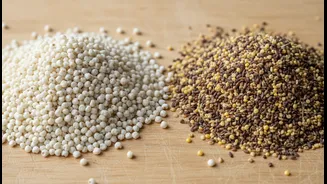
Perhaps the most crucial difference, regardless of whether a millet is 'premium' or 'regular', is whether it's polished or unpolished. Polishing is a mechanical process that removes the outer bran layer to make the grain look whiter and cook faster. However, this process strips away most of the fibre, minerals, and antioxidants. Unpolished millets retain their natural bran layer, which holds the bulk of their health benefits, including a lower glycemic index and higher nutrient density. Genuine unpolished millets have their natural colour—for example, unpolished Kodo millet is reddish-brown, not white—and are the superior choice for health.
Nutritional Showdown: Is There a Winner?
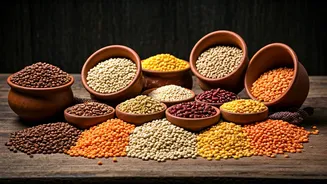
All millets are nutritional champions when compared to refined grains like white rice. They are gluten-free, high in fibre, and packed with minerals. While there are slight variations, the nutritional gap between 'premium' minor millets and 'regular' major millets is not as wide as marketing might suggest. For instance, Bajra (regular) offers 11.8g of protein per 100g, while Foxtail millet (premium) offers 12g. Browntop millet, often considered premium, has a very high fibre content at 12.5g. Kodo millet is noted for its high antioxidant levels. The key takeaway is that variety is more important than sticking to one type. Rotating different millets in your diet ensures you get a broader spectrum of nutrients.
The Price and Taste Test
There's no denying a significant price difference. Rarer millets like Browntop can cost nearly double the price of Jowar or Bajra. For example, you might find Foxtail or Kodo millet for around ₹118-₹160 per kg, while Browntop can be closer to ₹200-₹250 per kg. In contrast, common millets are more budget-friendly. The taste and texture also vary. 'Regular' millets like Jowar and Bajra have a robust, earthy flavour, perfect for rotis and bhakris. 'Premium' minor millets like Foxtail and Little millet are often milder and have a texture closer to rice, making them great for upma, pulao, and khichdi.