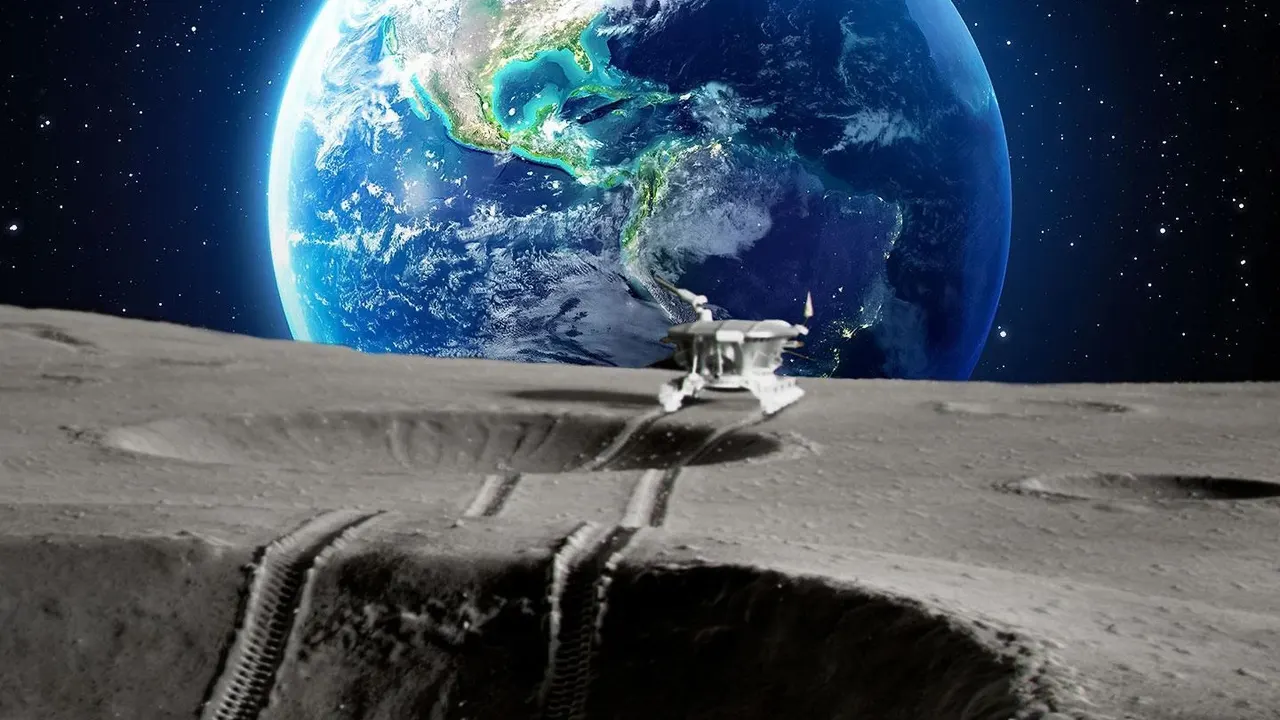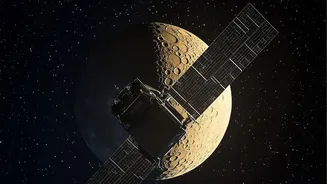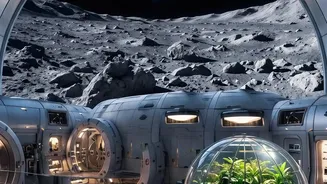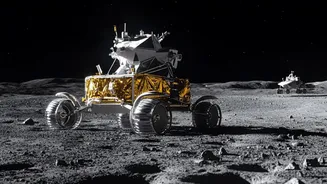



The Moon is once again the ultimate destination. But this time, it's not a global race to just land anywhere—it's a targeted push to its most mysterious and valuable real estate: the South Pole. Here's why everyone is racing to get there.
The Lure of Frozen Water
The single biggest
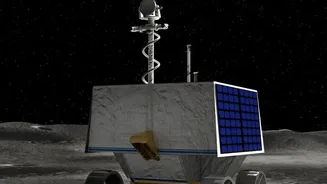
reason for the intense focus on the lunar South Pole is the confirmed presence of water ice. For decades, scientists theorized about water on the Moon, and missions have steadily built up evidence. This isn't just about finding a drink for future astronauts. Water (H2O) can be broken down into its component parts: hydrogen and oxygen. This means it can provide breathable air and, crucially, be processed into rocket propellant. The ability to refuel spacecraft on the Moon would revolutionize space travel, turning our natural satellite into a critical pit stop for more ambitious missions to Mars and beyond. This concept, known as in-situ resource utilization (ISRU), is the key to creating a sustainable, long-term human presence in space, reducing the immense cost and complexity of launching everything from Earth.
A Land of Shadow and Light
The South Pole's unique geography makes it unlike any other place on the Moon. Because of the Moon's axial tilt, the Sun perpetually skims the horizon. This creates 'peaks of eternal light'—the rims of certain craters that are in near-constant sunlight, ideal for generating solar power. Just a few kilometres away lie the bottoms of these same craters, which are 'permanently shadowed regions' that haven't seen sunlight in billions of years. These ultra-cold traps, with temperatures plummeting to -250°C, are perfect for preserving ancient water ice. This combination of near-constant energy and accessible frozen resources in close proximity is what makes the South Pole the prime real estate for building a future lunar base.
A New Global Space Race
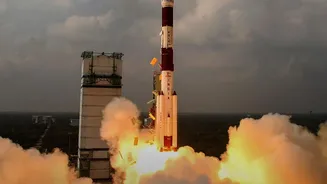
The strategic value of the South Pole's resources has ignited a new international space race. NASA's Artemis program is explicitly targeting the region for its upcoming crewed missions, with the goal of establishing a long-term presence. The United States is not alone. China has a series of ambitious robotic missions, including Chang'e-7 and Chang'e-8, planned for the South Pole to scout for resources and test technologies for a future International Lunar Research Station. India made history by becoming the first nation to successfully soft-land a spacecraft, Chandrayaan-3, near the lunar south pole in 2023, cementing its position as a major player. Russia also attempted a landing with its Luna-25 craft, though it was unsuccessful. This convergence of national ambitions underscores the region's geopolitical importance.
The Immense Challenge of Arrival
Despite the immense promise, landing and operating at the lunar South Pole is exceptionally difficult. The region's terrain is rugged, mountainous, and heavily cratered, making a safe, flat landing spot hard to find. The low angle of the Sun creates long, dark shadows that can hide treacherous boulders and slopes, confusing landing sensors. Unlike the well-lit equatorial regions visited by the Apollo missions, Artemis astronauts will have to navigate a landscape of extreme light and dark. Furthermore, the extreme cold in the shadowed areas poses a severe threat to equipment and astronauts, requiring highly advanced technology to survive and operate. These challenges make every mission to the South Pole a high-risk, high-reward endeavor.