
An Unblinking Eye at Lagrange Point 1
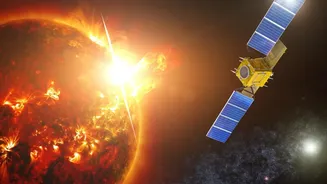
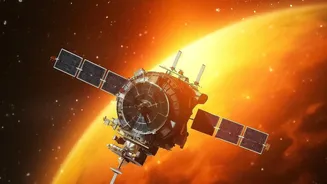
Positioned 1.5 million kilometres from Earth at a unique spot called Lagrange Point 1 (L1), Aditya-L1 has an uninterrupted, 24/7 view of the Sun. This strategic location allows its instruments to watch the Sun's every move without being blocked by the Earth or
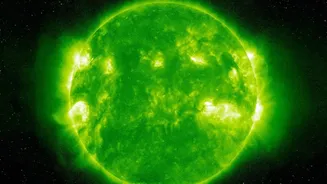
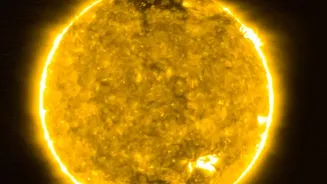
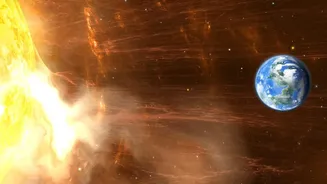
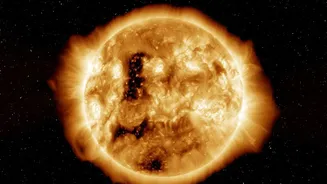
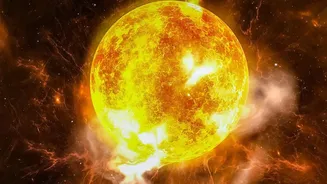
the Moon. Two of its key payloads, the Visible Emission Line Coronagraph (VELC) and the Solar Ultraviolet Imaging Telescope (SUIT), are designed to study the Sun's corona—its superheated outer atmosphere—with unprecedented detail. The corona is where solar storms, such as Coronal Mass Ejections (CMEs), are born. These massive eruptions of plasma and magnetic fields can travel towards Earth and wreak havoc on our technology.
Solving the Coronal Heating Mystery
One of the longest-standing puzzles in solar physics is why the corona is millions of degrees Celsius hotter than the Sun's surface, which is a mere 5,500°C. Recent data from Aditya-L1's VELC instrument, published in the Astrophysical Journal Letters, offers a compelling answer. By observing an energetic CME, scientists found that the primary source of this immense heat isn't waves bubbling up from the surface, as long thought. Instead, about 93% of the energy required to heat the corona comes from a process called magnetic reconnection—where tangled magnetic field lines snap and reconfigure themselves, releasing enormous amounts of energy. Understanding this fundamental process is crucial, as it is the engine that drives solar eruptions.
The Telltale Signs of a Coming Storm
This new understanding of the corona's energy source directly impacts storm prediction. By knowing that magnetic reconnection is the dominant factor, scientists can focus on monitoring the Sun's magnetic fields with greater precision. The data from VELC and SUIT allows them to see the build-up and twisting of magnetic energy in the lower corona, which are the precursor signs of an impending eruption. Earlier studies using Aditya-L1 data have already identified the turbulent regions within solar storms that cause the most severe geomagnetic disturbances on Earth. Identifying these features before they leave the Sun would represent a major leap forward in forecasting accuracy.
From Data to More Accurate Forecasts
The continuous stream of high-resolution data from Aditya-L1 is the raw material for better predictive models. This information is being fed into sophisticated computer models, including some powered by Artificial Intelligence, to improve their ability to forecast the timing, intensity, and trajectory of a CME. By observing the initial moments of an eruption and how the plasma is ejected, scientists can make more reliable predictions about whether a storm will hit Earth and how severe its impact might be. This shifts solar storm prediction from a reactive practice to a more proactive one, giving us a more reliable early warning system.
Why Earlier Warnings Are Critical
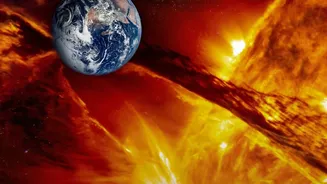
An improved warning time of even just a few hours can make a world of difference. Severe solar storms can damage or disable critical infrastructure. They can disrupt communication networks, knock out GPS services essential for aviation and shipping, and induce powerful electrical currents in power grids that can damage transformers and cause widespread blackouts. Our growing dependence on satellite technology for everything from financial transactions to weather forecasting makes us increasingly vulnerable. Better, faster warnings from missions like Aditya-L1 allow satellite operators to put their spacecraft into a protective 'safe mode' and for power grid managers to take preventive measures, safeguarding assets worth crores and ensuring the stability of our modern, tech-driven lives.