


The Unseen Gardeners of Our World
The ability of a plant to spread its seeds is fundamental to its survival. It allows new populations to establish, prevents overcrowding, and helps entire species migrate as climates change. This process, known as seed dispersal, relies heavily on animals
that consume fruit and later deposit the seeds elsewhere. While birds are famous for this role, a significant amount of this ecological work is carried out on the forest floor by terrestrial mammals. From tiny rodents to giant elephants, these ground-based gardeners are essential for the health and regeneration of ecosystems, particularly in tropical forests where the majority of tree species depend on animals for dispersal.
Insights from the 186-Species Study
A groundbreaking study has cast a new light on the immense contribution of non-flying mammals. Researchers compiled data on 186 species of terrestrial mammals known to eat fruit, creating one of the most comprehensive pictures to date of their seed-dispersal capabilities. The findings reveal a complex and vital network. Different mammals, due to their varied sizes, diets, and movement patterns, disperse a wide variety of seeds over different distances. For instance, the study shows that some mammals, like bears and tapirs, are crucial for dispersing large seeds that smaller animals cannot swallow. This diversity in dispersal services is key, as different plants require different conditions and partners for their seeds to successfully germinate. The research underscores that a rich diversity of mammals is not just a sign of a healthy ecosystem but a requirement for its continuation.
The Power of the Pachyderm
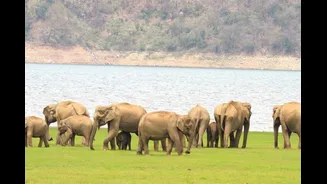
Among the most effective non-flying dispersers are megafauna—very large animals like elephants. Their immense size allows them to consume huge quantities of fruit and transport large seeds over vast distances, sometimes several kilometers. Studies focusing on Asian elephants, for example, have shown they are incredibly effective dispersers. They can consume large fruits whole and their digestive process often improves a seed's chance of germination. The loss of such megafauna from an ecosystem can have cascading effects. Without these long-distance dispersers, plant populations can become genetically isolated and less resilient. In a very real sense, the future of many large-fruited tree species is directly tied to the survival of these giant animals.
A Fragile Partnership Under Threat
The critical role of these animal dispersers is now under severe threat from human activity. Habitat loss, fragmentation, and hunting have led to drastic declines in many mammal populations across the globe. One analysis showed that the loss of birds and mammals has already slashed the ability of plants to track a changing climate by 60%. When large dispersers vanish, the consequences are profound. Plants with large seeds may fail to reproduce effectively, leading to what is sometimes called an 'empty forest'—a forest that looks green but lacks the underlying ecological processes needed to regenerate. The disruption of these ancient partnerships threatens not only individual species but the carbon storage capacity and overall resilience of entire forests.