






The Atmosphere's Lid: Temperature Inversion
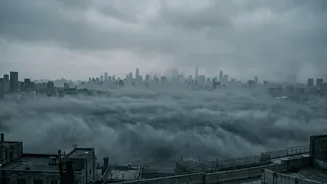
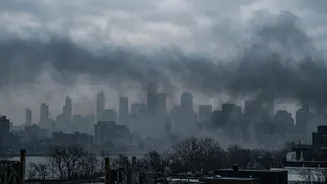
The primary reason winter air quality plummets is a phenomenon called 'temperature inversion'. Normally, air is warmer near the ground and gets cooler with altitude, allowing pollutants to rise and disperse. In winter, especially during cold, clear nights,
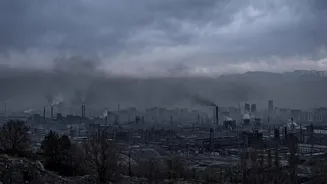
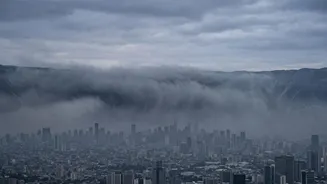
the ground cools rapidly, chilling the air just above it. This leaves a layer of colder, denser air trapped beneath a layer of warmer air—like a lid on a pot. With vertical mixing of air halted, all the pollutants emitted at ground level are trapped in this shallow, cold layer, accumulating to hazardous concentrations. Low wind speeds during this season prevent the dirty air from being blown away horizontally, worsening the stagnation.
The Fuel: A Toxic Mix of Fumes and Dust
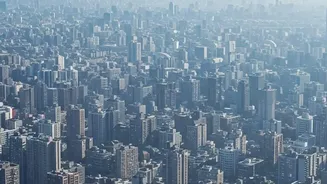
Into this atmospheric trap, a constant stream of pollutants is pumped. The biggest year-round culprits in urban areas are vehicle emissions and dust. Millions of cars, trucks, and buses release a cocktail of pollutants, including fine particulate matter (PM2.5), nitrogen oxides (NOx), and volatile organic compounds (VOCs). These particles are small enough to penetrate deep into the lungs, causing severe respiratory and cardiovascular issues. Compounding this is a relentless assault from dust. Construction and demolition activities, unpaved roads, and soil erosion contribute vast quantities of larger PM10 and finer PM2.5 particles to the air, making up a significant portion of the pollution load.
The Chemical Reaction: Creating Secondary Pollutants
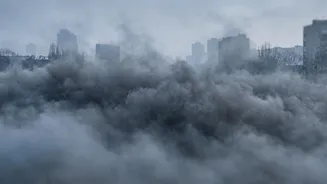
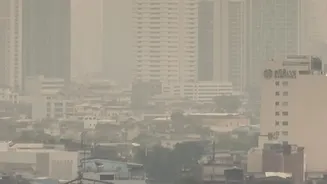
The danger doesn't just come from pollutants emitted directly from sources, known as primary pollutants. The trapped air becomes a chemical reactor. Gases like nitrogen oxides and sulfur dioxide, primarily from vehicle exhaust and industrial emissions, react with other compounds in the cold, humid air. This process forms 'secondary pollutants' like nitrates and sulphates, which are even smaller and often more toxic particles. These secondary particles are a major component of the winter smog, sometimes making up a third or more of the total PM2.5 concentration and contributing significantly to the air's toxic, eye-stinging quality.
The Regional Accelerator: Stubble Burning
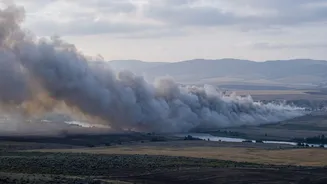
While local pollution provides the baseline, the event that tips the air from 'poor' to 'severe' each November is large-scale stubble burning. After the rice harvest in Punjab, Haryana, and Uttar Pradesh, farmers burn crop residue to quickly clear their fields for the next crop. This practice sends massive plumes of smoke, rich in PM2.5 and other toxins, drifting across the entire Indo-Gangetic Plain. Depending on wind direction and the intensity of the fires, smoke from stubble burning can account for a significant percentage of Delhi's pollution on any given day in November, sometimes contributing over 30% of the toxic particulate matter.
Geography's Unfortunate Role
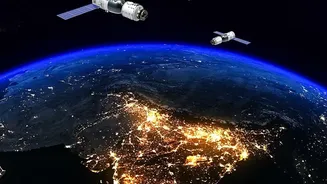
North India's geography exacerbates the problem. The towering Himalayan mountain range to the north acts as a natural barrier, preventing the trapped, polluted air mass from dispersing. This effectively creates a 'bowl' where pollutants from across the region can accumulate. The slow-moving winter winds in the Indo-Gangetic plains are insufficient to flush out the smog, meaning the region is forced to breathe the concentrated pollution from its cities, industries, and agricultural lands until meteorological conditions change. This combination of local emissions, regional smoke, and restrictive geography creates the perfect storm for the annual November smog wave.