



The Joy and Challenge of a Grand Feast
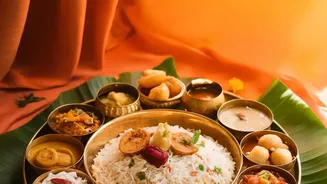
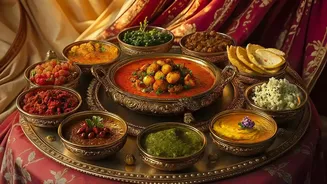
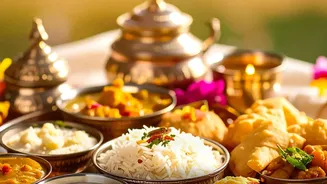
An Onam Sadhya is more than a meal; it's a cultural masterpiece featuring anywhere from 24 to over 60 vegetarian dishes. It’s a sensory celebration of Kerala's harvest festival, meant to be shared with family and friends. The sheer scale, however, presents
a significant challenge: How much is enough? Over-preparation leads to food waste and unnecessary expense, while under-preparation is a host’s worst nightmare. The goal is to honour the spirit of abundance without being overwhelmed by excess. Thoughtful planning ensures every guest leaves satisfied and the host can also enjoy the festivities without worrying about mountains of leftovers.
Start With a Headcount, Then Do the Math
The first step to a well-managed Sadhya is a firm guest count. Once you have your number, you can apply some simple logic. While you might cook half a cup of uncooked rice per person for a regular meal, for a Sadhya with its multitude of side dishes, you can reduce that amount by about 25 percent. So, for 20 guests, you might cook around 7.5 cups of uncooked rice instead of 10. This principle applies across the board. Because guests will be tasting many different items, they will take smaller portions of each. Planning quantities with this in mind prevents you from making a full-sized portion of every single one of the 20-plus dishes.
Categorise Your Dishes for Clarity
Trying to plan quantities for 26 dishes at once is overwhelming. Instead, group them into categories. A typical Sadhya can be broken down into: the main rice, primary curries (parippu, sambar), secondary liquid dishes (rasam, pulissery), dry vegetable sides (thoran), semi-dry dishes (avial, kootu curry), pickles and relishes (inji puli, mango pickle), snacks (chips, pappadam), and desserts (payasam). This approach allows you to think about quantities in a more structured way. You'll need more of the core components like rice and sambar, and smaller amounts of the potent pickles and chutneys.
Portioning the Main Components
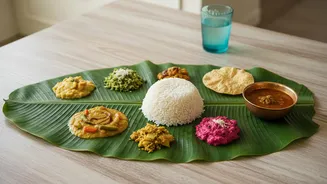
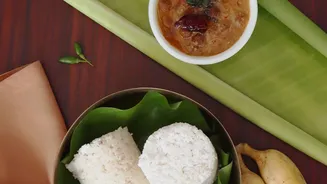
Kerala Matta rice is the heart of the meal, served on the bottom half of the banana leaf. After calculating your reduced rice quantity, focus on the main curries. Sambar and Parippu are essentials. Plan for about one to one-and-a-half standard ladlefuls of each per person. For secondary curries like Rasam or Moru Curry, which are served later and are lighter, a smaller portion of just under one ladleful per guest is usually sufficient. These are meant to be savoured in smaller quantities as the meal progresses.
Managing the Multitude of Sides
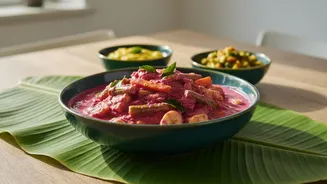
The side dishes, or 'thottu koottan', are where variety shines, but portion control is key. For dishes like Avial, Kalan, and Thoran, aim for about a half-cup serving per person. Remember, with so many options, most people will only take a spoonful or two of each. The pickles and relishes like Inji Puli and various achars are even more potent. These should be prepared in the smallest quantities; a few tablespoons per four to five guests is often enough. The same goes for banana chips and sharkara varatti; they are accents, not main features.
Planning for a Sweet Finish
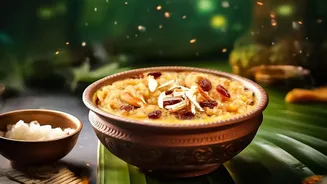
Payasam is the grand finale, and it's a common mistake to run short. If you are serving multiple types of payasam, like a milk-based Palada and a jaggery-based Parippu Pradhaman, people will want to taste both. A good rule is to plan for about half a small glass or bowl of each type per person. This allows everyone to sample the different varieties without feeling overly full. If you have to choose where to be generous, a little extra payasam is always a welcome treat for guests.
Embrace the Spirit of No Waste
Ultimately, portion planning for Onam Sadhya ties back to the festival's inherent respect for nature and community. Traditionally, the feast is a zero-waste event. Ingredients are sourced locally, the banana leaf plate is biodegradable, and leftovers are often shared. By planning portions carefully, you are participating in this sustainable tradition. You reduce food waste, save money, and lessen the environmental impact of the celebration. It allows the focus to remain on the joy of the food and the togetherness of the occasion, not on the burden of excess.