



The Great Unlocking: What Changed?
For decades, the Indian Space Research Organisation (ISRO) was the sole player in India's space endeavours. But a major policy shift, crystallized in the Indian Space Policy 2023, has thrown the doors open to non-governmental entities. The goal is to transform
India from a space-faring nation into a true space power. At the heart of this change is the Indian National Space Promotion and Authorisation Centre (IN-SPACe), a single-window agency created to promote, authorise, and supervise the activities of private space companies. This move is designed to boost India's share of the global space economy, which currently stands at around 2-3%, with ambitious targets to reach approximately $44 billion by 2033. Recent announcements have further clarified this new direction, with officials stating that ISRO will gradually exit the routine manufacturing of its workhorse rockets.
ISRO's New Role: From Sole Player to Coach
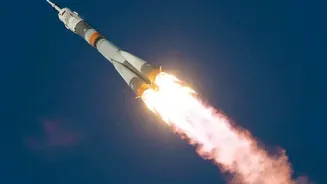
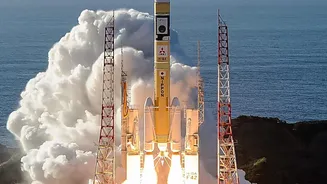
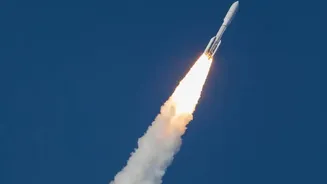
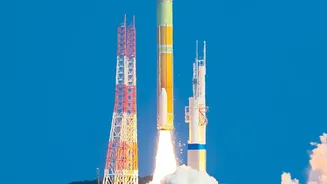
Instead of building every rocket itself, ISRO is transitioning into a new role focused on research and development, deep-space exploration, and national security missions. It will act as a mentor and enabler for the private sector, transferring established technologies and offering access to its world-class facilities. A prime example is the Small Satellite Launch Vehicle (SSLV), whose technology has been transferred to the private industry. Similar plans are in motion for the reliable Polar Satellite Launch Vehicle (PSLV) and the heavy-lifting LVM3. This strategic handover allows ISRO to concentrate on frontier science—like the Gaganyaan human spaceflight program and a planned lunar landing—while private industry handles the operational, commercial launches. NewSpace India Limited (NSIL), ISRO's commercial arm, will continue to interface with the market, procuring launch services from these private manufacturers.
Meet the Trailblazers: India's New Rocket Startups
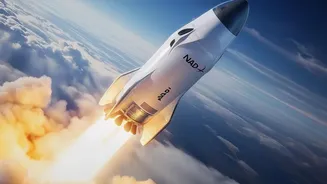
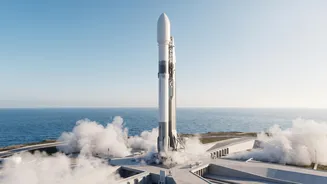
A vibrant ecosystem of over 400 space startups has emerged in India, ready to seize this new opportunity. Two names stand out in the launch vehicle space: Skyroot Aerospace and Agnikul Cosmos. Hyderabad-based Skyroot Aerospace made history in November 2022 by launching Vikram-S, India's first-ever privately developed rocket. It followed this suborbital success with the launch of the Vikram-1 orbital rocket in July 2026, making India one of the few countries with a private orbital launch capability. Chennai's Agnikul Cosmos is also a key player, known for its innovative 3D-printed, single-piece semi-cryogenic rocket engine. These companies are developing small-lift launch vehicles designed to offer cost-effective and dedicated rides to space for the booming global small satellite market.
The Global Space Race and Local Hurdles
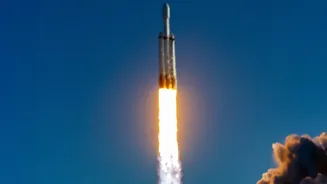
The opportunity is immense. The global space economy is projected to exceed $1 trillion by the next decade, driven by falling launch costs and the proliferation of satellite-based services. By encouraging private players, India hopes to compete with global giants like SpaceX and Rocket Lab, offering more frequent and affordable launch options. However, the path is not without challenges. Indian startups face stiff global competition and need significant capital to scale. While investment is growing, access to funding remains a key hurdle, particularly for an industry with long development cycles. Other challenges include developing a robust domestic supply chain for critical components, building more launch infrastructure beyond the existing spaceport at Sriharikota, and navigating a regulatory landscape that is still evolving despite the new policies.