



The Soul of Kutch on a Wall
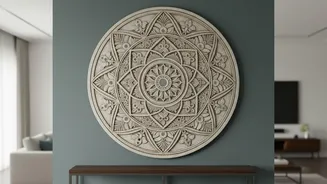
Lippan Kam, also called mud mirror work, is a traditional mural craft from the Kutch region of Gujarat. For generations, women from communities like the Rabari and Mutwa have decorated the inner and outer walls of their circular mud huts, or 'bhungas'.
The process was deeply connected to the land. Artisans would create a dough from locally sourced clay and animal dung, typically from camels or donkeys, which acted as a natural binding agent. This mixture was then skillfully applied to the mud walls by hand, creating intricate relief patterns of geometric shapes, peacocks, camels, and trees. Into this wet clay, they would press small, dazzling pieces of mirror called 'aabhla', which would catch the light and brighten the dark interiors.
A Tradition's Weighty Problem
As beautiful as it is, traditional Lippan Kam was never meant to be portable. It was an integral part of the home's architecture, bonded directly to the mud walls. This presented a significant challenge for bringing the art form to a wider, urban audience. A slab of dried mud and dung is extremely heavy and fragile, making it impractical to hang on the plasterboard walls of a modern city apartment. Furthermore, the traditional materials were not always suited to humid, non-desert climates and could be prone to cracking or degradation over time. The art form needed to evolve to survive and find new patrons.
Innovation Meets Heritage on a Board
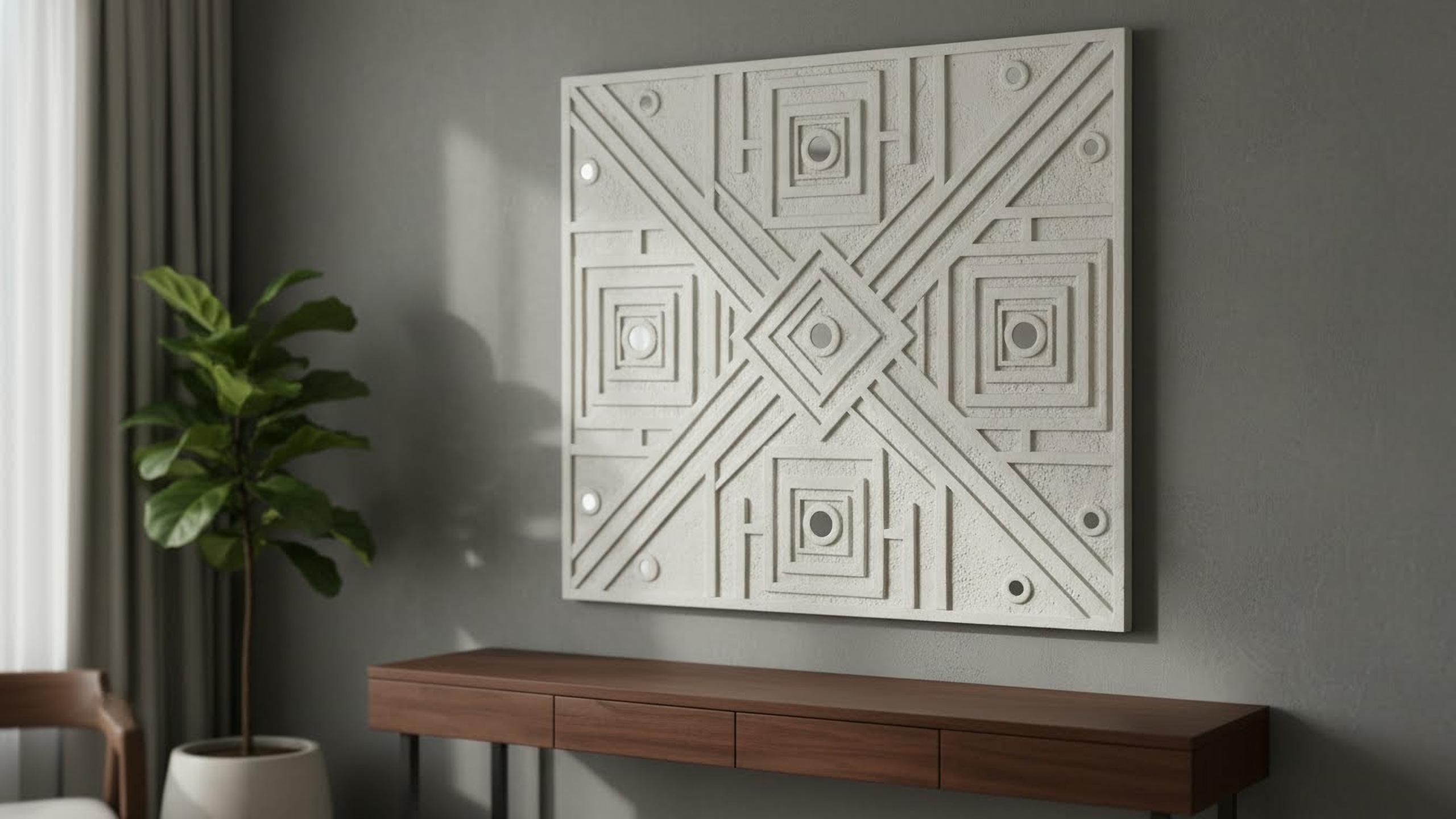
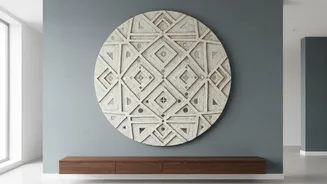
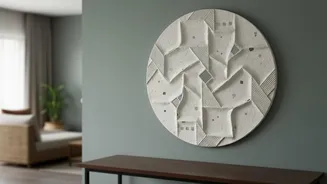
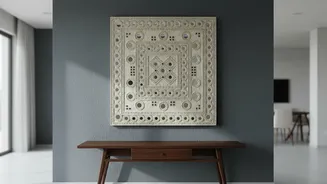
The solution came from a simple but revolutionary shift: moving the art from the wall to a board. Instead of applying the relief work directly onto a permanent structure, artisans began using sturdy, lightweight bases. Medium-Density Fibreboard (MDF) and plywood have become the preferred canvases for modern Lippan art. This single change made the art form portable, durable, and easy to install in any home, anywhere in the world. An entire panel can be created in a workshop, packed, and shipped to a buyer, ready to be hung like a painting.
A New Recipe for an Old Craft
Along with the new base, the recipe for the clay dough also received an update. To make the panels lighter and more durable, artisans have largely replaced the traditional dung and mud mixture. Today's artists often use a blend of materials like chalk powder, sawdust, and clay powder, mixed with a strong adhesive glue instead of dung. This modern paste is much lighter, less prone to cracking, and free from any odour, making it perfectly suitable for indoor living spaces. It is rolled into long strips and applied to the MDF board to create the relief patterns, just as it was traditionally done on mud walls.
The Artistry Remains Unchanged
While the foundational materials have evolved, the soul of the artistry remains untouched. The intricate process of hand-moulding the clay strips and embedding the mirrors is still performed with the same skill and attention to detail passed down through generations. Artisans still sketch their designs and then painstakingly build up the geometric and symbolic patterns freehand. The placement of the mirrors, each one pressed into the soft dough, is a crucial step that gives the art its distinctive, shimmering quality. The final piece is often painted, traditionally with white clay, but now sometimes with acrylic paints to add colour while preserving the textured, three-dimensional effect.
From Village Courtyard to City Living Room
This thoughtful evolution has transformed Lippan Kam from a regional architectural feature into a global decor phenomenon. These lightweight panels now adorn the walls of urban apartments, boutique hotels, and art galleries, bringing a piece of Kutchi heritage to modern interiors. This innovation has not only ensured the survival of a beautiful craft but has also created a sustainable livelihood for many artisan communities in Gujarat. By adapting their methods, they have made their cultural legacy accessible, allowing people everywhere to own a piece of the starl starlit desert sky.