








The Plot Twist in Urban Mobility
For years, the spotlight has been firmly fixed on the sprawling metro networks of Delhi, Mumbai, and Bengaluru. They were the undisputed protagonists of India's urban development story. But a compelling new subplot is emerging from the nation's Tier-2
and Tier-3 cities. Thanks to a massive push in infrastructure spending, rail connectivity in smaller urban centres is being reimagined. Initiatives like the PM Gati Shakti National Master Plan are funnelling unprecedented funds into decongesting and expanding the rail network beyond the usual suspects. This isn't just about adding a few extra tracks; it's about fundamentally changing how smaller cities grow, connect, and thrive. The plan involves not just new lines but also upgrading thousands of existing rail bogies to Vande Bharat standards, enhancing safety and comfort for millions of new passengers.
Spotlight on the New Stars
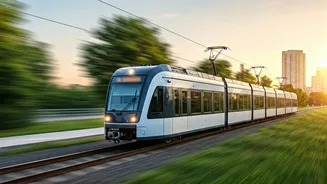
The transformation is most visible in the form of new and proposed train services designed specifically for shorter, inter-city routes. The Vande Metro, also known as the Namo Bharat Rapid Rail, is a prime example. These services are engineered to connect major cities with their satellites, typically within a 100-250 km radius, making daily commutes and business travel faster and more efficient. Routes like Lucknow-Kanpur, Bengaluru-Mysore, and Chennai-Tirupati are being developed to slash travel times. In Lucknow, the metro project is expected to serve over 200,000 people daily, opening up previously hard-to-reach parts of the city. Similarly, the Mumbai-Ahmedabad high-speed corridor, while connecting two major hubs, is designed to uplift smaller towns like Surat, Vapi, and Boisar along its route, creating new centres of economic activity.
An Economic and Environmental Sequel
This renewed focus on rail is about more than just convenience. It's a strategic move with profound economic and environmental implications. Enhanced connectivity makes smaller cities more attractive for investment. Multinational companies and startups, looking to escape the high operational costs of Tier-1 cities, are setting up shop in places like Lucknow, Indore, and Chandigarh. This influx fuels demand for housing and commercial real estate, creating a virtuous cycle of growth. Developers are shifting their focus to these burgeoning markets, transforming them into the next real estate hubs. Environmentally, promoting rail travel is a significant win. By providing a reliable and affordable alternative to road transport, these new train lines can help reduce traffic congestion and the crippling air pollution that plagues many Indian cities. High-speed and semi-high-speed trains, often running on locally generated electricity, also decrease reliance on imported fuels.
More Than Just a Commute
Ultimately, the rise of small-city trains represents a cultural shift. Historically, railways have been a powerful force for national integration and social change in India. Railway stations have always been more than just transit points; they are social and economic hubs that anchor local communities. As these new projects take shape, they are doing more than just moving people; they are weaving the country together in new ways, bridging the gap between isolated communities and mainstream India. They enable farmers to reach new markets, students to access better education, and tourists to explore regional heritage sites. By making smaller cities more liveable and accessible, this new generation of trains is empowering them to write their own confident, forward-looking stories, moving from supporting roles to becoming main characters in India's growth journey.