





A Front-Row Seat to Creation
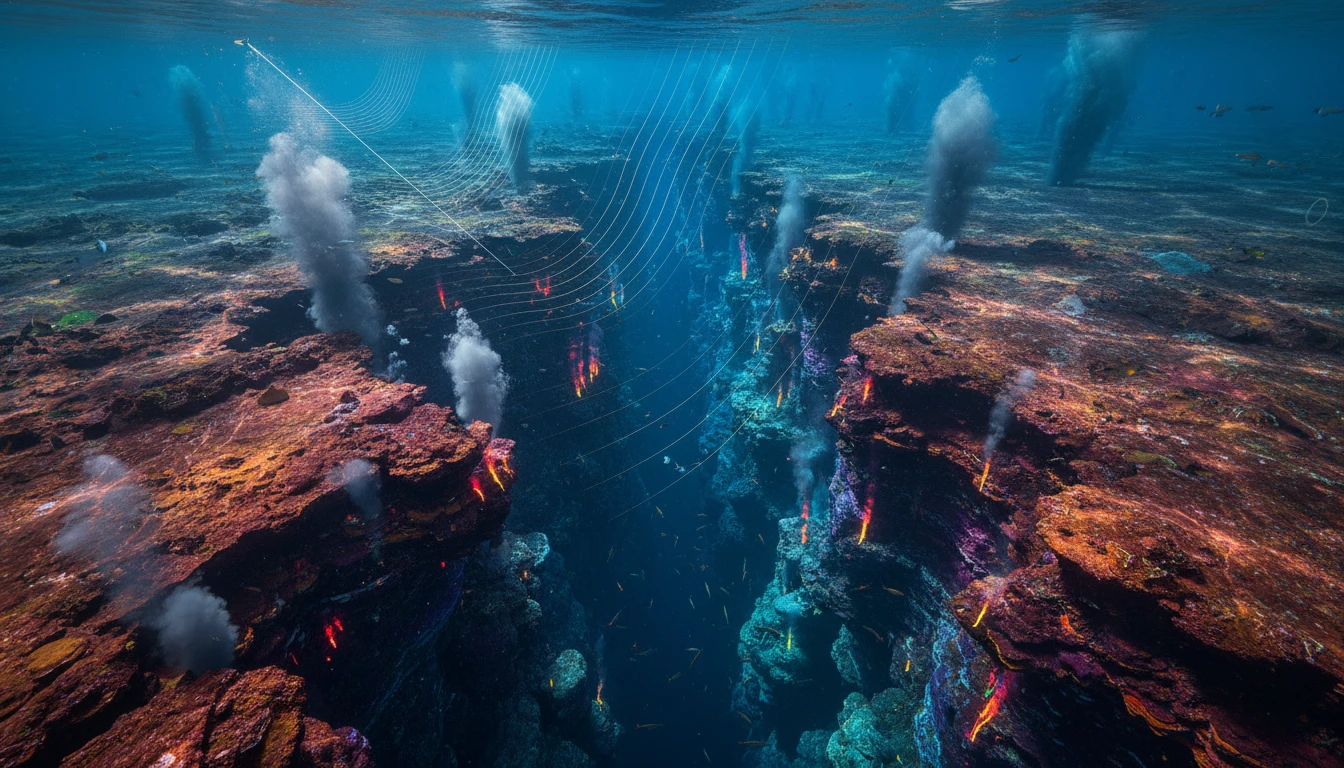
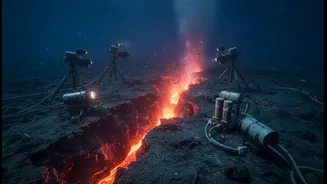
In April 2024, deep beneath the waves of the southern Indian Ocean, something spectacular happened. Scientists who had placed an array of monitoring instruments just two months earlier struck geological gold. They captured a complete seafloor spreading
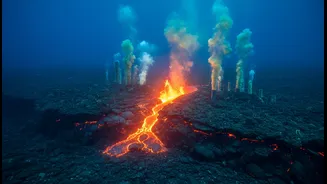
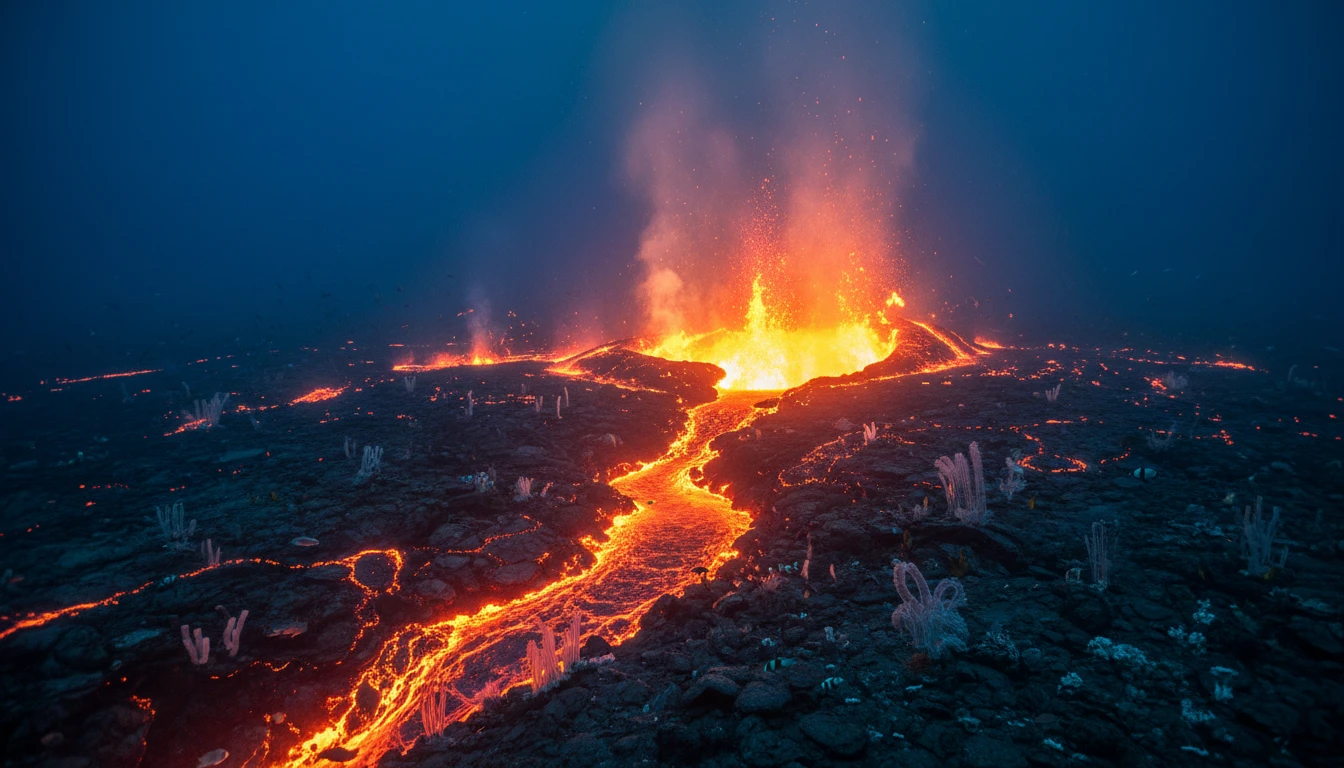
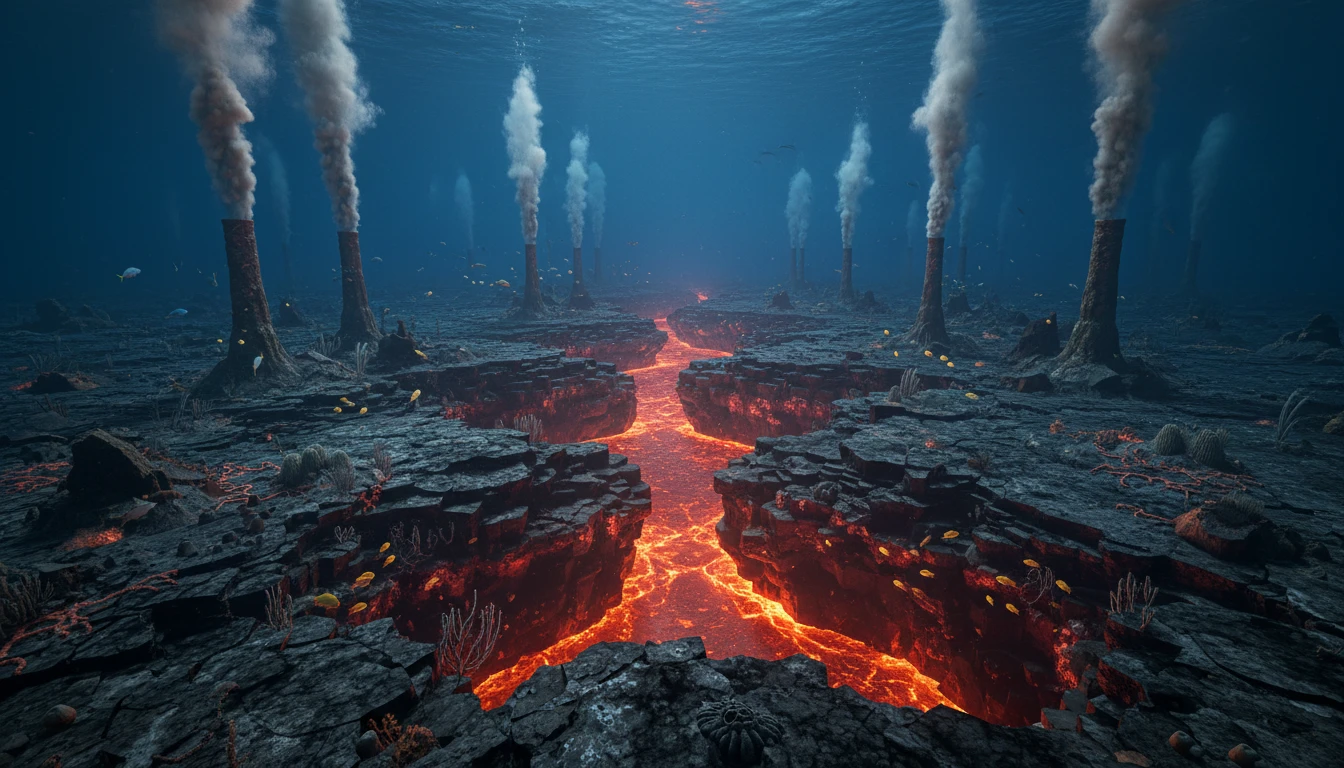
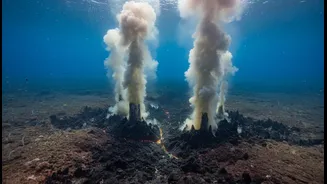
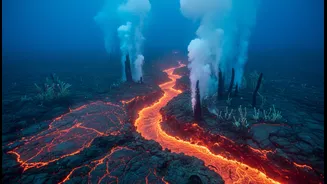
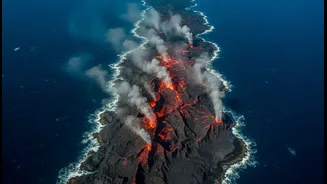
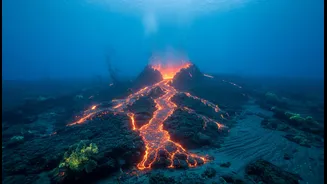
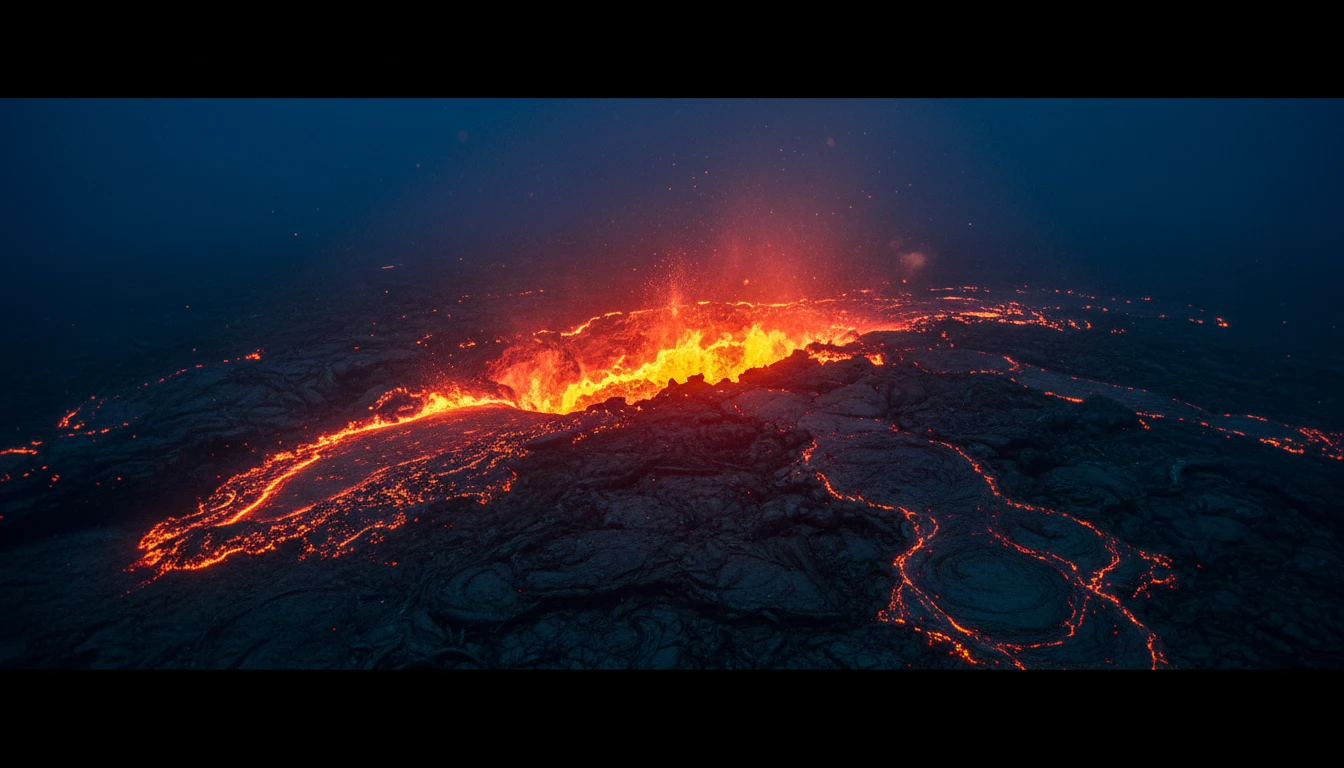
event as it unfolded at the Southeast Indian Ridge. The show began with a swarm of earthquakes that raced along the ridge's axis. Within days, the valley floor sank by more than four metres, and an enormous volume of lava—estimated at 160 million cubic metres—poured out, forging brand new oceanic crust. For a process that builds two-thirds of our planet's surface but has only ever been studied through its ancient scars, this was the equivalent of catching evolution in the act. It was a breathtaking, first-of-its-kind look at one of Earth's most fundamental creative forces.
How New Ocean Floor Is Made
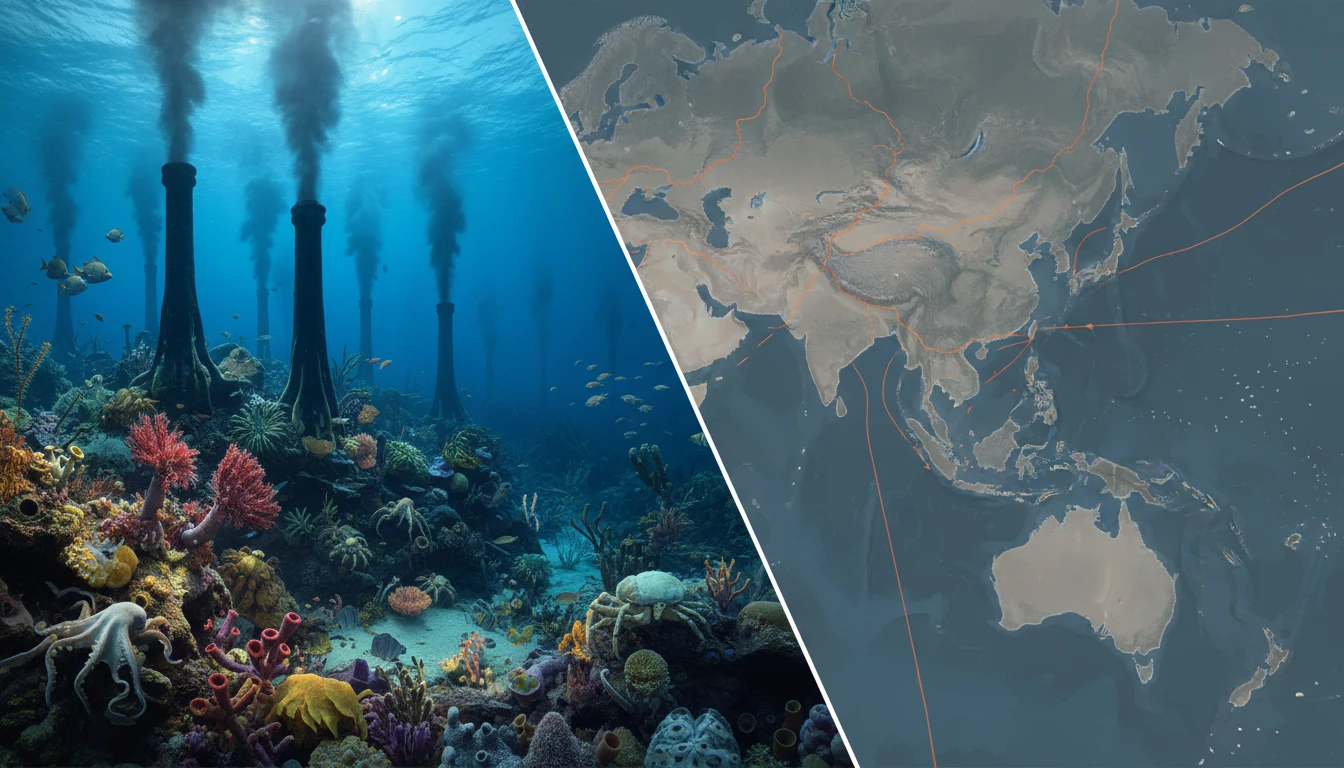
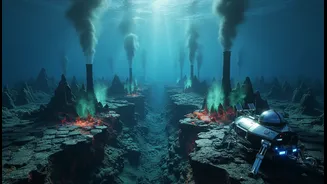
So, what did the scientists actually see? They witnessed the action at a mid-ocean ridge, which is essentially an underwater mountain range that wraps around the globe like the seam on a baseball. These ridges mark divergent plate boundaries, where two of Earth's tectonic plates are slowly pulling apart. As they separate, molten rock, or magma, from the mantle below rises to fill the gap. It erupts as lava onto the seafloor, cools, and solidifies into new crust. This process, known as seafloor spreading, continuously adds material to the ocean basins. The speed of this spreading varies; some ridges move apart slowly, creating steep, rugged terrain, while others spread faster, forming gentler slopes. The event captured in the Indian Ocean provided a perfect, real-time example of this powerful geological engine at work.
The Indian Plate’s Busy Neighbourhood
Observing a mid-ocean ridge is one thing, but the area around the Indian subcontinent is a hotbed of complex tectonic activity. The Indian Plate isn't just peacefully drifting; it's involved in several different types of interactions. Its most famous interaction is the colossal collision with the Eurasian Plate to the north. This is a convergent boundary, where two continents are crunching together, a process that has been thrusting up the Himalayas for 50 million years. To the west and southwest, the Indian Plate has divergent and transform boundaries, where it pulls away from or slides past the Arabian and African plates. There are three main types of plate boundaries—divergent (pulling apart), convergent (pushing together), and transform (sliding past)—and the Indian Plate is experiencing all of them. This makes the region a fascinating but complicated natural laboratory.
Why One Event Isn't the Whole Story
This brings us to the key limit of the recent discovery. While groundbreaking, the observed seafloor spreading event represents just one type of geological action: a magma-fueled event at a divergent boundary. However, this doesn't explain all the immense stresses shaping the Indian Ocean. For years, scientists have gathered evidence that the once-unified Indo-Australian plate is buckling and breaking in two just south of India. This is creating a new, diffuse plate boundary, not at a neat ridge, but across a wide zone of deformation. This internal stress is what led to the massive and unusual intraplate earthquakes in 2012, which were powerful strike-slip quakes, not the type seen at a spreading ridge. The researchers behind the 2024 observation noted this themselves, stating that their findings don't apply to other ridge systems that are less magmatic and more dominated by earthquakes, which also need to be studied.