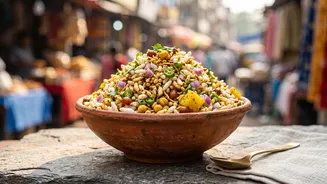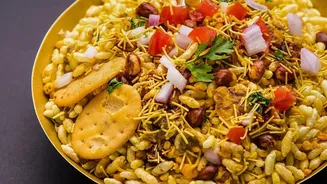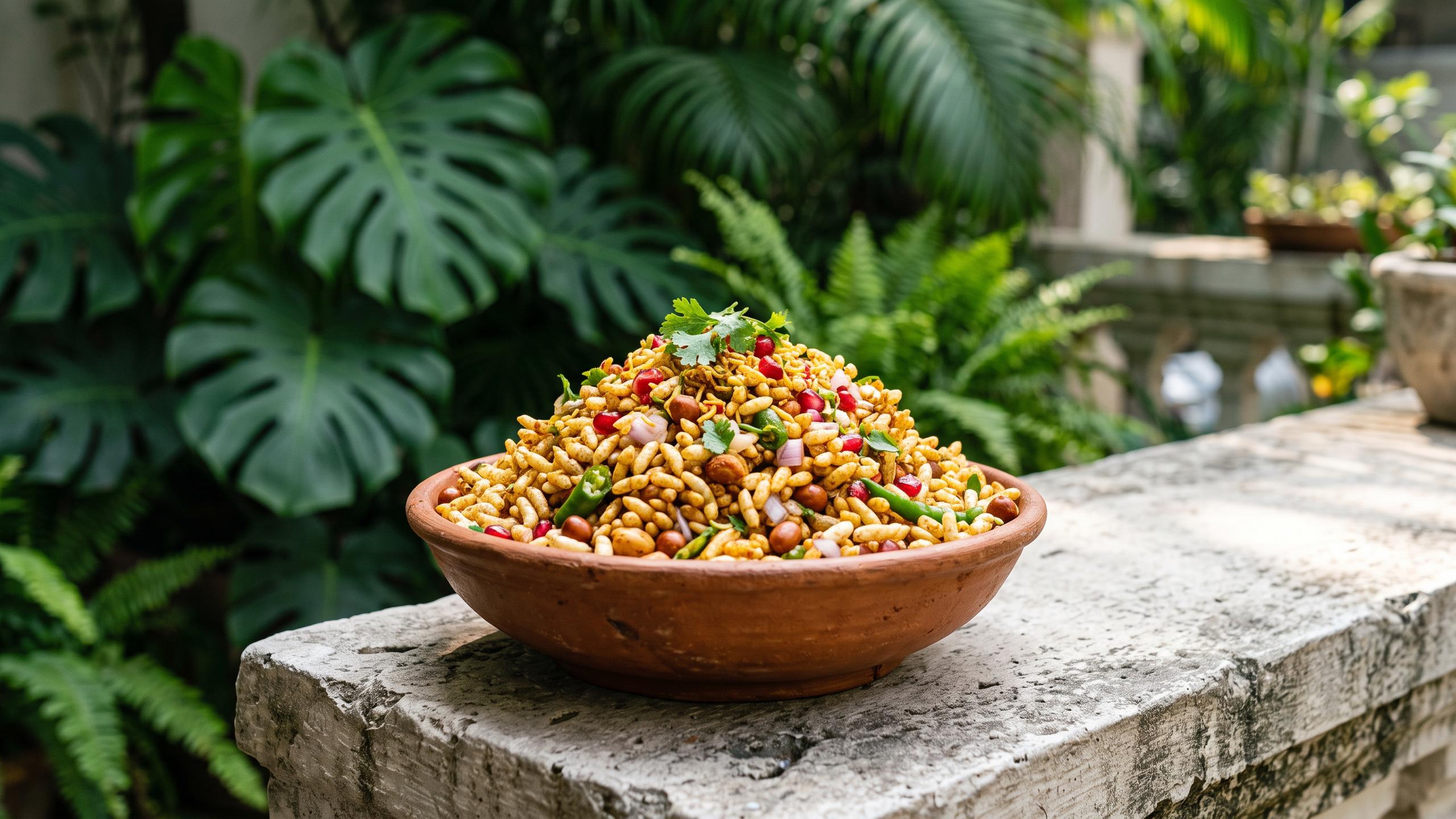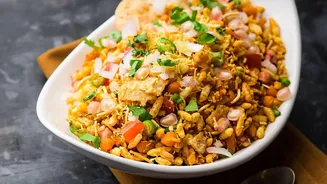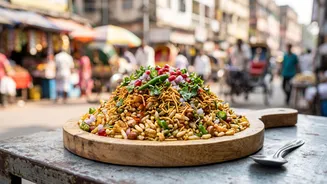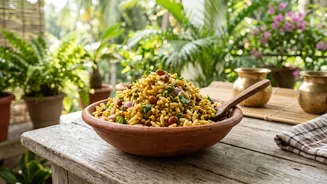



To understand Jhalmuri, the beloved Bengali street snack, is to understand the soul of its key ingredient: mustard oil. This isn't just a cooking medium; it's the sharp, pungent, and utterly irreplaceable element that defines the entire experience.
The Anatomy of a Perfect Bite
At
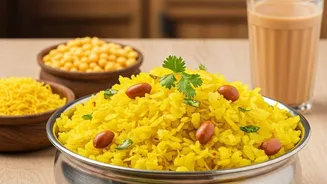
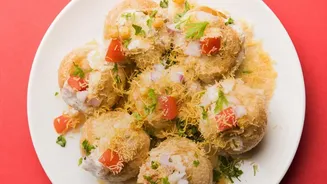
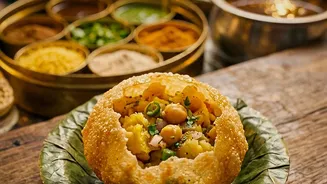
its heart, Jhalmuri is a deceptively simple mix. The name itself translates to 'spicy puffed rice'. It's a vibrant toss of crispy puffed rice (muri), finely chopped onions, tomatoes, boiled potatoes, green chillies, and fresh coriander. To this, a variety of crunchy elements like roasted peanuts, sev, or chanachur (a savoury mix) are added for texture. A blend of spices, including cumin and chaat masala, provides a tangy, savoury base. But these ingredients, while essential, are merely the supporting cast. The undisputed star, the element that ties everything together and gives Jhalmuri its signature identity, is a generous drizzle of raw mustard oil.
Not Just Any Oil: The 'Kachchi Ghani' Difference
The mustard oil used in authentic Jhalmuri is not the refined, neutral-tasting version you might find everywhere. It must be 'kachchi ghani', which translates to 'raw press'. This traditional method involves cold-pressing mustard seeds at low temperatures without using heat or chemical solvents. This process ensures that the oil retains its natural properties: a deep golden colour, a wealth of nutrients, and, most importantly, its potent, sharp aroma and flavour. Refined oils, by contrast, are heated and processed to create a milder, more neutral product, stripping away the very character that makes mustard oil so vital to Bengali cuisine.
The Science of Pungency: What is 'Jhanjh'?
That signature, nose-tingling sharpness of kachchi ghani mustard oil, often called 'jhanjh' in Bengali, is not a flaw but a feature. It comes from a chemical compound called allyl isothiocyanate (AITC). This compound is naturally formed when mustard seeds are crushed, releasing an enzyme that converts glucosinolates in the seeds into AITC. It’s the same family of compounds that gives wasabi and horseradish their fiery kick. In Jhalmuri, this raw pungency is not cooked off; it's added at the end, providing a direct, sharp hit that awakens the senses and cuts through the starchiness of the puffed rice and potatoes. It's a flavour that doesn't just sit on the tongue but travels up through the nose, creating a multi-sensory experience.
A Pillar of Bengali Cuisine
Mustard oil's importance extends far beyond Jhalmuri; it is the cornerstone of Bengali cooking. From classic fish curries like 'shorshe ilish' to vegetable preparations like 'aloo posto' and the mixed-vegetable dish 'labra', mustard oil provides the foundational flavour that is instantly recognisable as Bengali. Its use is a culinary signature, a thread connecting countless dishes across West Bengal and Bangladesh. The oil is treated as an ingredient in its own right, not merely a fat for frying. Its antimicrobial properties also make it the traditional choice for preserving pickles ('achaar'), where it protects against spoilage while infusing the ingredients with its distinctive taste.
Can You Substitute It? The Unspoken Rule
For anyone attempting to recreate Jhalmuri outside of Bengal, the question of substitution inevitably arises. The simple answer is no. Using any other oil—be it vegetable, sunflower, or even a refined mustard oil—will result in a snack, but it won't be Jhalmuri. Without the sharp, pungent kick of raw kachchi ghani oil, the dish loses its soul. The oil is not just there to moisten the ingredients; it's there to provide a specific, powerful flavour counterpoint. It is the 'jhal' in Jhalmuri, the spicy, fiery element that makes the snack so much more than the sum of its parts. A culinary expert from Kolkata noted that the use of mustard oil is the defining characteristic that ties the dish to Bengali identity.