





The Rush for Comfort
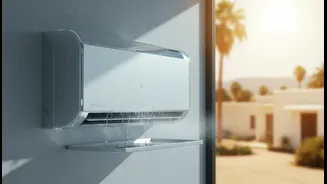
The demand for air conditioners in India is exploding. Driven by rising incomes, rapid urbanisation, and increasingly frequent and intense heatwaves, millions of Indian households are purchasing their first AC unit. The numbers are staggering: from just
two million units in the country in 2006, sales reached over 15 million in 2025, with projections suggesting the market could nearly double by 2030. While currently only about 10% of Indian homes have an AC, this is changing fast. This surge reflects a fundamental desire for thermal comfort in the face of extreme weather, a trend that is reshaping household energy consumption across the nation.
The Pain of High AC Bills
The immediate consequence of running an AC is felt in the monthly electricity bill. Air conditioning is a power-intensive affair, and its usage can cause household energy costs to skyrocket. A single 1.5-ton AC running for eight hours a day can add thousands of rupees to a monthly bill, depending on the model's efficiency and local tariffs. For many middle-class families, this creates a difficult choice between comfort and cost. The shock of a high bill often leads households to limit AC usage, defeating the purpose of the initial purchase. This financial strain is the most tangible part of the cooling trap, hitting household budgets directly, especially during peak summer months when usage is highest.
The Energy Efficiency Dilemma
Not all ACs are created equal. The Bureau of Energy Efficiency (BEE) uses a star rating system to indicate an appliance's energy efficiency, with 5-star models being the most efficient. A 5-star inverter AC can consume 30-40% less electricity than a lower-rated or non-inverter model. However, higher-rated models come with a higher upfront cost, pushing many consumers toward cheaper, less efficient options. While a 5-star AC can pay for its price premium in electricity savings within a few years, the initial investment remains a barrier for many. This preference for lower-cost, inefficient models locks consumers into higher long-term running costs and contributes significantly more strain on the power grid. The government regularly tightens efficiency standards, meaning a 5-star AC from a few years ago may only be equivalent to a 3-star or 4-star model today.
Straining the National Power Grid
The collective impact of millions of ACs switching on simultaneously puts immense pressure on India's power grid. Cooling already accounts for a significant portion of peak electricity demand, which has hit record highs in recent summers. This demand is particularly challenging at night, when solar power is unavailable, forcing reliance on coal-fired plants to meet the load. Projections show that without intervention, cooling could account for nearly a third of India's peak electricity demand by 2035, requiring massive, costly investments in new power generation and grid infrastructure to prevent shortages and blackouts.
The Household Emissions Feedback Loop
The environmental side of the trap creates a vicious cycle. An AC itself doesn't produce emissions, but the electricity it consumes does. In India, where a large share of power is generated from coal, increased AC usage directly translates to higher household carbon emissions. This contributes to global warming, which in turn leads to more extreme heatwaves and a greater need for cooling. It's a powerful feedback loop. Furthermore, refrigerants used in ACs are potent greenhouse gases, and leaks can contribute significantly to warming. While newer refrigerants like R32 have lower global warming potential, the massive volume of ACs in use makes both electricity consumption and refrigerant management critical environmental issues.
Escaping the Trap: A Path Forward
Breaking this cycle requires a multi-pronged approach. The India Cooling Action Plan (ICAP), launched in 2019, provides a roadmap. Key strategies include promoting higher energy efficiency standards and encouraging consumers to adopt 5-star rated appliances. Simple behavioural changes, like setting the AC thermostat to 24-26°C, can lead to significant energy savings. Beyond technology, improving building design with better insulation, cool roofs, and natural ventilation can reduce the need for active cooling in the first place. Ultimately, escaping the cooling trap involves making smarter choices as consumers and implementing policies that make sustainable cooling accessible and affordable for everyone.