





From Government Program to Anchor Customer
For decades, space exploration was the exclusive domain of national governments. NASA designed, built, and operated its own hardware. With the Artemis program and its goal of a permanent lunar presence, that model has fundamentally changed. Instead of being
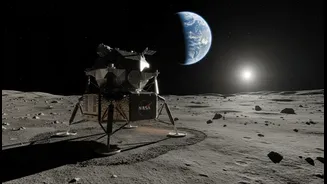
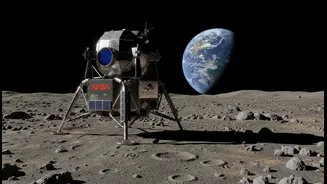
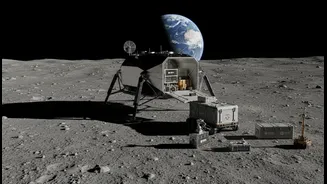
the sole operator, NASA is now acting as an anchor customer, and its most important tool for this is the Commercial Lunar Payload Services (CLPS) initiative. Through this program, NASA doesn't buy and fly the landers; it buys a delivery service from a growing pool of private American companies. This strategic shift is designed to stimulate the commercial space industry, drive down costs through competition, and foster a marketplace that can eventually serve customers beyond NASA. This approach mirrors the success of the Commercial Resupply and Crew programs for the International Space Station, which helped create a vibrant low-Earth orbit economy.
Science Goals Driving Lander Design
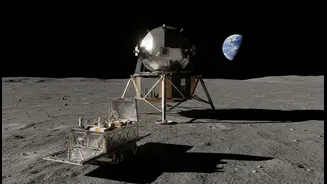
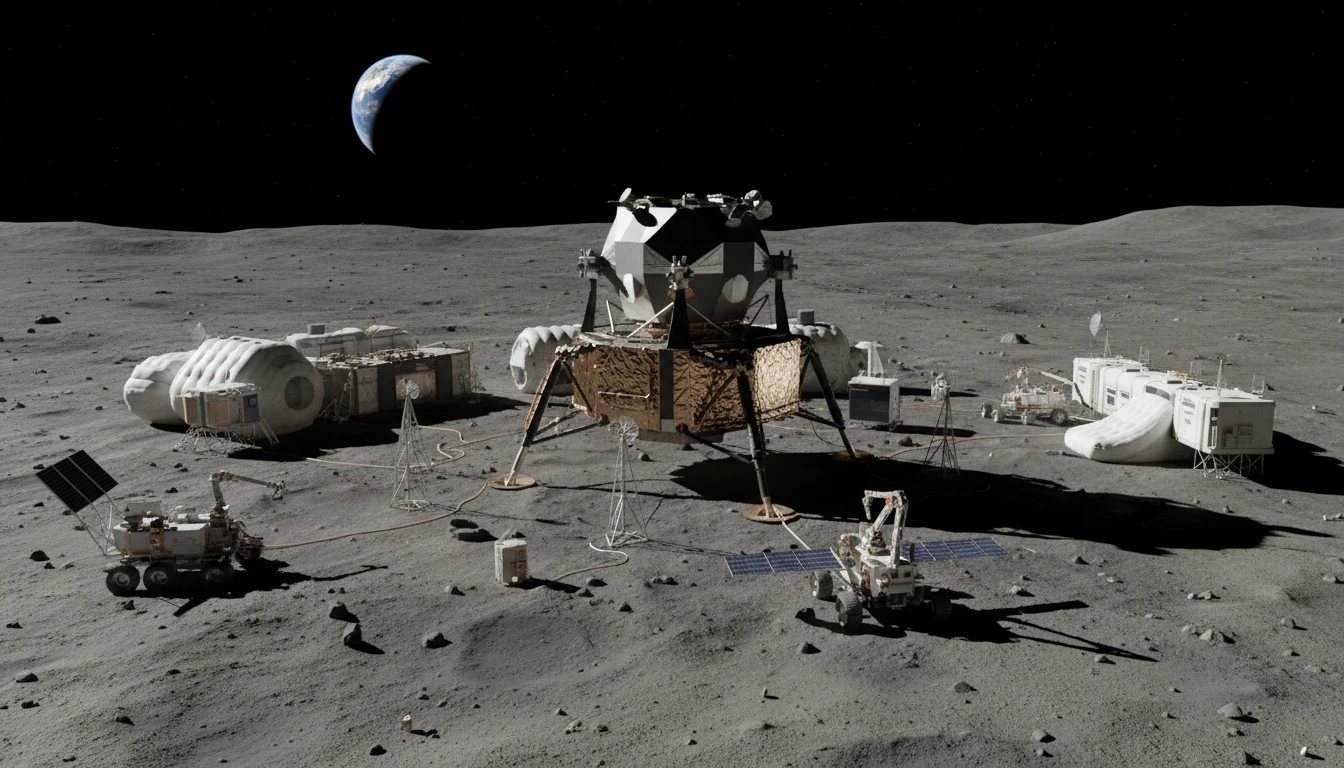
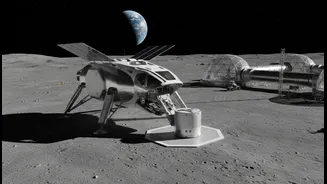
NASA's push for a moon base isn't just about planting flags; it's about science. The agency's primary goals are centered on the lunar South Pole, a region believed to be rich in water ice. This single scientific priority—the search for water and other volatiles—has profound implications for commercial partners. Landing in the dark, rugged, and extremely cold polar regions is far more challenging than the equatorial landings of the Apollo era. These science-driven requirements dictate the design of the commercial landers. Companies in the CLPS program must develop advanced capabilities like precision landing to navigate hazardous terrain, robust power systems to survive in areas with little sunlight, and the capacity to carry sophisticated scientific instruments like drills and rovers. For example, the VIPER rover, designed to map lunar ice, places immense demands on the lander that will deliver it.
A High-Risk, High-Reward Market
The early days of the CLPS program have demonstrated that building a lunar delivery service is fraught with risk. Several of the initial missions have faced significant challenges, including failures and partial successes. Astrobotic's Peregrine lander suffered a propellant leak in 2024 and failed to reach the Moon, while an Intuitive Machines lander successfully touched down but tipped over, limiting its scientific return. These missions underscore the immense technical difficulties involved. However, NASA anticipated this, accepting a higher level of risk in exchange for fostering rapid innovation and lower costs. For the companies involved, the financial stakes are high. While NASA's contracts provide foundational revenue, the long-term business model for many of these firms depends on attracting other customers and proving their systems are reliable. Despite the challenges, the potential rewards are enormous, with projections for the lunar economy reaching into the hundreds of billions of dollars.
Building an Economy, Not Just a Ride
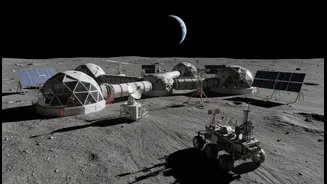
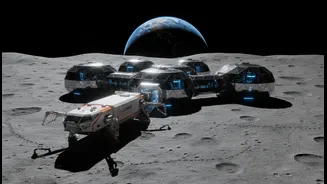
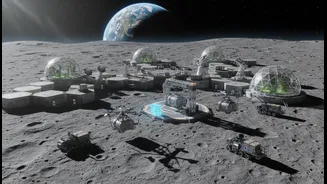
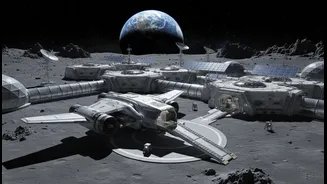
The key lesson from NASA's science push is that the agency is catalyzing an entire industrial ecosystem. The demand for delivering scientific payloads is just the first step. To support a permanent moon base, NASA requires a massive increase in logistical capability, evolving from small landers to medium and heavy-class vehicles. This demand is spurring innovation in everything from lunar communication relays and data centers to in-space manufacturing and resource harvesting technologies. The CLPS program is transitioning from simply delivering science packages to enabling a sustained surface presence. NASA's recently unveiled plans for "CLPS 2.0" reflect this shift, with a dramatic increase in the planned number of missions to build out lunar infrastructure like habitats and power systems. The ultimate goal is an economy where NASA is one of many customers, and private industry drives activity on the Moon.