
A New Perspective on a Familiar Planet
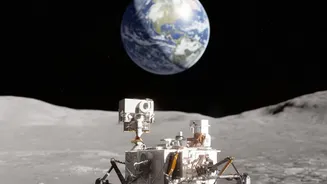
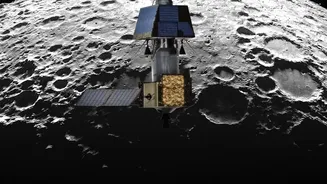
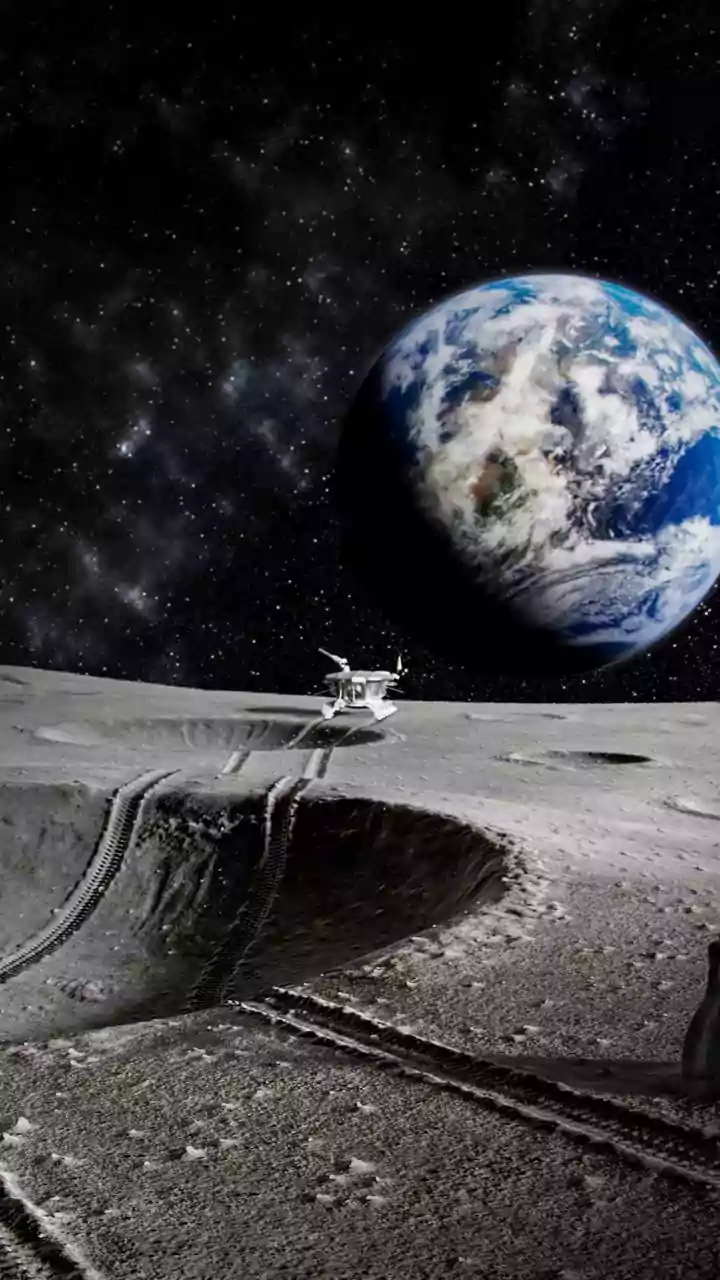
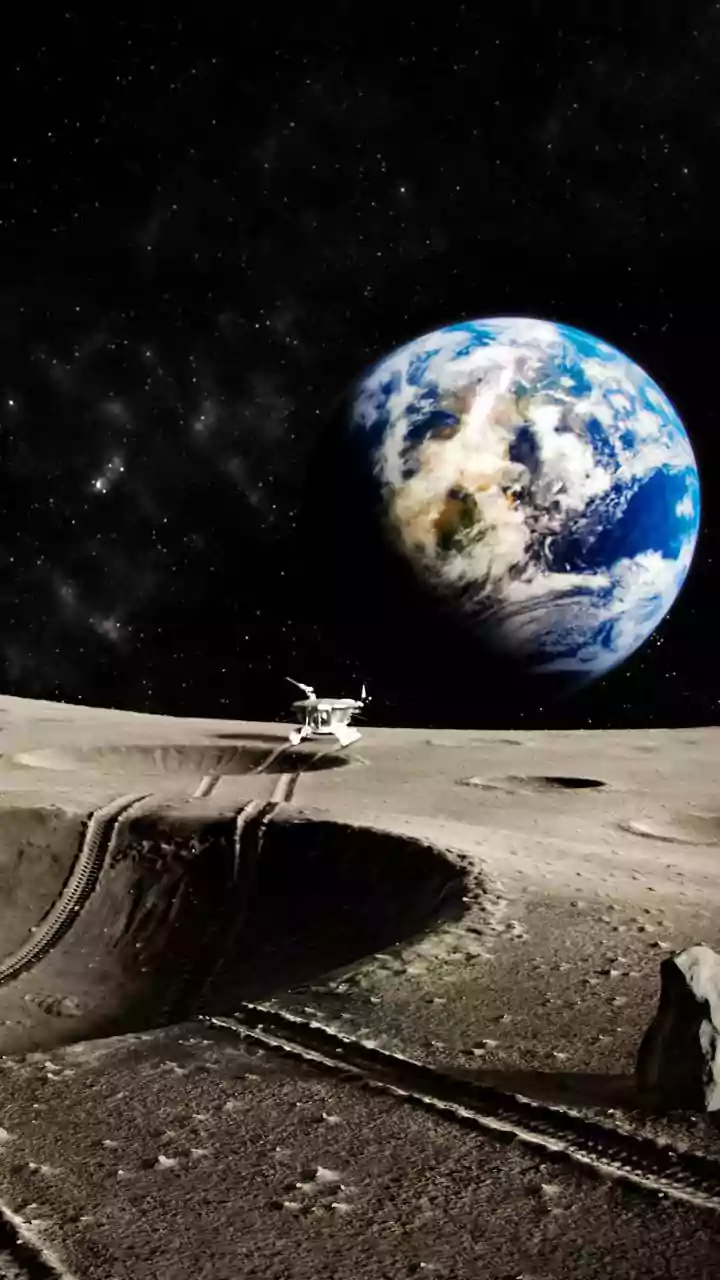
Attached to the Chandrayaan-3 propulsion module, the SHAPE experiment has a unique and rather poetic mission: to look back at Earth from lunar orbit. SHAPE stands for Spectro-polarimetry of a Habitable Planet Earth, and its purpose isn't to study the Moon,
but to use the Moon as a stable, distant platform to observe our own world. It was the only scientific payload on the propulsion module, operating long after the lander separated to begin its historic descent. The core idea is to treat Earth as if it were a distant exoplanet—a planet orbiting a star far beyond our solar system. By cataloging the detailed light signature of a known life-bearing world, scientists can create a vital template, a 'cheat sheet' for what to look for when studying planets trillions of kilometres away.
The Science of a Planetary Fingerprint
SHAPE’s technology, called spectro-polarimetry, is designed to capture Earth's unique fingerprint. It analyses the sunlight that reflects off our planet’s surface and atmosphere. The 'spectro' part breaks this light down into its constituent colours or wavelengths, which can reveal the chemical composition of the atmosphere, such as the presence of water vapour, carbon dioxide, and oxygen. The 'polarimetry' part measures the orientation of these light waves. This can provide information about clouds, oceans, and surface textures. For instance, the way light polarizes when it reflects off an ocean is very different from how it reflects off a desert or a forest. By combining these two sets of data, ISRO can build an incredibly detailed profile of a habitable planet, capturing its atmospheric gases, cloud cover, and surface features from afar.
Searching for 'Bio-Signatures'
The ultimate goal of this observation is to characterise what scientists call 'bio-signatures'—features in a planet's light that strongly suggest the presence of life. On Earth, the high concentration of oxygen in our atmosphere is a direct result of biological processes like photosynthesis. For a distant observer, detecting that much oxygen would be a compelling sign of potential life. SHAPE is studying these very signatures from its vantage point in lunar orbit, observing how they change as Earth rotates and different features like continents and oceans come into view. This provides a dynamic model, not just a static snapshot. This data will be crucial for interpreting the signals received by future, more powerful telescopes designed specifically to hunt for Earth-like worlds around other stars.
Beyond the Moon: India's Next Cosmic Leap
So, while SHAPE is technically part of a lunar mission, its contribution is to astrophysics and planetary science. It elevates India’s space program from exploring celestial bodies to actively participating in one of humanity's most profound quests: the search for life beyond Earth. The experiment serves as a critical testbed, proving the technology and methodology for future dedicated missions. The lessons learned from SHAPE will inform the design of instruments on upcoming Indian space observatories and potentially even interplanetary missions aimed at studying the atmospheres of planets like Mars or Venus. It represents a strategic pivot, transforming India's capabilities from landing on the Moon to using the Moon as a base for looking outward into the wider universe.