





The Rise of the AI Crutch
For a generation that grew up with instant access to information, it's no surprise that AI has been adopted so quickly. Recent studies show a significant portion of Gen Z uses AI tools not just for research, but specifically for writing assistance in their
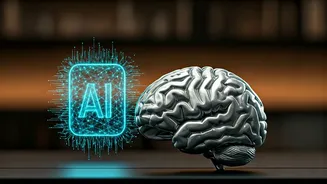
work and studies. The appeal is obvious: it’s fast, efficient, and can help overcome the anxiety of staring at a blank page. Whether it’s drafting a professional email or summarising dense reports, AI offers a shortcut. This reliance isn't just about laziness; it's about productivity. In a world that values speed, AI feels like a necessary tool to keep up. The technology can help break down complex problems and even act as a tireless study partner.
The Danger of Digital Sameness
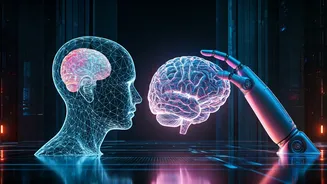
The problem arises when this helpful assistant becomes a substitute for our own thinking and voice. Over-reliance on generative AI can lead to a homogenised communication style, where everything starts to sound polished but soulless. These tools are trained on vast datasets and tend to produce text that is correct but often generic. The unique quirks, personal anecdotes, and subtle emotional tones that make our communication distinctly human get smoothed over. This creates a paradox: a tool meant to improve communication might actually be eroding the soft skills—like collaboration and building relationships—that are critical for long-term career success. In a sea of AI-generated content, standing out becomes nearly impossible when everyone is drawing from the same well.
What Does It Mean to 'Sound Human'?
Sounding human isn't about grammatical perfection; it's about authenticity. It’s the slight hesitation in an email, the witty aside in a presentation, or the vulnerability in sharing a personal story. These are the elements that build trust and create genuine connections. AI struggles with these nuances because it doesn't have lived experiences, a sense of humour, or personal values. It can mimic tone, but it can't replicate true empathy or original insight. A human voice is recognisable by its imperfections and its unique perspective. It’s the difference between a cover song played perfectly by a machine and the original artist’s raw, emotional performance. Readers and colleagues can often sense when content lacks a human touch, triggering distrust.
Authenticity as a Career Superpower
In a workplace increasingly populated by automated messages and AI-generated reports, having a distinct and authentic voice is a powerful differentiator. While AI can handle routine tasks, uniquely human skills like creative thinking, critical judgment, and emotional intelligence are becoming more valuable than ever. Your ability to communicate with personality and build genuine rapport is a skill that cannot be automated. It fosters trust with clients, builds stronger teams, and makes your ideas more memorable. The more that communication becomes flooded with generic, machine-written text, the more a truly human voice will stand out and be valued. Transparency about when and how you use AI can also build credibility.
How to Use AI as an Assistant, Not a Ghostwriter
The goal isn't to abandon AI, but to use it wisely. Treat it as a co-author or a research assistant, not a replacement for your own voice. Start by developing your own ideas and creating a rough outline before turning to AI. Use it to brainstorm alternative angles, summarise research, or rephrase a clumsy sentence. After generating content, the most crucial step is the 'human pass'. Edit ruthlessly to inject your personality. Add personal stories, swap generic phrasing for your own, and ensure the final message reflects your genuine intent and values. Think of it as a collaboration where you are always in the driver's seat, making the final creative decisions.