




The Coolest Spot in the Cosmos
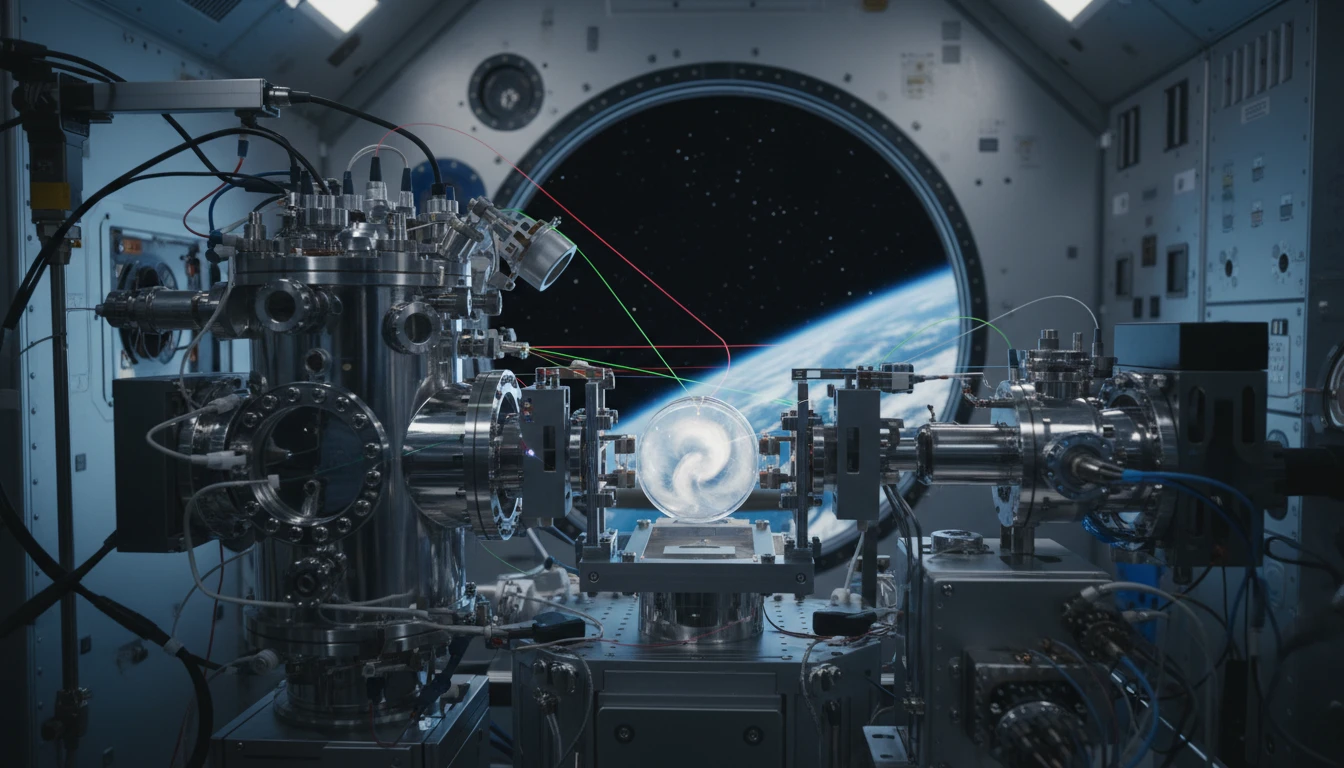
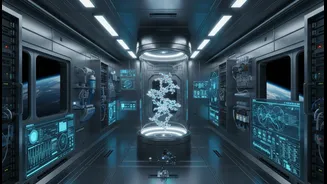
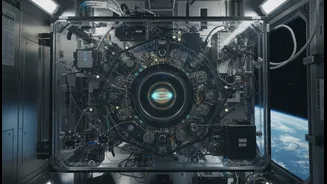
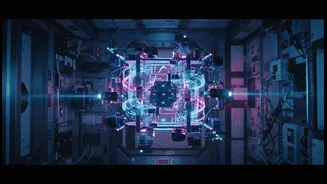
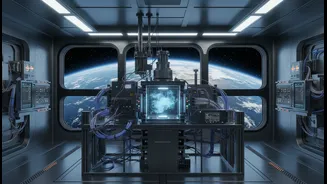
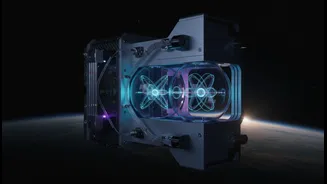
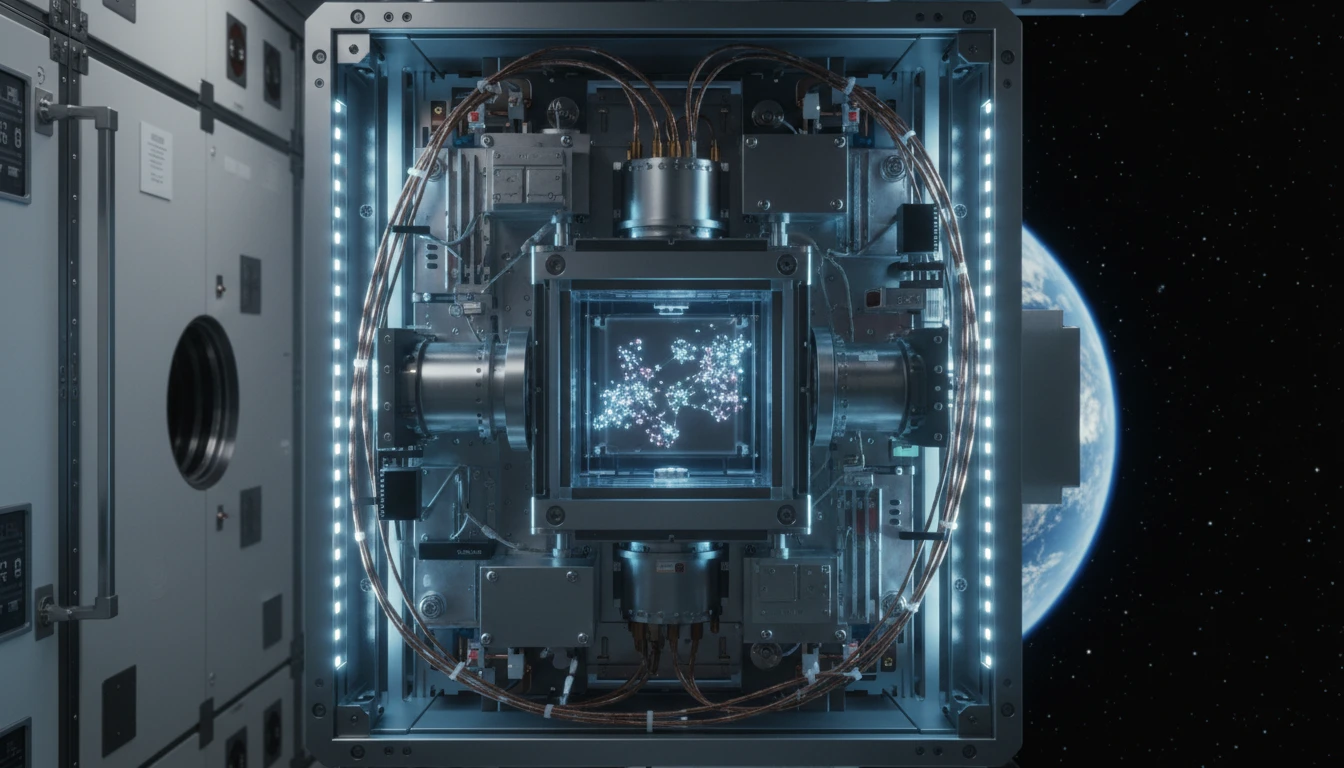
To understand the universe, sometimes you have to get extremely cold. The Cold Atom Lab (CAL) is a quantum physics facility on the International Space Station (ISS) designed to do just that. Remotely operated from Earth, its job is to cool atoms down
to temperatures just a fraction of a degree above absolute zero, or -273.15°C. At these temperatures, which are billions of times colder than deep space, the frantic dance of atoms slows to an almost complete standstill. This allows scientists to observe bizarre quantum phenomena that are impossible to see under normal conditions. The lab itself is a marvel of engineering, a compact unit that was installed on the station in 2018 and has received several upgrades since, most recently in 2026.
Creating a Fifth State of Matter
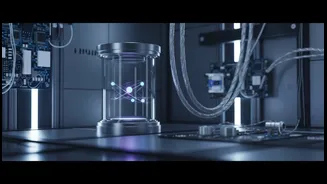
When atoms of certain elements like rubidium are cooled to such extremes, they stop behaving like individual particles and merge into a single, unified quantum object. This bizarre state is known as a Bose-Einstein Condensate (BEC), often called the fifth state of matter after solids, liquids, gases, and plasma. In a BEC, the atoms act like one harmonious wave, allowing scientists to see the strange rules of quantum mechanics on a macroscopic scale. It's like the difference between a chaotic crowd and a perfectly synchronized marching band; in the condensate, all the atoms are marching in lockstep. The CAL was the first facility to produce a BEC in Earth orbit, a major milestone for physics.
Why Do This in Space?
While scientists have been creating BECs on Earth since 1995, there's a fundamental problem: gravity. On the ground, as soon as the magnetic trap holding the ultracold atoms is weakened for observation, gravity pulls the delicate condensate apart. This gives researchers only fractions of a second to conduct their experiments. In the microgravity environment of the ISS, the atoms are in a state of perpetual freefall. This effectively neutralizes the pull of gravity, allowing scientists to observe the condensates for much longer—up to several seconds. This extended observation time is crucial for studying their properties in detail and pushing them to even colder temperatures than achievable on the ground.
Blowing Quantum Bubbles
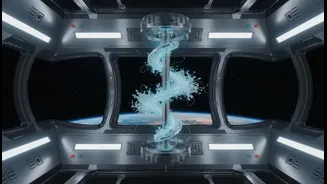
One of the most exciting recent developments from the Cold Atom Lab is the ability to create ultracold atomic bubbles. Using magnetic fields, scientists can manipulate the cloud of condensed atoms into a hollow, shell-like structure. This is something that simply cannot be done on Earth, where gravity would cause the atoms to pool at the bottom, creating more of a contact lens shape. These quantum bubbles, some just a millimeter in diameter, provide a completely new geometry to study quantum phenomena. Scientists are exploring how energy and quantum vortices behave on a curved surface, which could even provide insights into cosmological theories about the expansion of the universe.
From Fundamental Physics to Future Tech
While studying the fundamental nature of the universe is a primary goal, the research at the Cold Atom Lab has profound practical implications. The extreme sensitivity of BECs to their environment makes them ideal for developing next-generation sensors. This could lead to vastly improved atomic clocks, which are the backbone of GPS and navigation systems. Other potential applications include ultra-precise gyroscopes for deep space navigation and advanced gravimeters for monitoring climate change by measuring tiny shifts in Earth's gravitational field. This work is part of what some call "Quantum 2.0," a new revolution aimed at directly manipulating quantum states to create technologies we can only begin to imagine.