

A Digital Apocalypse in a Week
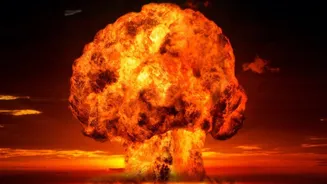
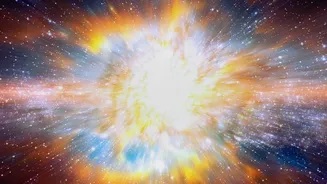
Recent research paints a devastating picture of what a single high-altitude nuclear explosion (HANE) could do to the thousands of satellites circling our planet. A study from physicists at the University of Wisconsin-Madison and Princeton University simulated
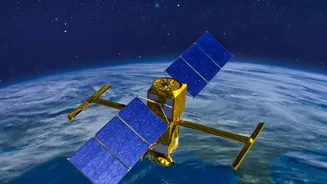
a one-megaton nuclear detonation at an altitude of 500 kilometres. The results are catastrophic: within just one week, an estimated 98% of all satellites in low-Earth orbit (LEO) would be rendered inoperable. This densely populated region of space, home to over 13,000 active satellites, hosts the backbone of global communication, weather monitoring, and internet services.
The Real Killer: An Artificial Radiation Belt
The initial blast and its pulse of X-ray radiation are not the primary threat. While the prompt radiation would instantly disable satellites within its line of sight, the far greater danger comes after. A nuclear detonation in the vacuum of space releases a massive cloud of high-energy electrons from its fission products. Instead of creating a shockwave like an atmospheric blast, these particles are captured by Earth’s magnetic field, forming a dense, artificial radiation belt that can linger for months or even years. Satellites in low-Earth orbit, which circle the planet every 90 minutes or so, would repeatedly fly through this deadly zone. With each pass, their sensitive electronics would absorb a cumulative dose of radiation, leading to rapid degradation and failure.
Echoes of a Cold War Experiment
This is not just a theoretical exercise. In 1962, the United States conducted the 'Starfish Prime' test, detonating a 1.4-megaton warhead 400 kilometres above the Pacific Ocean. The effects were far greater than anticipated. The blast created a brilliant artificial aurora visible in Hawaii, over 1,400 kilometres away, and its electromagnetic pulse (EMP) knocked out streetlights and telephone links on the ground. More importantly, it created an artificial radiation belt that damaged or destroyed at least a third of the few dozen satellites then in orbit, including the pioneering Telstar communications satellite. Today, with a satellite population hundreds of times larger, the consequences would be exponentially worse.
A Cascade of Collisions
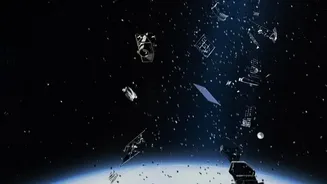
The chaos wouldn't end with fried electronics. As satellites lose power, they also lose their ability to manoeuvre and maintain their orbits. They become uncontrollable pieces of space junk. The simulation predicted that within two years of the initial detonation, around 20 collisions would occur between these disabled satellites. Each collision would create thousands of new pieces of debris, triggering a chain reaction of further crashes known as the Kessler Syndrome. This could render vast portions of low-Earth orbit unusable for years or even decades, making it incredibly hazardous to launch new satellites needed for recovery.
A Fragile Global System at Risk
The loss of satellite infrastructure would not be a distant, abstract problem. It would directly impact daily life across the globe. We rely on satellites for GPS navigation, financial transactions that require precise timing signals, weather forecasting, emergency services, and global communications. A successful attack could disrupt transportation, financial markets, and military operations that depend on space-based assets for surveillance and communication. The simulation highlights a profound vulnerability: a weapon detonated to target one nation's satellites would inevitably cause indiscriminate, global damage, threatening the entire orbital infrastructure built by humanity.