


Why Your Arms Are a Hidden Powerhouse
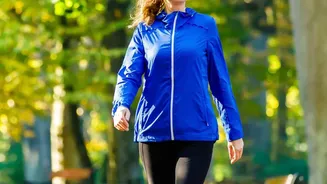
For too long, walking has been considered purely a lower-body activity. We focus on our stride, our pace, and our feet, while our arms are often forgotten, left to hang limply or busy holding a phone. However, treating walking as a full-body activity is
key to unlocking its true potential. An active arm swing is a natural part of human locomotion, acting as a counterbalance to your legs. This opposing motion helps stabilize your body, reduce rotational forces, and maintain forward momentum. When you neglect your arms, other muscles have to compensate, which can lead to strain and a less efficient gait. More importantly, especially for adults over 40, a purposeful arm swing is crucial for maintaining good balance and coordination, which can reduce the risk of falls.
The Science-Backed Benefits of an Active Swing
Intentionally pumping your arms does more than just make you look like a pro walker; it delivers tangible health rewards. Firstly, it boosts your cardiovascular workout, increasing your heart rate and calorie burn compared to walking with passive arms. This added intensity helps improve endurance without putting extra stress on your joints. An active swing also engages the muscles in your upper body, including your shoulders, upper back, and chest, turning your walk into a more comprehensive workout. This movement also encourages gentle rotation through your torso, which helps mobilize the spine and keep back muscles healthy and strong. Furthermore, the simple act of swinging your arms can stimulate the lymphatic system, which has nodes in your armpits, helping to support your body's immune functions.
How to Master the Perfect Arm Swing
Getting the movement right is simple, but it requires focus. Start by relaxing your hands; clenching your fists can create unnecessary tension. Imagine you're holding a delicate potato chip you don't want to break. Bend your elbows at a roughly 90-degree angle and keep them relatively close to your body. The movement should originate from your shoulders, not your elbows. Swing your arms forward and back in opposition to your legs—as your right leg steps forward, your left arm should swing forward, and vice versa. Focus on driving your elbows backward, which naturally propels the opposite arm forward. Your hands should travel from roughly your hip or waist level up to your chest level with each swing. Avoid swinging your arms across your body, as this can slow you down and is less efficient.
Common Mistakes to Avoid
Many well-intentioned walkers make a few common errors that limit the benefits of their arm swing. One is keeping the arms too straight. A stiff, straight-armed swing can feel unnatural and awkward. Bending at the elbow is more efficient and powerful. Another mistake is looking down at your feet, which causes your posture to slump and can lead to neck and back strain. By keeping your gaze fixed 10 to 20 feet ahead, you'll naturally stand taller, allowing for a fuller, more effective arm motion. Finally, some people believe carrying small hand weights will boost their workout. While it might seem logical, experts often advise against it as it can alter your natural gait, strain your arm and shoulder joints, and offer minimal extra benefit compared to a powerful, unweighted swing.
Ready for an Upgrade? Consider Nordic Walking
If you've mastered the active arm swing and want to take your walking workout to the next level, Nordic walking is an excellent option. This enhanced form of walking uses specially designed poles to engage the upper body even more. By pushing off the ground with the poles, you propel yourself forward, which intensifies the workout significantly. Nordic walking has been shown to burn more calories and increase oxygen consumption compared to regular walking. It works the muscles of your arms, shoulders, chest, and back more thoroughly while also reducing the impact on your knees and hips. It’s a fantastic way to build on the principles of active arm movement, offering a powerful, low-impact, full-body workout that's particularly beneficial as we age.