

A Note on Monsoon Plant Care
Before we get to the plants, a few general tips can help your entire indoor garden survive the season. The biggest mistake during the monsoon is overwatering. With high humidity, the soil dries out much more slowly. Always check the top inch or two of
soil; if it feels damp, wait a few more days before watering. Ensuring your pots have good drainage holes is crucial to prevent waterlogging, which is a primary cause of root rot. Finally, reduced sunlight means plants grow slower, so you can ease up on fertilising until the sunny days return. Good air circulation is also key to preventing fungal diseases that love damp, still conditions.
Snake Plant (Sansevieria trifasciata)
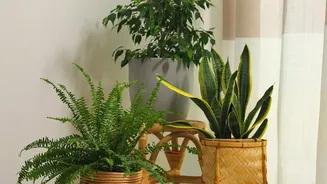
Often called the 'un-killable' plant, the Snake Plant is a champion of neglect and a perfect choice for the rainy season. Its tolerance for low light means it won't struggle on overcast days. More importantly, it is highly susceptible to root rot, so its preference for dry soil is a major advantage during the humid monsoon. You should water it only when the soil is completely dry to the touch, which might be as infrequently as every three to four weeks during this season. Its stiff, upright leaves add a touch of modern elegance to any room and it is also known for its air-purifying qualities.
ZZ Plant (Zamioculcas zamiifolia)
The ZZ Plant is another superstar of low-maintenance gardening. It is famously drought-tolerant because its underground rhizomes store water, making overwatering a greater risk than underwatering. This is ideal for the monsoon when the air is heavy with moisture. Like the Snake Plant, the ZZ can thrive in low-light conditions, making it suitable for corners far from a window. Its glossy, dark green leaves can brighten up a gloomy room. Water it sparingly, allowing the soil to dry out completely between waterings, roughly every two to three weeks. Yellowing leaves are a common sign of overwatering.
Pothos or Money Plant (Epipremnum aureum)
A staple in many Indian homes, the Money Plant is incredibly resilient and adaptable. It tolerates a wide range of conditions, including the lower light levels and high humidity of the monsoon. While it enjoys moisture, it's crucial to avoid waterlogged soil, which can lead to root rot. The finger test is your best friend here: water only when the top layer of soil feels dry. Its trailing vines look beautiful on shelves or in hanging baskets, and it's famously easy to propagate. Plus, it's a great air purifier, which is an added bonus during the stuffy, humid days of the rainy season.
Aglaonema (Chinese Evergreen)
Aglaonemas are a fantastic choice because they genuinely love the conditions the monsoon provides. Native to tropical forests, they thrive in high humidity and can handle lower light levels well. The beautiful patterns on their leaves can add a splash of colour on a dreary day. However, despite loving humidity, they are still prone to root rot if the soil is consistently soggy. Ensure the pot has excellent drainage and water only when the top couple of inches of soil are dry. Good air circulation will also help prevent potential fungal issues on its lush foliage.
Peace Lily (Spathiphyllum)
The Peace Lily is well-suited for the monsoon as it prefers humid conditions and adapts well to low-light spaces. In fact, the extra humidity can encourage it to produce its elegant white blooms. One of the best things about the Peace Lily is that it communicates its needs clearly; the leaves will visibly droop when it's thirsty, taking the guesswork out of watering. This helps prevent the overwatering that is so common during the rains. It’s also known for being an excellent air purifier, making it a healthy and beautiful addition to your home.
Spider Plant (Chlorophytum comosum)
The Spider Plant is a forgiving and easy-to-care-for option that does well indoors during the monsoon. It enjoys bright, indirect light but can tolerate lower light conditions. Its arching leaves and the 'spiderettes' (baby plants) that dangle from the mother plant create a lovely, full appearance. These plants prefer their soil to be kept evenly moist but not waterlogged, so reducing watering frequency during the humid months is essential. Their ability to tolerate a bit of neglect makes them a stress-free companion for the rainy season.