

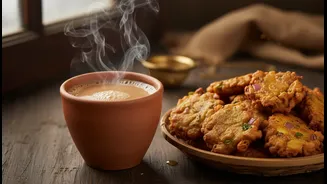

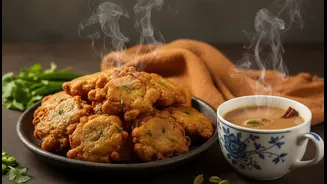


An Instinctive Response to Rain
This craving isn't just a simple habit; it’s a complex interplay of biology and psychology. When the monsoon clouds roll in, the lack of sunlight can cause a dip in our serotonin levels, the brain's natural mood regulator and appetite suppressant. In
response, our bodies instinctively seek out carbohydrates to boost serotonin production. Fried foods, rich in carbs and fat, provide this quick boost, while also triggering the release of dopamine, a neurotransmitter associated with pleasure and reward. This creates a powerful, satisfying experience that our brains remember and seek out again.
The Comfort of Contrast
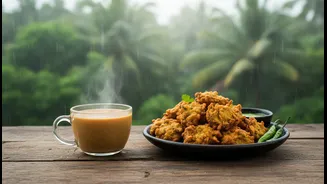
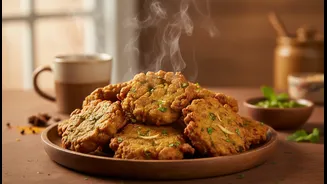
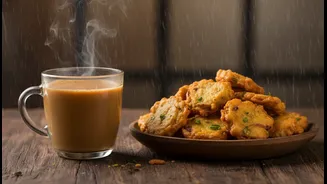
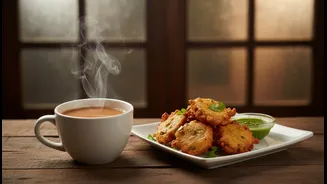
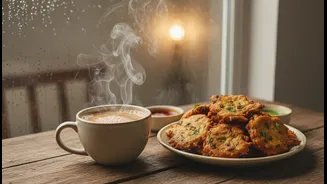
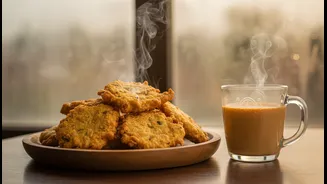
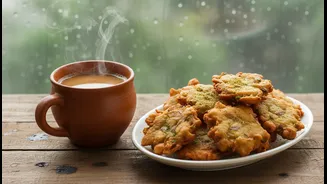
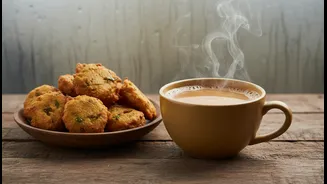
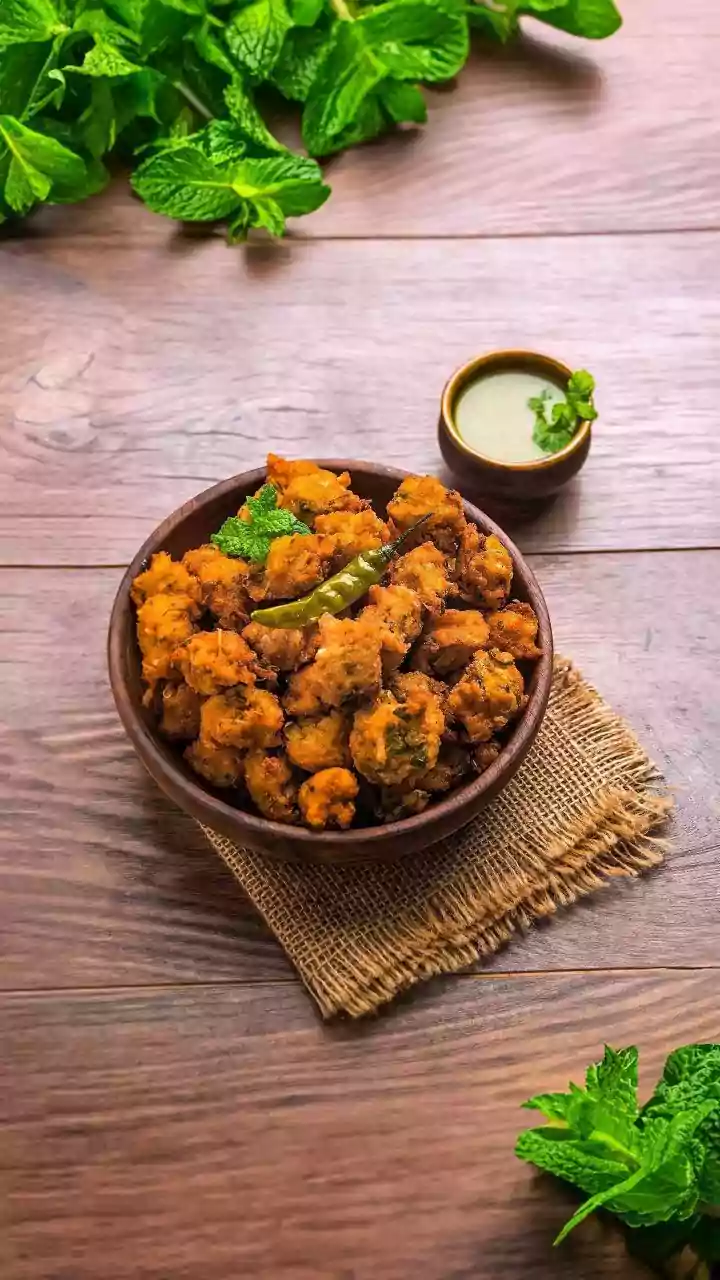
There's also a sensory science at play. The monsoon brings with it a cool, damp, and humid environment. Our bodies naturally crave warmth and a contrast to the sluggish feeling of a rainy day. Hot, crispy, and crunchy foods like pakoras provide a perfect counterpoint to the dampness outside. The warmth from a freshly fried snack or a steaming cup of tea helps our bodies regulate temperature, a process known as thermogenesis. It's a literal and figurative comfort, a way of creating internal warmth when the world outside feels chilly and wet.
A Ritual of Togetherness
Beyond the science, the pairing of chai and pakoras is a deeply social ritual. In India, tea is more than a beverage; it is a symbol of hospitality and connection that is woven into daily life. The concept of “chai pe charcha” (a discussion over tea) highlights its role in fostering communication and building relationships. When it rains, this ritual is amplified. The act of preparing and sharing pakoras often becomes a communal activity, bringing families and friends together to enjoy a simple pleasure. It transforms an ordinary afternoon into a shared, memorable occasion, reinforcing social bonds over a comforting snack.
Tasting Nostalgia in Every Bite
For many, the scent and taste of chai and pakoras are deeply intertwined with nostalgia. The combination evokes powerful memories of childhood, family gatherings, and carefree rainy days. Food has a unique ability to transport us back in time, and this specific pairing often connects people to moments of comfort and security. You may not remember specific details from your school days, but you remember the feeling of biting into a hot fritter while watching the rain from a window. This emotional connection is a key reason the craving feels so potent; we aren't just seeking food, but a feeling of home and happiness.
An Enduring Cultural Signature
While the combination is now considered a quintessential monsoon tradition, its widespread popularity is a relatively modern phenomenon from the 20th century. As tea became more accessible across India and street food culture grew, chai and pakoras became the unofficial cuisine of the rainy season. Today, from roadside stalls to family kitchens, the tradition is a cultural constant. While every region has its own rainy-day specialties, from Kerala's ulli vada to Karnataka's goli baje, the spirit of finding comfort in warm, savoury snacks remains the same across the country. This shared experience is a delicious thread in India's rich cultural tapestry.