





The Gut-Breakfast Connection
Think of your digestive system as a garden. After a long night of rest, breakfast is the first opportunity to tend to it. Eating in the morning kickstarts your metabolism and gets your digestive enzymes working. When you introduce fermented foods at this
time, you are seeding your gut with beneficial bacteria, or probiotics, which set a positive tone for the rest of the day. A balanced breakfast helps regulate your natural digestive rhythm, and adding probiotics can enhance this process significantly.
What Exactly Are Fermented Foods?
Fermentation is an ancient preservation method where microorganisms like bacteria and yeast break down sugars in food. This process not only creates distinct tangy flavours but also produces probiotics. These are the “good” bacteria that help maintain a healthy balance in your gut microbiome. By consuming these foods, you are directly reinforcing your gut's population of helpful microbes, which play a vital role in digestion, immunity, and even mental well-being through the gut-brain axis.
Idli & Dosa: The Probiotic Powerhouses
For many in India, a fermented breakfast is already a daily tradition. South Indian staples like idli and dosa are made from a batter of rice and lentils that is left to ferment overnight. This process enriches the batter with lactic acid bacteria, which act as natural probiotics. These beneficial bacteria pre-digest the carbohydrates and proteins, making idlis and dosas remarkably easy on the stomach and reducing issues like bloating. They also enhance the absorption of nutrients like B vitamins and iron.
Yogurt and Dahi: A Versatile Classic
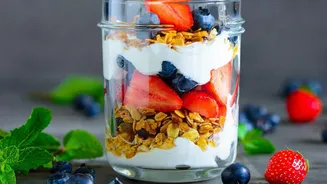
Perhaps the most accessible fermented breakfast food is yogurt, or dahi. It's a simple and effective way to get a daily dose of probiotics. You can enjoy it plain, add it to a smoothie, or top it with fruit and nuts for a balanced meal. When choosing yogurt, look for labels that say “live and active cultures” to ensure you are getting the probiotic benefit. The fermentation process makes yogurt a great source of calcium, protein, and B vitamins.
Beyond Dahi: Discovering Kefir
If you enjoy yogurt, consider trying kefir. It’s a fermented milk drink with a consistency thinner than yogurt, making it perfect for drinking or pouring over cereal. While both are excellent probiotic sources, kefir is often considered more potent, containing a wider variety and a higher number of beneficial bacteria and yeasts. Studies suggest that this diversity can offer enhanced benefits for both digestion and immune support.
A Good Word for Sourdough
If toast is your go-to breakfast, switching to traditional sourdough can be a gut-friendly upgrade. Unlike standard bread made with commercial yeast, sourdough is leavened with a fermented starter of wild yeast and lactic acid bacteria. While the baking process kills the live probiotics, sourdough is still beneficial because it contains prebiotics—a type of fiber that acts as food for the good bacteria already in your gut. This fermentation process also breaks down some gluten and other compounds, making it easier to digest for many people.
How to Get Started
Incorporating fermented foods into your breakfast doesn't have to be complicated. Start small to allow your system to adjust. Try adding a spoonful of dahi to your plate, switching your regular bread to sourdough, or blending kefir into your morning smoothie. Even adding a side of fermented pickle or sauerkraut to your scrambled eggs can provide a flavourful probiotic boost. The key is to find what you enjoy and make it a consistent part of your morning routine.