







An Encore for a Legendary Probe
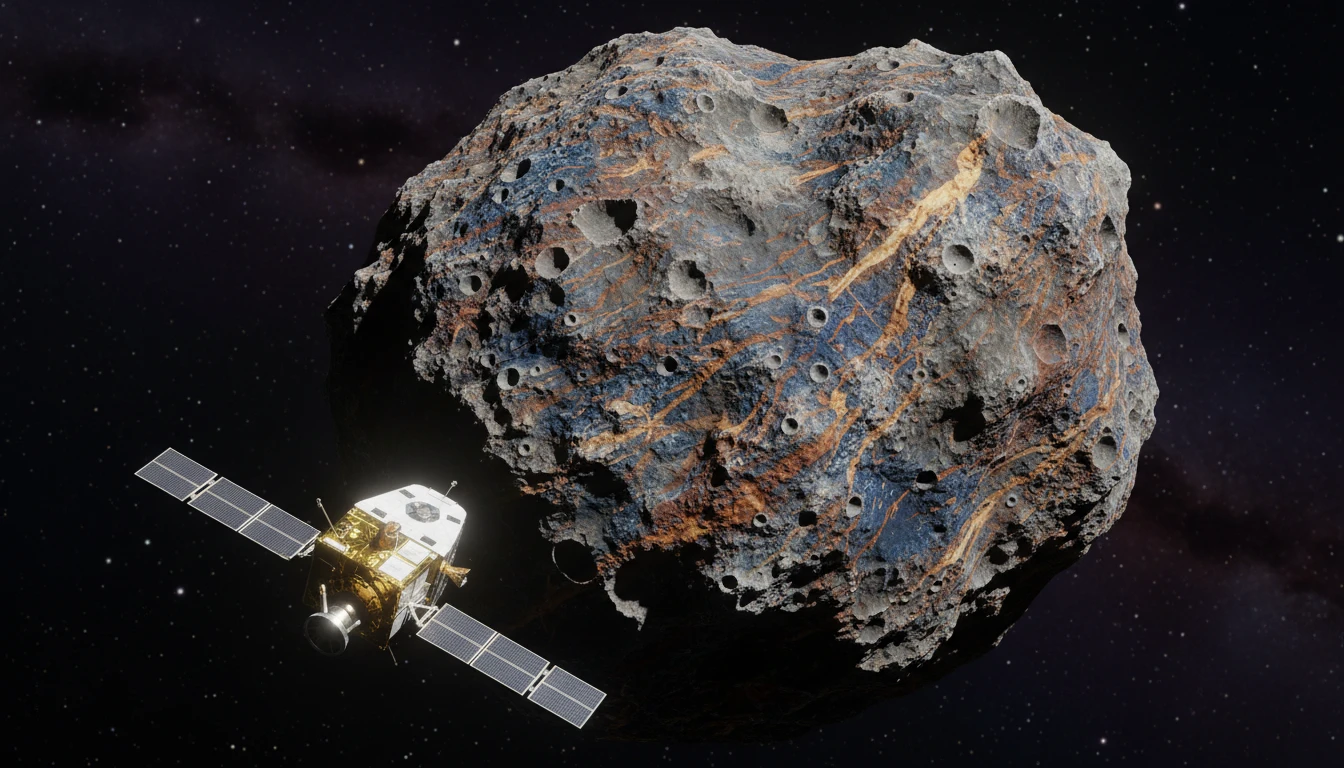
Japan’s Hayabusa2 is a spacecraft that has already earned its place in history. Its primary mission, which concluded in December 2020, saw it successfully land on the asteroid Ryugu, collect pristine samples from its surface and below, and return them
to Earth for study. That achievement provided scientists with invaluable insights into the building blocks of our solar system. But the Japanese Aerospace Exploration Agency (JAXA) wasn't done. With the probe still healthy and possessing remaining fuel, it was sent on an ambitious extended mission. The first major milestone of this new journey was the flyby of a second asteroid, a near-Earth object known as 98943 Torifune (formerly 2001 CC21), which it successfully completed on July 5, 2026. This new phase is not for collecting samples, but for pushing the boundaries of spacecraft navigation and high-speed observation.
Target: The Two-Lobed Torifune
The target, Torifune, is a stony S-type asteroid roughly 450 metres in diameter. The flyby was a high-stakes manoeuvre, with Hayabusa2 speeding past the asteroid at a relative velocity of about 5 kilometres per second. This made navigation and data collection incredibly challenging. Early images have already delivered a scientific surprise, revealing that Torifune is likely a 'contact binary'—two separate asteroids that gently merged to form a single, two-lobed body. Beyond pure science, JAXA views the mission as a crucial test for planetary defense. Successfully tracking and approaching a small, fast-moving object at close range demonstrates a capability that could one day be vital for deflecting an asteroid that poses a threat to Earth. Every piece of data gathered on Torifune’s composition and structure adds to the global knowledge base needed to protect our planet.
The Indian Context: A Benchmark for Ambition
So, where does India fit into this picture? While the Indian Space Research Organisation (ISRO) was not directly involved in the Torifune flyby, JAXA's success sets a powerful benchmark. ISRO has its own clear ambitions in this domain. In 2024, ISRO Chairman S. Somanath stated that India is keen to collaborate on global missions to study asteroids and develop planetary defense capabilities. He noted that after the successes of Chandrayaan-3 and Aditya-L1, India has proven its ability to execute complex interplanetary missions and must now apply those skills to asteroids. JAXA's accomplishment with Hayabusa2 provides a clear roadmap of the technical challenges and scientific rewards involved. It serves as both an inspiration and a friendly challenge, pushing other space-faring nations, including India, to accelerate their own programs.
Collaboration Over Competition
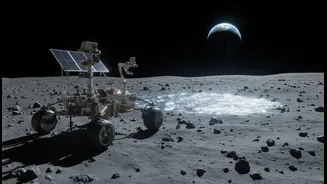
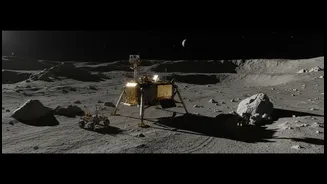
The future of asteroid exploration is likely to be collaborative, a point Chairman Somanath has stressed himself. No one nation can handle planetary defense alone. JAXA's expertise, demonstrated by the Hayabusa missions, makes it a prime potential partner for ISRO. This is not just speculation; the two agencies already have a strong working relationship. They are collaborating on the Lunar Polar Exploration Mission (LUPEX), a joint venture to explore the Moon's south pole. This existing partnership on a complex lunar mission provides a solid foundation for future cooperation in other areas, such as asteroid missions. As ISRO looks towards a potential mission to the asteroid Apophis in 2029, the lessons from Hayabusa2's flybys and JAXA’s operational experience will be invaluable. In fact, JAXA experts have already participated in workshops in India to share insights from their missions.