





The Anatomy of a 'Cup'
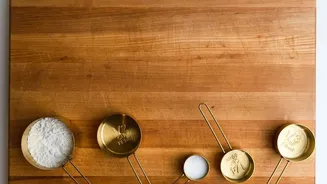
In the world of cooking, a 'cup' is not just any cup. It's a standard unit of volume, but the problem is that the standard isn't universal. The three most common systems you'll encounter in recipes, especially online, are the US customary system, the metric
system, and the old British imperial system. A US customary cup holds about 237 millilitres (ml), though it's often rounded to 240 ml for nutritional labeling. A metric cup, used in Australia, New Zealand, and for many modern recipes, is a clean 250 ml. An older British or Imperial cup, which you might find in pre-1970s UK recipes, is a much larger 284 ml. While these differences may seem small, they can quickly compound and throw a recipe's ratios completely off balance.
Why Baking Is a Science
Unlike general cooking, where you can often get away with a 'pinch of this' and a 'dash of that', baking is chemistry. Each ingredient has a specific function, and their ratios are crucial for the desired chemical reactions to occur. Too much flour can make a cake dense and dry. Not enough sugar affects browning, moisture, and texture. An imbalance in leavening agents like baking soda or powder can cause a cake to rise rapidly and then collapse in the middle, or leave a bitter aftertaste. When you mix and match cups—for instance, using a 250 ml metric cup for the flour and a 240 ml US cup for the milk—you are unknowingly altering these precise chemical formulas, which can be the difference between a fluffy sponge and a sunken disaster.
The Flour Problem: Volume vs. Weight
Dry ingredients, especially flour, are notoriously difficult to measure accurately by volume. The amount of flour in one cup can vary dramatically depending on how you fill it. Scooping the cup directly into the flour bag can compact it, resulting in up to 30% more flour than a recipe intended. The proper technique—fluffing the flour, spooning it into the cup, and leveling it off with a straight edge—yields a more consistent result, but it's still prone to user error. This is why professional bakers and pastry chefs almost always measure ingredients by weight using a digital scale. Weight is an absolute measure; 120 grams of flour is always 120 grams, regardless of how packed it is or the humidity in the air. This eliminates all the guesswork and is the single biggest step you can take toward more consistent baking.
A Simple Toolkit for Success
So, how can you avoid these measurement mishaps? The solutions are quite simple. First, be consistent. When you start a recipe, use one single set of measuring cups for everything. Don't grab one cup from a new set and another from an old one you've had for years. Second, be aware of your recipe's origin. If you're using a recipe from an Australian or British blog, it likely uses 250 ml metric cups. If it's from an American source, it's probably assuming 240 ml cups. Knowing this can help you make adjustments or at least understand why a batter might seem too wet or dry. Finally, the gold standard solution is to invest in a digital kitchen scale. They are affordable and easy to find. Using recipes that provide gram measurements is the most reliable way to replicate a dish perfectly every single time, taking all the cup-related confusion out of the equation.