


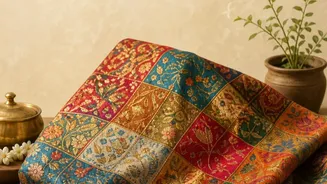
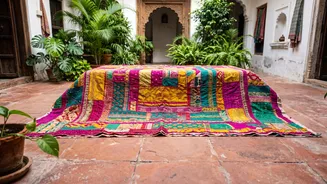
Before 'upcycling' was a buzzword, there was Sujini. This traditional embroidery from Bihar has, for centuries, turned old, forgotten fabrics into works of art, proving that sustainability is woven deep into India's cultural fabric.
A Stitch Through Time
At its heart, Sujini—also
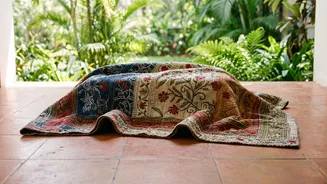
known as Sujani—is the art of storytelling with a needle and thread. Originating in the Bhusara village of Bihar, this craft is a form of quilting that traditionally used a simple running stitch to join layers of old, worn-out saris and dhotis. The name itself comes from the words 'su', meaning easy or facilitating, and 'jani', meaning birth. In its earliest form, Sujini was used to create soft, protective quilts for newborn babies, swaddling them in layers of familiar cloth filled with the memories and blessings of the family. It was a craft born not of commerce, but of necessity, resourcefulness, and love, where nothing was wasted and every piece of fabric had a continuing purpose.
The Threads of Scarcity and Story
The genius of Sujini lies in its humble origins. In rural Bihari households, women would gather discarded cotton fabrics, layering them to achieve a desired thickness. They would then use thread pulled from the borders of their old saris to stitch these layers together. This process didn't just create a functional item; it created a canvas. The top layer became a space for expression, where artisans would embroider intricate designs depicting village life, personal joys and sorrows, mythological tales, and scenes from nature. Each quilt was a unique document, a visual diary that communicated the creator’s worldview. The motifs were rarely just decorative; they were symbolic, often carrying wishes for protection, prosperity, and a long life for the child the quilt was meant for.
The Language of the Running Stitch
The primary technique in Sujini is the unpretentious running stitch. What makes Sujini distinct is how this simple stitch is used to achieve complex narrative effects. The outlines of the main figures and motifs are first drawn onto the fabric. These outlines are then often filled with a dense pattern of running stitches, usually in a contrasting colour, which makes the motifs pop against the base fabric. A chain stitch is also commonly used to create bold outlines for the main figures. The background is then typically filled with fine, parallel running stitches in the same colour as the base cloth, creating a delicate, rippled texture that holds the layers together. This combination of bold, colourful figures and subtle, textured backgrounds gives Sujini its signature look.
From Domestic Art to Global Stage
For generations, Sujini remained a purely domestic craft, passed down from mother to daughter. Its journey into the wider world began in the late 1980s, when cultural organisations and designers recognized its unique aesthetic and social potential. This revival has seen Sujini move beyond quilts for newborns. Today, the embroidery adorns a wide range of products, including high-fashion garments, sarees, wall hangings, cushion covers, and bedspreads. The craft received a significant boost when it was awarded the Geographical Indication (GI) tag in 2006, officially recognizing its origin in Bihar and protecting its authenticity. This has helped secure the livelihood for hundreds of women artisans who are the custodians of this tradition.
The Soul of Sustainable Craft
In an era grappling with the environmental impact of fast fashion, Sujini embroidery stands as a powerful testament to circular and mindful consumption. Its foundational principle is to extend the life of textiles, to see value in what is old and worn, and to transform it into something beautiful and meaningful. This is not a modern trend but an age-old practice rooted in a deep respect for resources. By choosing a Sujini product, consumers are not just acquiring a piece of textile art; they are supporting a sustainable ecosystem. They are empowering women artisans, preserving a rich cultural heritage, and participating in a story of renewal that is stitched, quite literally, into the fabric of the piece.