
The Problem with Martian 'Soil'
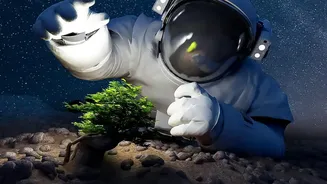
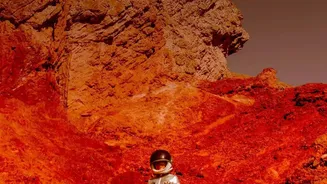
The ground on Mars, called regolith, isn't the rich, organic soil we have on Earth. It's essentially fine, crushed rock and dust, lacking the essential organic matter and beneficial microbes plants need to thrive. Worse, Martian regolith contains toxic
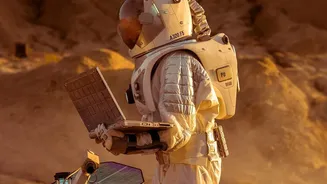
compounds, including perchlorates, which are harmful to both plants and humans. While some experiments using Martian soil simulants have shown that certain plants can germinate, long-term growth is another story. The regolith's texture is also a problem; it struggles to hold water and can become hard like concrete, stunting growth. The first step for any Martian farmer would be to either extensively treat the regolith—a process that involves washing out the harmful salts—or to bypass it completely.
Creating an Earth-like Bubble
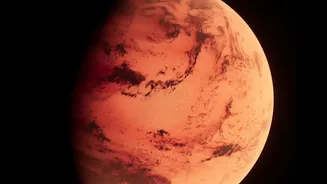
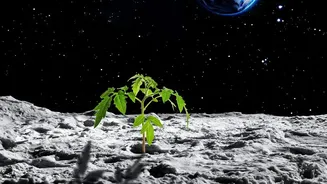
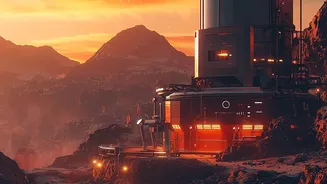
Plants cannot survive on the Martian surface. The atmosphere is about 100 times thinner than Earth's, is composed mostly of carbon dioxide, and offers almost no protection from sterilizing radiation. Temperatures can plummet to an average of -65°C. Therefore, all agriculture would need to happen inside highly advanced, sealed, and pressurized habitats or greenhouses. These structures would have to maintain a stable temperature, a breathable atmosphere, and shield everything inside from the intense cosmic and solar radiation that bombards the planet. Building such habitats, potentially underground or covered in thick layers of regolith for natural shielding, is a monumental engineering feat in itself.
Finding Water on a Dry Planet
While Mars appears to be a desolate desert, it's not entirely without water. The planet holds vast quantities of water ice at its polar caps and buried underground. Future colonists would need to mine this ice and melt it—a process that requires significant energy and technology. However, this water isn't ready to use straight from the ground. It's often briny and mixed with the same perchlorates found in the soil, meaning it would have to be purified before it could be used for drinking or irrigation. Transporting all the necessary water from Earth is economically impossible, so mastering in-situ resource utilization—using what's already there—is critical.
Soil-Free Farming Solutions
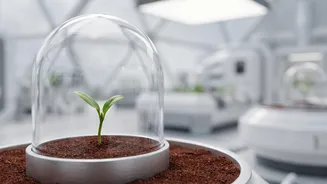
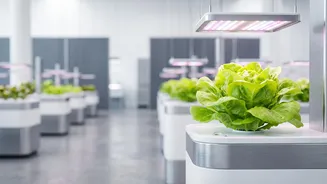
Given the issues with Martian regolith, many scientists believe the most viable solution is to not use it at all. This is where soil-free techniques like hydroponics and aeroponics come in. Hydroponics involves growing plants in a nutrient-rich water solution, while aeroponics uses a mist of nutrient-fortified water. These methods are highly efficient, use significantly less water than traditional agriculture, and allow for complete control over nutrient delivery. NASA has already done extensive research in this area, including the 'Veggie' and Plant Habitat experiments on the International Space Station, where astronauts have successfully grown lettuce, chili peppers, and other crops. These controlled environment agriculture systems are seen as the most promising path forward for producing fresh food on long-duration missions.
Let There Be (Artificial) Light
Mars is farther from the Sun than Earth, receiving only about 43% of the sunlight. This already limited light can be further obscured by the planet's frequent and massive dust storms, which can last for weeks. Relying on natural sunlight alone would be risky. The solution is artificial lighting, likely from advanced and highly efficient LED systems. Research pioneered by NASA for space applications has already led to the development of specific light recipes—combinations of red, blue, and green light—that optimize plant growth. These vertical farms, with stacks of trays under tailored LED lights, would allow for dense, reliable food production regardless of the weather outside the habitat.