

Why the Moon's Temperature Matters
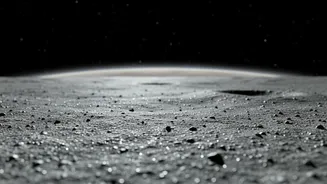
The Moon is a world of incredible temperature extremes. During its long, two-week-long day, the surface can get hotter than boiling water, while at night, it plunges into temperatures cold enough to freeze gases. Understanding this thermal behaviour is not
just a scientific curiosity; it's critical for future exploration. Any plan for establishing long-term human habitats, extracting resources like water ice, or building infrastructure depends on knowing how hot and cold the lunar ground gets, and how that heat travels through it. The properties of the lunar soil, or 'regolith', dictate everything from the stability of structures to the potential for finding and preserving volatile resources like water, especially in the permanently shadowed regions near the poles. Studying this helps scientists model the Moon's geology and provides an essential instruction manual for future engineers and astronauts.
Meet ChaSTE: A Next-Generation Lunar Probe
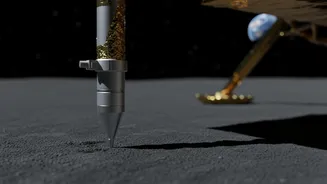
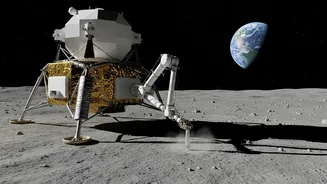
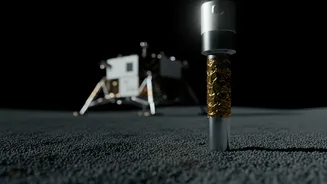
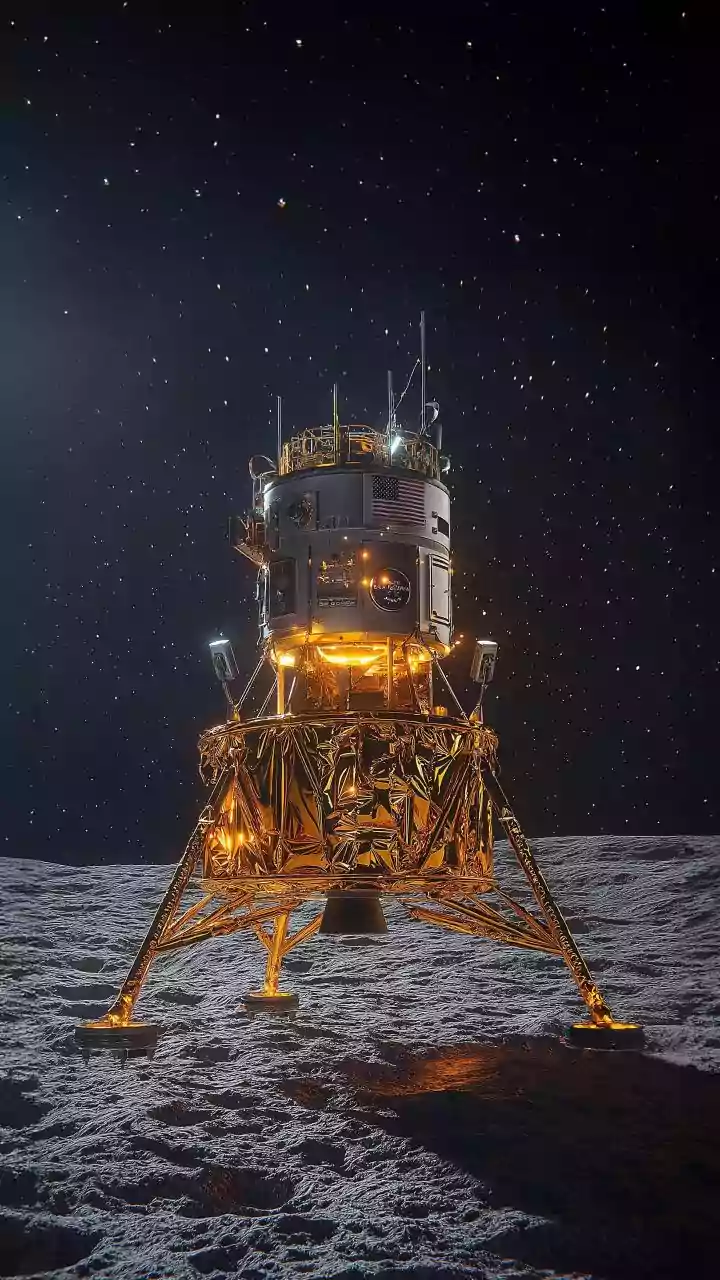
At the heart of this investigation is a sophisticated instrument aboard the Vikram lander called ChaSTE, which stands for Chandra’s Surface Thermophysical Experiment. Developed by teams at ISRO's Space Physics Laboratory (SPL) and the Physical Research Laboratory (PRL), ChaSTE is essentially a high-tech thermal probe designed to do something no mission had successfully done before: physically penetrate the lunar surface and measure the temperature profile directly. It consists of a probe that can reach a depth of about 10 centimetres into the loose, dusty layer of rock and mineral fragments known as lunar regolith. This probe is equipped with 10 highly sensitive temperature sensors spaced along its length, allowing it to take precise readings at different depths simultaneously.
An Innovative Approach to Penetration
Getting a probe into alien soil is trickier than it sounds. Previous international missions had attempted to use hammering mechanisms to drive their instruments into the surface, but these efforts fell short. ISRO's engineers took a different, more elegant approach. ChaSTE uses a motor-driven, rotary mechanism that gently drills its way into the regolith. This controlled and steady insertion method was the key to its success, allowing it to become the first instrument to successfully deploy a thermal probe into the soil of another celestial body. This innovative design not only ensured the probe reached its target depth but also minimized disturbance to the surrounding regolith, ensuring the temperature data collected would be as pristine as possible.
Measuring Temperature and Conductivity
ChaSTE performs two main experiments. The first is passive: as soon as it's embedded, the 10 sensors begin recording the temperature at their respective depths, creating a vertical temperature profile from the surface down to 10 cm. The initial data sent back was stunning. It showed a massive temperature drop, from around 50-60 degrees Celsius at the sunlit surface to a frigid minus 10 degrees Celsius just a few centimetres below. This revealed that the top layer of lunar regolith is an incredibly effective insulator, a poor conductor of heat. The second experiment is active. A heater located near the tip of the probe is turned on for a period, warming the soil around it. By measuring how quickly that heat dissipates through the regolith and is detected by the other sensors, scientists can calculate the soil's thermal conductivity with remarkable accuracy.
What These Findings Mean for the Future
The data from ChaSTE is a goldmine for lunar science and exploration. The discovery of the regolith's potent insulating properties is particularly exciting. It suggests that a few centimetres of lunar soil could act as a natural 'thermal blanket', shielding subsurface habitats from the extreme temperature swings on the surface. This could dramatically simplify the design and energy requirements for future lunar bases. Furthermore, understanding how heat flows (or doesn't flow) is vital for the search for water ice. The poor heat transfer means that areas just below the surface, even in sunlit regions, could remain cold enough to harbour ice, expanding the potential locations for resource prospecting beyond permanently shadowed craters. ChaSTE's findings are a crucial piece of the puzzle, helping to create a detailed environmental map for humanity's return to the Moon.