









A Shift From Reaction to Prediction
For decades, event safety was largely reactive. Security teams would respond to problems as they arose. Today, the focus has shifted entirely to a proactive model. Tragic incidents at past events, where crowd surges led to devastating consequences, have
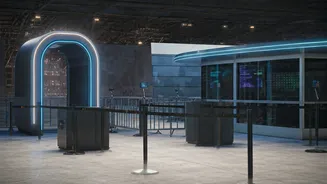
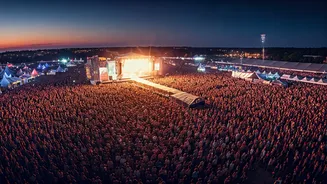
served as a powerful catalyst for change. Organisers now understand that crowd management must be integrated into event design from the very beginning, not bolted on at the end. This involves a comprehensive risk assessment that considers everything from venue layout and stage placement to artist schedules, all of which can dramatically affect how a crowd moves and behaves. The goal is no longer just to control a crowd, but to understand and guide it, preventing dangerous situations before they ever have a chance to develop.
The New High-Tech Toolkit
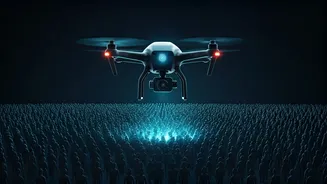
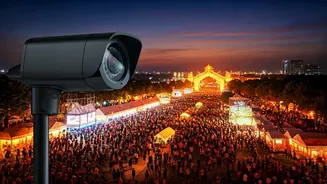
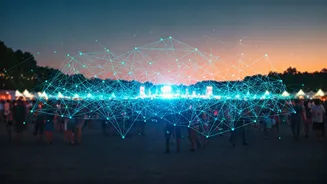
At the core of this new approach is a suite of advanced technologies. Artificial intelligence is a game-changer, with AI-powered video analytics providing real-time monitoring of crowd density. These systems can create 'heat maps' to identify potential bottlenecks and automatically alert staff before an area becomes dangerously congested. Drones equipped with high-resolution cameras offer a bird's-eye view, giving organisers unparalleled situational awareness across sprawling festival grounds. Many festivals have also adopted RFID (Radio Frequency Identification) wristbands, which do more than just grant entry; they provide valuable, anonymised data on how attendees are moving between different zones, helping to manage flow and prevent overcrowding in real time.
The Science of the Swarm
Modern crowd management is grounded in science. Experts in crowd dynamics are now essential consultants for major events, using sophisticated software to model and simulate how thousands of people will move through a space. These 'digital twins' create a virtual replica of the event venue, allowing planners to stress-test different layouts and scenarios. They can simulate a mass exit, the rush between stages after a popular act, or the effect of closing a certain pathway. By understanding concepts like flow velocity and density gradients, organisers can design venues that naturally guide people, using subtle cues in the layout rather than just relying on imposing barriers. This predictive power helps create safer, more comfortable environments for everyone.
Beyond the Technology
While technology is a powerful tool, it's only one part of the equation. Human expertise remains critical. Comprehensive staff training is essential to ensure everyone from security personnel to volunteers understands their role in the crowd management plan. Clear and effective communication is another pillar of modern festival safety. This includes multi-layered systems to reach attendees, such as push notifications through official festival apps, large digital screens, and traditional PA systems, ensuring vital information can be disseminated quickly in an emergency. Furthermore, close collaboration with local law enforcement and emergency services from the earliest planning stages ensures a coordinated and efficient response to any incident.