

What Makes Chandrayaan-4 Historic?
The primary goal of Chandrayaan-4 is to achieve what only a handful of nations have done: perform a lunar sample return. This means landing on the Moon, collecting samples of rock and soil (regolith), and returning them safely to Earth for scientific
study. The mission, with a target launch around 2028, is a massive technological step-up, designed to validate crucial systems needed for India's long-term goal of sending astronauts to the Moon by 2040. After receiving government approval in late 2024, the mission is not just about exploration but about demonstrating mastery over a complete cycle of planetary operations—from launch and landing to ascent and Earth re-entry.
A 'Five-in-One' Spacecraft Design
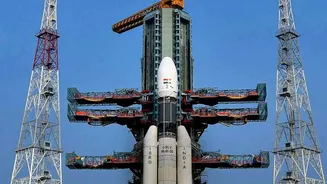
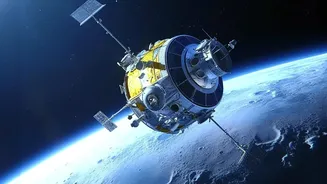
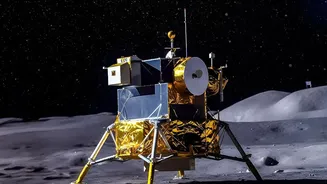
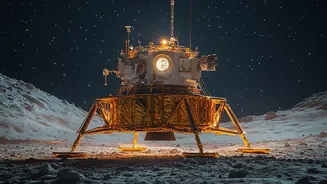
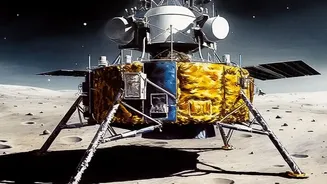
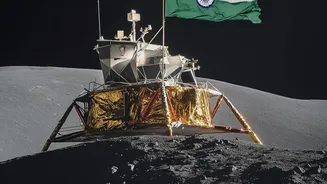
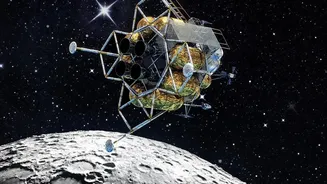
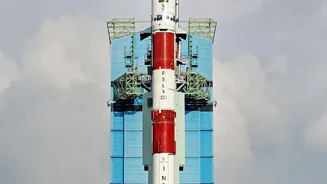
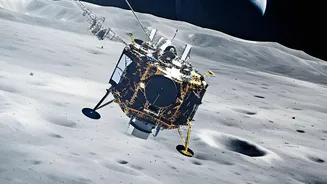
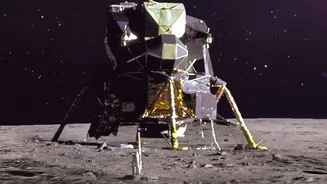
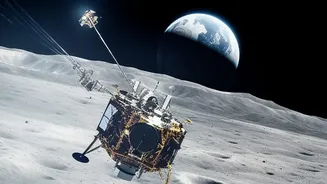
Unlike its predecessors, Chandrayaan-4 is a logistical marvel involving five separate modules that must work in perfect harmony. The combined weight is too heavy for a single LVM3 rocket, India's most powerful launch vehicle, necessitating a complex dual-launch strategy. The five components are the Propulsion Module (to travel to the Moon), the Descender Module (for the landing), the Ascender Module (to lift off from the Moon), the Transfer Module (to carry the sample in lunar orbit), and the Re-entry Module (to bring the sample back to Earth). These modules will be launched in two separate stacks and then assembled in Earth's orbit, a major new capability for ISRO.
The Challenge of Docking in Space
The mission's success hinges on a series of complex docking manoeuvres, a feat ISRO is tackling for the first time on such a scale. First, the two launched stacks must find each other and dock in Earth's orbit to form the integrated spacecraft. After the lander collects samples on the Moon, the Ascender module will lift off and must autonomously rendezvous and dock with the waiting Transfer Module in lunar orbit. This orbital ballet, happening hundreds of thousands of kilometres from home, is one of the mission's most difficult and critical phases. To mitigate risks, ISRO has already begun practising these manoeuvres with its Space Docking Experiment (SPADEX) in Earth orbit, successfully demonstrating the core technology required.
The Journey from Surface to Lab
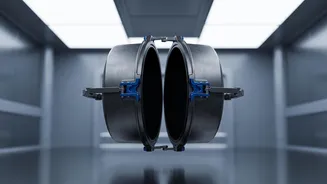
Once on the lunar surface near the south pole, the Descender will deploy a robotic arm and a drilling mechanism. The mission aims to collect up to 3 kilograms of both surface and sub-surface material, which will be transferred into vacuum-sealed containers on the Ascender module to preserve their pristine state. After collection, the Ascender fires its engines, becoming the first Indian vehicle to launch from another celestial body. It docks with the orbiting modules, transfers the precious cargo to the Re-entry Module, which then begins its journey back to Earth, designed to protect the samples from the intense heat of re-entry before splashing down.
Paving the Way for India's Space Future
Chandrayaan-4 is more than a single mission; it is a crucial building block for India's future in space. By developing and proving technologies like orbital docking, sample transfer, and re-entry, ISRO is laying the groundwork for even more ambitious projects. These capabilities are essential for the planned Bharatiya Antariksha Station (Indian Space Station) and the ultimate goal of a crewed lunar landing. The entire mission is being developed with a focus on self-reliance, with ISRO aiming to create all critical technologies domestically. This not only enhances India's strategic capabilities but also promises to boost skill development and technological growth across the nation's industries.