





The Nearly Indestructible Snake Plant
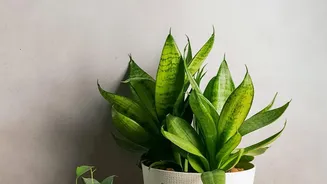
Often called 'mother-in-law's tongue', the Snake Plant is a champion of low-maintenance indoor greenery. It's almost impossible to kill, thriving on neglect and tolerating low light, making it perfect for beginners or busy households. A landmark 1989
NASA study found it effective at absorbing toxins like formaldehyde, benzene, and trichloroethylene from the air. Uniquely, it releases oxygen at night, making it an excellent addition to bedrooms for fresher air while you sleep. A weekly watering schedule is often more than enough for this hardy survivor.
The Ubiquitous Money Plant (Pothos)
This fast-growing vine is already a fixture in millions of Indian homes, and for good reason. The Money Plant, or Pothos, is exceptionally forgiving and can grow in a simple water-filled bottle or in soil. It thrives in a variety of light conditions, from dim corners to bright spots. Its air-purifying credentials are well-established; it's particularly effective at removing formaldehyde and benzene, two common pollutants found in furniture, paints, and cleaning products. Its cascading vines also make it a beautiful decorative element for shelves and hanging baskets.
The Elegant Areca Palm
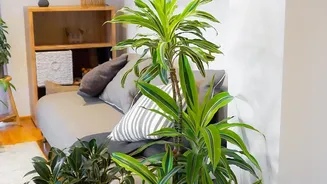
If you're looking for something with a bit more height and a tropical feel, the Areca Palm is an excellent choice. Popular in Indian homes, it's rated highly for its ability to filter airborne toxins like xylene and toluene. Beyond just cleaning the air, it also acts as a natural humidifier, releasing moisture into the dry winter air common in Delhi-NCR. This plant prefers bright, indirect sunlight and consistently moist soil to look its best, making it a great statement piece for a living room corner.
The Prolific Spider Plant
The Spider Plant is one of the easiest and most adaptable houseplants you can own. It's fast-growing and sends out little offshoots, or 'spiderettes', that can be easily repotted to create new plants. Research has shown it to be particularly good at removing formaldehyde and carbon monoxide from the air. It is also non-toxic to pets and children, making it a safe choice for family homes. Place it in a hanging basket near a window and watch it thrive with minimal fuss.
The Flowering Peace Lily
For those who want the benefit of clean air with the bonus of beautiful flowers, the Peace Lily is a top contender. It is one of the few plants that can bloom in low-light indoor conditions. It is a powerhouse air purifier, known to absorb a wide range of pollutants including ammonia, benzene, and formaldehyde. In fact, NASA's research highlighted it as one of the most effective plants for removing toxins from a sealed environment. It prefers consistently moist soil and a spot away from direct, harsh sunlight.
A Note on Effectiveness
While these plants are scientifically proven to filter pollutants in controlled lab settings, it's important to have realistic expectations for a home environment. The original NASA study used sealed chambers, which are very different from a typical room with windows, doors, and natural ventilation. To achieve a significant reduction in pollutants comparable to a mechanical air purifier, you would need a very large number of plants—some estimates suggest 10 to 1,000 plants per square meter. Therefore, think of houseplants as a beautiful, natural supplement to your air quality strategy, not a replacement for a good HEPA filter, especially during days of severe pollution. They contribute to a healthier indoor ecosystem, reduce stress, and improve well-being, but they are one part of a larger solution.