






A Date Steeped in History
The choice of August 7 is not arbitrary; it's a powerful reminder of India’s freedom struggle. On this day in 1905, the Swadeshi Movement was formally launched to protest the partition of Bengal. A core tenet of the movement was the boycott of foreign
goods and the promotion of indigenous products. The humble charkha (spinning wheel) and hand-woven khadi became potent symbols of self-reliance and economic independence, turning weavers into frontline soldiers in the fight for freedom. The Government of India, in 2015, designated this date as National Handloom Day to honour the legacy of this movement and the artisans who uphold it.
Understanding the Craft Skill
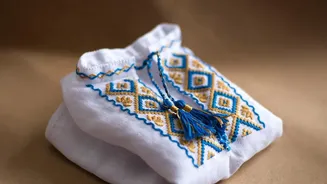
A handloom product is more than just cloth; it is a story woven with threads of tradition, patience, and immense skill. Unlike power looms, handlooms are operated manually, with every single thread passed through the warp and weft by hand. This process preserves intricate, region-specific weaving techniques like Banarasi brocade, Pochampally Ikat, and Kanjeevaram silk, which are impossible to replicate on a machine. These skills are passed down through generations, often within families, representing a living library of cultural knowledge. The sector is also a significant source of employment, particularly in rural areas, with over 70% of all weavers and allied workers being women. Supporting handloom, therefore, is not just about preserving a craft but also about empowering communities and fostering women's economic independence.
The Logic of Sustainable Production
In an era dominated by fast fashion and its environmental costs, handloom offers a compellingly sustainable alternative. The production process is inherently eco-friendly. Handlooms require no electricity, drastically reducing their carbon footprint compared to power looms. Many weaver communities still use natural dyes derived from plants and minerals, avoiding the toxic runoff associated with chemical dyeing. The process is slow and deliberate, creating high-quality, durable products that are meant to last, directly countering the throwaway culture of modern consumerism. By its very nature, handloom production is a small-scale, decentralized model that supports local economies and minimizes waste.
Bridging Tradition with Modern Innovation
The government and various organizations are increasingly focused on making the handloom sector more competitive and resilient. As part of the 2026 celebrations, the Ministry of Textiles launched the "Handloom Hackathon 2026" to invite innovative solutions in design, technology, and marketing from students, startups, and innovators. The grand finale for this was held on August 1st at IIT Delhi. Initiatives like the National Handloom Development Programme and the newly announced 'Mahatma Gandhi Handloom Scheme' aim to provide comprehensive support through skill development, raw material access, and better market linkages. These efforts are crucial in helping artisans navigate modern challenges, such as competition from machine-made imitations and the need for digital market access.
How You Can Participate
Understanding and appreciating handloom is the first step; supporting it is the next. On National Handloom Day, look for events, exhibitions, and sales organised by government bodies and artisan cooperatives in your city. Make a conscious choice to buy authentic handloom products. Look for the Handloom Mark, a government-backed logo that guarantees the product's authenticity. By choosing handloom, you are not just purchasing a beautiful textile; you are investing in a weaver's livelihood, preserving a priceless cultural heritage, and making a vote for a more sustainable future. Every purchase acts as a direct link between you and the artisan, ensuring their incredible skills continue to thrive for generations to come.